More Favorite Books

A while back, I did a list of some of my favorite books.  Since I have hundreds of them, and have been insanely bored, I thought I’d post another.

Lately I’ve been culling my massive collection, in case I can’t find a job and have to move.  People always say, “It’s so cool you have so many books!”  Yeah, until they have to help you pack them.  Hopefully, I won’t have to, but even so, I’m getting tired of dusting them.   In the process I’ve rediscovered several books I forgot I had.

In no particular order, below find more of my favorites.

Anne Frank: The Diary of a Young Girl

If you know nothing about World War II, you probably know what happened to the Jewish people of Europe when Hitler began to lead Germany in a devastating sweep across the continent.  Those who couldn’t escape the initial lockdown ended up in hiding.

Anne Frank and her family, along with acquaintances the van Pels family and an elderly dentist, Fritz Pfeffer (these names are changed in the published diary), hid in a secret apartment above her father’s business in Amsterdam from 1942 until 1944, when some rat fink told on them.

Anne wanted to be a writer, and it’s heartbreakingly clear she would have been a good one.  Only her father, Otto Frank, survived the war.  He published his daughter’s diary, which documents not only Anne’s family and relationships with the others in hiding, but much of the war itself.

My seventh grade class read this and saw the 1959 film.  I can still remember how devastating it was to learn that human beings could do this to one another.

Nana

Number nine in Emile Zola‘s Les Rougon-Macquart novel cycle, Nana tells the story of an attractive girl who rises from a slatternly beginning in the gutters of Paris to become a celebrated courtesan.  In her wake, she leaves a trail of broken, ruined and destitute men.   I read this one first—my aunt loaned it to me when I visited her in London after my high school graduation.  Once I started it, I couldn’t put it down.

Zola, the premier example of the Naturalist school of writing, is extremely easy to read.  In naturalism, heredity and environment are believed to contribute to one’s eventual path in life.  Emphasis is on believable situations, written as they would be in real life.

Give Zola a try.  I think you’ll like him.   He even has a Facebook page.  :)

Dracula

I have never read this one in school.  Usually Frankenstein is offered instead.  Actually, in college I took two classes where I had to read Mary Shelley’s book.  I finally managed to eke out a damn good paper on Dracula. 

Written by a strapping Irishman named Abraham “Bram” Stoker, the novel takes us from England to Transylvania and back again, as the hapless Jonathan Harker travels to the Count’s castle to enact a real estate transaction for his employers.

Stoker wrote believably about Transylvania, although he never went there.  The book, written in a mostly epistolary style, is surprisingly action-packed.  Sprinkled throughout, we find the latest in late nineteenth century technology, such as Mina’s typewriter and Dr. Seward’s phonograph recordings.

The noble vampire is defined in this book.  Before that, tales of bloodsuckers featured mostly Eastern European legends of filthy, long-nailed and bloated corpses.  But Dracula is not a romantic figure.  On the contrary, he’s like that scary uncle you always felt uncomfortably nauseated around without knowing why.

The Little House books

Yes, I love these!  Written by Laura Ingalls Wilder, the beloved children’s series chronicles in fictionalized form her pioneer childhood, from around age five through her marriage to Almanzo Wilder at eighteen.

I don’t think these books should be restricted to kids.  There is a lot adults can get out of them as well.  It’s fascinating to read about pioneer life at that time.  The television series based on the books, Little House on the Prairie, ran from 1974 to 1982 and was watched by legions of devoted fans.

Interesting side note:  I have The Little House Cookbook, with all the foods from the books and a ton of cool historical information.  You can get it here.
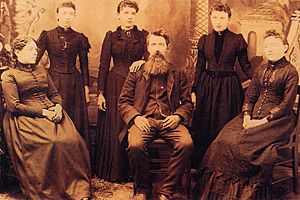
The Ingalls family. From left to right: Ma (seated), Carrie, Laura, Pa, Grace, Mary (seated).

Image:  www.discoverlaura.org

Cages of Glass, Flowers of Time

Charlotte Culin’s 1979 novel about a battered child explores the conflicted feelings victims have about their abusers.  Claire Burden is fourteen, recently torn from her neglectful artist father to be raised by her alcoholic mother, herself an abuse victim.  Claire loves to draw as her father did, but Mom doesn’t want her to, because it is painful for her.   Frightened and lonely, the young girl gradually emerges from her dark existence, nurtured by two loving friends.

This young adult book is so good.  I read it in high school and looked everywhere for it.  It’s out of print, but I finally found a copy on the internet.  Highly recommended.  I can’t find any other works by this author, and that’s too bad.

Clive Barkers Books of Blood

Technically, these aren’t one book, but six volumes of short stories by one of the masters of horror, Clive Barker.   I had been a horror fan for a long time.  When the first volume was published in 1984, I devoured it with my mouth open and my eyes wide.  It was unlike anything I’d read before.

Barker has since penned quite a few novels that weave fantasy and horror in a completely unique way.  Several of his works have been adapted into films that have terrified millions, notably The Hellbound Heart (as Hellraiser) and “The Forbidden,” a story from Books of Blood: Vol. 5 that eventually became Candyman. 

I met him in Los Angeles around 1992, at a Fangoria magazine horror convention.  He’s a very nice man.

Doesn’t seem like the father of demonspawn like Rawhead Rex…

Image:  imbd.com

———-

That’s all for now.  I’m sure as the culling continues I’ll unearth more books I’d like to share with you.  Until then, happy reading!*

*Unless you’re browsing the Barker stuff late at night, that is.  Heh heh heh.

Have Fun at Work on Talk Like a Pirate Day!

This post originally ran on September 19, 2010.  A chat friend wondered today how to enjoy the upcoming holiday at work, so I decided to repost it in advance, so those of you who will be working on Pirate Day can prepare.  Arrr, happy Talk Like a Pirate Day to ye!

YARR!  Happy Talk Like a Pirate Day, ye scurvy bilge rats! September 19th be the day!

Every year on this momentous occasion, would-be pirates dress up, scoff a tankard o’grog and dance the hornpipe in celebration of a bit o’ silly fun.

How did this holiday start?  Well, me lubbers, click on the link near the crow’s nest of this article for a detailed explanation of why people are running around saying things like “Ahoy!” and “Avast!” today.  It’s mostly for fun, and we all could use a pint o’ that!

How do ye celebrate this day of days, ye be wonderin’?  Ye talk like a pirate, that’s what.  And act like one, iffen ye can get away with it.  But what if you’re at work, as ye may be next year, when the holiday falls on Monday?

If yer captain isn’t too scurvy of a tyrant, ye can answer the phone with a hearty “ARRR!”  If he’s a whip-crackin’ slave driver, ye could stage a mutiny. Or ye could keep it on the QT, among yer shipmates (coworkers).

Some ways to enjoy Pirate Day at work:

  • Make up a pirate name and insist everyone call ye by it.  Find one here!
  • Call people things like “bilge rat,” or “knave.”  Everyone will think yer nuts, but that’s part of the fun of it!  Look here for some language help.
  • Wear something piratey to work.  Fer the menfolk, a casual dress environment means ye can wear a Jolly Roger t-shirt, a bandanna or an eyepatch even, if yer cap’n don’t have a peg leg up his arse.   A hoop in yer earhole will lend a seafarin’ touch.  If yer stuck wearin’ business clothes, a skull tie pin or somethin’ subtle be yer best bet.  Wenches, ye can wear a frilly ruffly blouse and skull earrings, or some epic hoop earrings if ye like.  Add some boots and black pants with a scarf for a belt and ye have a nice pirate outfit that don’t look like yer gonna walk the plank.
  • Add pirate clip art to all yer emails.
  • Eat lunch at a buffet that serves things like chicken legs, fried fish, mashed taters, and hearty breads and desserts.  Pirates ate a-plenty when there was plenty to have.  Pack ye a big, meaty sandwich and some chocolate coins for sweets if there’s no galley nearby or ye can’t jump ship.  Throw in some oranges so ye don’t get scurvy!
  • Read Treasure Island on yer break.  Gotta keep up the image!
  • Describe things in nautical terms.  Like “The Chumley account is three leagues from bein’ complete!” or “”Hoist the mainsail, and let’s finish our slog before Happy Hour!”

Use yer imagination, lubbers, and if ye come up with some other ways to make the daily deck-swab on next year’s Talk Like a Pirate Day a rip-roarin’ party, post ‘em in the comments.  Shovin’ off now.  Enjoy, me hearties!

*SIGH*

SWF, 40-ish, scrolling through the local dating site:

1.  Do not put a picture of your dog as your photo.

2.  Super Mullet!

3.  If you’re wearing a ball cap and holding a fish, no.

4.  Christ.  I’m a woman, not a women.

5.  Put your goddamn shirt back on.

6.  Who is the bitch in the picture?  If it’s your daughter, why is she in your dating photo?  Stand on your own.   If it’s not your daughter, HELL no.

7.  Why do so many men take MySpace pictures of themselves behind the wheel?  Unless you’re driving a Lamborghini, I don’t give a shit.

8.  I thought the bald head / goatee thing was out.  Guess not.

9. A karate stance would be more impressive if you weren’t wearing a dorky fleece jacket and cap, standing in front of a closet door.  Grow the hell up.

10.  That puppy is cute, but you ain’t.

11.  I’m not even looking at your profile if it doesn’t have a picture.

12.  You’re not him.

Breakups suck.

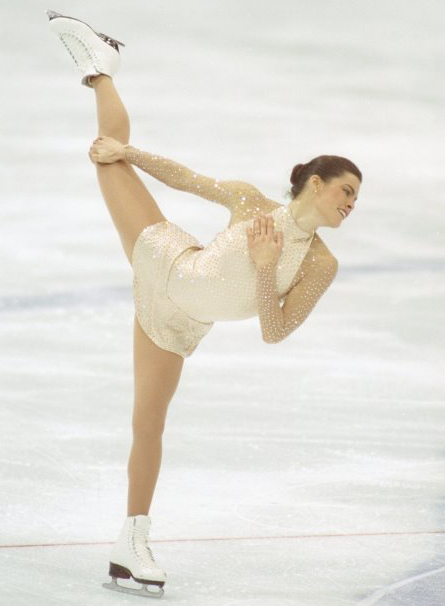
Figure skating dresses aren’t just for skinnies!

I spend most Saturday mornings skating, either with or without a lesson.  Today I worked on my Adult Bronze Freestyle program, set to music from Final Fantasy X.  I’m still wondering what I’m going to wear when I finally test it.

Elite athletes spend big bucks for the right costumes, some put together especially for them by top designers.  Kids’ outfits are often made by their moms, or purchased plain and then embellished by same.  Adults are mostly on their own.

We can’t ALL wear Vera Wang.

Image:  stylecheckup.com

Most skaters never reach Nancy Kerrigan level.  Good quality skating dresses can cost over a hundred bucks for something simple.  And manufacturers of ready-made outfits don’t seem to realize that most adult skaters aren’t five-foot stick figures.

I’m an adult recreational figure skater, and while I’m not obese, I ain’t skinny either.  I can’t afford to buy dresses or have them made for me, so I bought a sewing machine and learned to make my own.

I use Kwik Sew patterns, which are interchangeable.  If the skirt is too short on one, I can substitute something else.  I’m also tall, so I had to lengthen the bodice and sleeve patterns.  The instructions are easy, and the patterns simple.

I have two ready-made dresses, and I only wore one of them once.  It’s a lovely purple dress with spaghetti straps .  Let’s get one thing straight.  I’m a woman, and I have boobs.  The only way I felt comfortable in the thing was to wear a nude leotard under it.

Mostly, I try to stay away from:

Excess crystals

I don’t have the body for these (yet—I’m working on it).  No need to accentuate bumps I don’t want anyone to notice.  Besides, the good ones are pricey.  I don’t want to waste them on a homemade crap costume.

Circular skirts

They flare out nicely, but unless they are a bit longer than usual, they make my hips look bigger.  Flat skirts actually are better for a fuller figure.

Poofy sleeves

If you have sticklike arms, go for it.  Or, preferably, if you’re under ten years old.

Cute if you’re six; not so much if you’re sixty.

Image:  northernice&dance.com

Tiny anything

Ever notice what happens when a lady in a figure skating dress skates backward really fast?  The underpants on that dress need to cover your butt completely.

Bare outfits

The purple spaghetti strap dress I mentioned earlier is covered with sparkles and is flowy and beautiful.  I can’t bear to get rid of it.  It’s like a faint, closeted hope that I may someday be able to go bra-less.  But without something underneath, one jump and Janet Jackson will be on her knees thanking God she’s not me.

Thin fabrics

It’s cold in there, dammit.  Not only do thin fabrics show things I wish they wouldn’t, they’re not warm enough.  I favor stretch velvet, not too shiny.  Sometimes it’s still not enough, so I use a stretch lining fabric or that extra leotard.

An extra layer also helps conceal any supportive garments.  Technically, you’re not supposed to wear anything under a skating dress, but I’d rather not distract the audience with flying body parts.

Here’s an example of a gorgeous costume on a mature skater.  This is Dr. Marci Richards, competing at the Adult National Figure Skating Championships.

You go girl!

Image:  figureskatingabout.com

Skating costumes reflect the character of the music.  They’re not as literal as stage costumes, unless you’re in Disney on Ice.   Like the words you choose when you’re writing, your colors and embellishments help set the tone for your program.

For adult skaters, it’s certainly possible to look as great as you skate!


More Annoying Online Errors

Surfing around the ‘net, I found another 79,352,863 so-called professional articles online this week with ridiculous errors. Most are homophones, words that sound the same but are spelled differently.

I already covered common punctuation errors here, in The Most Annoying Online Errors (formerly called “All Those Eyes.”  Editing is fun!)

Below are more goofs I keep running across, in no particular order.

Horde vs. hoard

A horde is a large group.  A hoard is an accumulation.  ”But,” you cry, “the definitions are similar!”  Tricky? Yes, except a hoard can be small.

Teh vs. the

In LOLcat speak, teh is usually deliberate. The email to your boss is not LOLcat speak.  Often this error is a typo that careful proofreading would have caught.  I see it more in blog posts and comments.

Image:  lolcatpics.com

Thx vs. thanks

Unless texting your BFF, write it out!  The more you get in the habit of writing carefully and properly, the better your overall presentation will be.  Save the textspeak for casual encounters.  Or just learn to type faster.

Bare vs. bear

(Naked vs. a large carnivorous land mammal)

I hate this one.

The pain was more than I could bare.

Don’t wear shoulder-bearing shirts in the office.

Fuzzy Wuzzy was a bear (not a bare).  Fuzzy Wuzzy had no hair.  Fuzzy Wuzzy wasn’t very fuzzy, was he?

If you tell me this is a bair, I can’t help you.

Image:  APF/Getty

Isle vs. aisle

You were not married on a tropical aisle; it was a tropical isle.  Your grocery cart didn’t lose a wheel in the middle of the isle; you lost it in the aisle.

Gage vs. gauge

A gage is a pledge or the token of a challenge, like the glove a knight throws down to an opponent.  A gauge is an instrument for measuring something.  Guage is just plain wrong.

Hair vs. hare

Come on.  Really?  You can’t tell the difference between an aggregate of keratinous filaments growing through the skin, and a long-eared, rodentlike mammal of the genus Lepus?

What an ultra-maroon!

Image:  mediadump.com

Juggler vein

Your veins can juggle! Call the news channel! Call Ripley’s Believe it or Not!  We got a medical miracle here!

Leach vs. leech

NO:  The trash leeched chemicals into the groundwater when it rained.

To leach *VERB* means to dissolve out something by percolation.

A leech *NOUN* is a bloodsucking freshwater worm, or that ex-boyfriend who hung around constantly and ate all your roommate’s food.

Accept vs. except

To accept is to receive something—an object, criticism, etc.   Except is a preposition, which leads to an exclusion.

“I’d accept your challenge,” the Doctor said to the Sontaran, “except we are not both armed with sonic screwdrivers.  Wouldn’t be quite fair, would it?”

Run-on sentences

Run-on sentences go on and on they don’t have any punctuation between them and they are very very long the person writing them doesn’t know or care about punctuation oh my God that drives me nuts.

I see these in comments or forum posts the most.   Many times, they lead to an impenetrable wall of text my eyes cannot fathom.

Than vs. then

NO:  He was more handsome thenthe first man we saw.

YES:  He was more handsome than the first man we saw.

Than is a conjunction.  It sets apart two unequal subjects of comparison.

Then is an adverb (modifies a verb, typically) used to denote time and place.

Gandalf leaned over, set the confused Pippin on his feet, then brushed him off roughly. “Fool of a Took,” he muttered, not without affection. 

Subject/verb agreement

Plural vs. singular

The cops ate their donut.

One cop, one doughnut.  His doughnut, her doughnut.   More than one cop, more doughnuts.

Spelling

Donut vs. doughnut.  Did you catch that one?

Separate, not seperate.

Mischievous.  not mischievious. Also pronounced wrong:  it’s MIS-cheh-vus, not mis-CHEE-vee-ous.

It’s leviOsa, not levioSA, you bloody idiot.

Image:  bookclubllt.blogspot.com

———-

When your name goes on that article, you want it to be your best work, right?  Even if you’re posting anonymously, your online writing represents you, in comments, posts, and even tweets.  Take a little time to check words you’re not sure of.

I’m far from perfect, and if you spot a mistake in one of my posts, please let me know in the comments.  They come to me in email, so I’ll see it. I’ll gladly correct it, publish your rebuttal to something I said (following my Comment Policy, of course), or change it if needed.

Writing When You’re Not Writing

It was wrenching to write the first words of this post.  Why?  Because I don’t want to admit I’m not writing.  Maybe you surmised from an earlier post that things aren’t going very well right now.

But you’re blogging, you say.  That’s writing.  Sure it is.  I’m talking to you in written form, telling you something.  So it’s writing.  It’s just not the kind of writing I want to be doing.

Anne Wayman, super freelance guru, wrote a post about writing even when you are horribly distracted.   She says, in essence, that writing helps keep her mind off things.

I have the opposite problem; I can’t NOT think about it, because when I’m upset, I tend to bang out little Notepad diary entries about how pissed off I am.  At least they’re digital, and I can delete them before I die and someone finds them.

Note to self: burn this old thing….

Image:  vada0214/stock.xchng

How the hell do you write when life blows up in your face?  Here are my conclusions.

Take a break

Sometimes, you just have to.  If you have freelance clients or a deadline, you might not have the luxury.  At least cut back, if you’re able.  Put as many projects on hiatus as you can while you deal with things.

Write something that pertains to whatever is distracting you

Turn it into a project, by golly.  At most, you might even get a sale out of it, if you can find an intriguing angle on the subject.  At least, you’ll discharge some of those feelings and sort your thoughts.

I have no clue what the hell this is supposed to be, but it cheered me up for a minute.

Image: FreeDigitalPhotos.net

Use the time to do research

I’ve been trying to do this a bit.  Of course, the whole insomnia thing makes reading material very difficult.  I’ve actually had to *GASP* put the computer aside and rest my eyes.

Research is easy.  You read some stuff and take notes.  No pressure. If you act like it’s no big deal instead of life or death, you may dig yourself out of a dead end.  I think I’ve found an answer to one particular problem in the current WIP that’s been plaguing me.

Write somewhere other than your hidey-hole

Get out of the house.  Take your laptop to the library.  They have wi-fi in case you need to look up giant sloth toads of Madagascar, or watch a YouTube tutorial on binary star systems.  Wear headphones so other unemployed lurkers don’t hit on you.

Once you start writing in earnest, disconnect.

For God’s sake, stay away from the button!

Image: FreeDigitalPhotos.net

Go back to a previous project

When I’m brain-dead, pulling something out of Ye Olde Writing Trunk is soothing.  I’ve said before that I much prefer editing to writing first drafts.

Hence the re-edit of Rose’s Hostage   I’ve got a few more queries to try before I bury the poor thing.  At least it will give me something to do.  And you never know.

———-

I dearly hope you are all surviving this ridiculous excuse for an economy we have lately.  And the drought.  And the unemployment.  And the global warming.  And the religious wars.

We all have to hang in there.  There’s nothing else to do.  Except, maybe, write about it.

Vocabulary – O Yeah

My favorite letter! Hey, I like the shape. It’s kinda like a pizza.

O is for ocean, operatic, and ohmahgawdwhatthehelljusthappened.  Well, that’s not a word. Okay.  That’s a word.  Happy now?

Shall we begin?

Oakum – in old-timey sailor talk, natural fiber ropes that are unraveled and used to caulk cracks on a ship.  They’re jammed in the cracks and coated with pitch, which traditionally would be pine tar.  Oakum is rarely used today, except in the construction of historically authentic tall wooden ships, or maintenance of the real deal.

Jam-packed with oakum.

Image: Wikimedia Commons

Oblation – a sacrifice or other offering given in worship.

Buffy rolled her eyes.  She had no time to be the demons’ oblation today.  With her super Slayer strengths, she broke her bonds, kicked all of them into the lava pit and escaped the sewers in time for lunch rush at the Doublemeat Palace.

Occlude – to close off or obstruct something.

Odoriferous – giving off a distinctive smell.

Wand held in front of him, Harry cautiously entered the Muggle attic and sniffed.  He detected the odoriferous presence of a concealed werewolf.  A board creaked in the corner.  He pointed his wand at the corner and yelled “Stupefy!” The stunned werewolf fell to the floor, unconscious.

“Right,” said Harry to the other Aurors. “Let’s get him out and modify the Muggle family’s memories.” 

Sorry, I got carried away.  Been re-reading Harry Potter again, I have.

Oenophobia – fear of wine.  Really?  You’re afraid of wine?  More for me!

I’m only afraid of red wines made from zombie-trod grapes.

Image: Wikimedia Commons

Officious – annoyingly assertive or dominant.  Overly enthusiastic about being in charge.  See the first sentence in Stephen King’s The Shining. 

Ogle – to amorously glance at something or someone.

Joker ogled the pretty red-haired nurse.  He grabbed her wrist and yanked her up, ignoring her shrieks.  “Batman would come after you in a jiffy,” he said.  “Lets go, bait!”  He dragged her off into the depths of the asylum, leaving Harley to pout jealously as she cold-cocked a guard.

Ohmmeter  – a thing that measures electrical resistance in ohms.  What’s an ohm?  According to Dictionary.com, ” the SI unit of electrical resistance, defined to be the electrical resistance between two points of a conductor when a constant potential difference applied between these points produces in this conductor a current of one ampere. The resistance in ohms is numerically equal to the magnitude of the potential difference. Symbol:  Ω ”

Yeah, I don’t know what that means either.

Oilskin – cloth that has been treated with oil to make it waterproof.

Ojime  – a Japanese bead worn on a cord.  Click on this link and then the arrow to hear a Japanese person pronounce the word.

Pretty!

Image: Wikimedia Commons

Okra – a mucilaginous vegetable pod often used in making gumbo (yuck).  Delicious when sliced and fried in cornmeal or breaded.  For more information, click this link from the University of Illinois Extension.

Oligarchy – a form of government where power is concentrated in a small class or with just a few people.  Criteria could be wealth, royalty, or some other delineator.

Ombré (ohm-bray) – a French word meaning shaded.

Like this…om nom nom…

Image:  www.beantownbaker.com

Onomatopoeia – a property of some words that means they suggest the sound they refer to.  Examples include buzz, oink, splash, and plop.

Oology – the study of bird eggs, primarily, or the hobby of collecting them.

Opulence – riches, affluence.

Joker’s filthy, bedraggled form looked as out of place in the opulence of Wayne Manor’s ballroom as a turd on a wedding cake.

Orology – the study of mountains.

Ossuary – a repository for bones of the dead.

“Dammit, Miklos, you were just supposed to stack them nicely!”

Image: Wikimedia Commons

Otoscope – what the doctor uses to examine the inside of your ear.

Outré (oo-tray) – French word meaning excessive or extravagant.

The general thought Darth Vader’s diamond-studded cape was a bit outré, but, not wanting to be force-choked, he didn’t say a word. 

Ovine – sheeplike.

Owlery – any Harry Potter fan knows this one.  A place where owls live or gather.  In the Harry Potter series, the owlery was a room at the top of Hogwarts Castle’s West Tower, where the owls used to carry messages ate, slept and rested.

Harry waits for a message, perhaps a recipe for poop-stain removal.

Image:  harrypotterwikia.com

Oxymoron – a contradictory figure of speech.  Examples:  jumbo shrimp, Army intelligence (if you ever watched M*A*S*H*, that may be the first one you thought of), and genuine imitation.

Oysterer – someone who sells oysters.  WHICH I HATE.

“Thass all right then; we love ’em!”

Image: Wikimedia Commons

OzoceriteMindat.org says ozocerite is:

A naturally-occurring odoriferous [!!!] mineral wax or paraffin.

It is used in the making of electrical insulators, high-temperature use candles and waxed paper.

That’s all the vocabulary for today, kids.  See you next time!

Why I Don’t Want to Read Your Manuscript

Hey, it’s not that I don’t like you.  Really.

“But you’re a writer!  You can help meeeee!” 

Maybe.  But there are issues.

Legal stuff sucks

Remember that story by Stephen King, “Secret Window, Secret Garden?”  They made a film out of it with Johnny Depp, called merely Secret Window.  In the film/story, a writer is approached by a hayseed who hurtles the accusation at him, “You stole my story!”

I don’t want to read unpublished work, possibly be influenced by it, and then end up in court because you levied this accusation at me, even though my story has nothing to do with yours.  Or because I used the same theme, like first love, but not the same plot, that of your fictional first time with a young Bruce Wayne, in Alfred’s room while he was at the grocery store.

Dear God. We can’t blame you. *droooool*

Image:  Wearingcelebs.com

Criticism sucks

First readers are great.  They look at your stuff, and point out mistakes, inconsistencies, awkward turns of phrase, and other beasts that infest your writing.  You will be blind to these while you birth your masterpiece.

Truth is, no one, NO ONE, writes a perfect first draft.  Depending on the writer or the work, it may take several edits before it’s ready for someone else’s discerning gaze.  If you think your first draft is perfect, I challenge you to sit on it for a month and then go back and read it again.

If I read your work, I will feel compelled to point out the places where it could use some improvement.  I’m no expert, far from it.  But I know enough to help you with the big clunkers.

And that’s what it is:  help.  I don’t do it because I don’t want to listen to you whine, or yell at me, if I make suggestions.  Learn how to take constructive criticism (I really prefer the term feedback).  You’ll have to do this if you want to be a writer.

Not having enough time sucks

I have two blogs, and (usually) a full-time job, plus I’m supposed to be writing my own stuff.   I don’t always have time to slog through your long-ass manuscript.  Especially if you’re going to yell at me.

If we’re both broke and you’re at least at my level of skill and you want to barter—you read mine, I’ll read yours—I may be amenable to that.

Critiquing is work, and working for free sucks

Sorry, man, but I can’t pay my bills in thanks.  If I don’t know you and you want me to give a basic critique, you’re going to have to pay me for my time.  If I do know you, well you’ll still have to, although I might be able to work something out with you.

“But you don’t have a book out.  You’re just an amateur writer.  Why can’t you do this for the kudos?”

Because.

  • Unless YOUR book is coming out and you thank me profusely in the acknowledgments for helping you cross your Is and dot your Ts, the kudos aren’t going to do me a bit of good.  No one will see them.
  • I’m not a complete amateur.  Yes, my output isn’t as prolific as some other people’s, but I have actually been paid to write.  If you get paid for something, you’re no longer an amateur, the definition of which is “someone who does something for the love of it.”
  • If I have to work for free all the time on YOUR stuff, I’m not free to do my own work, which at some point I may actually get paid for.

———–

I’m not trying to demean your efforts, really.  I’m just pointing out to you that there are good reasons why many writers don’t read unpublished work.  Famous ones are even less likely to do it, unless you’ve paid buttloads of money for a personalized glance-through at a conference or convention.

Writing groups are a good place to bounce your stuff off other people of a similar literary bent.  They are set up with this in mind.  A good group will have rules, and you’ll have to return the favor from time to time, but that will only help you learn.

Look here for a good article on how to find a critique group.  


Vocabulary: N-aah naah naaah naah, hey hey hey

N is for noted, nautical and nerd.

Nacelle – the structure on an airplane wing that contains the engine.  Or, on a starship.

“Captain!” Scotty shouted.  “The starboard nacelles have sustained a direct hit! I’ll have to route the antimatter thingamajig to the whatzit to bypass the doohickey or we’ll be blown to bits!”

Nave – the big room in a church where the congregation sits.

Notre Dame de Paris, France.

Image:  Adam Bishop / Wikimedia Commons

Necropsy – post-mortem, or autopsy.  Usually when it’s done on people, it’s referred to as an autopsy, and when animals or other non-human creatures are examined, it’s called a necropsy.  I have no idea why, except that auto– means self.  Technically they’re the same thing, but I don’t suppose we think of animals as being ourselves.

Nebbish – a pitiful person, not effective in his work.  A weak, wishy-washy person.  From the Yiddish nebekh, unfortunate.

Ngorongoro Crater – the vast, ancient caldera of an extinct volcano in Tanzania, Africa.  The crater’s floor is now a vast plain that is populated by wildebeests,  zebras, lions, and flamingos that hang out in the lake in the center.  Ngorongoro is a national conservation area that attracts many tourists with its scenery and varied wildlife.

It be purty.

Image: G. Heilmann / Wikimedia Commons

Nictitating – to nictate is to wink or blink.  In birds, sharks and some animals, there is a nictitating membrane, or a third eyelid, that blinks across the eye to protect it.  Typically it’s transparent, so the animal can retain visibility while moistening the eye.  I first came upon this term when reading about sharks in National Geographic as a kid.

Nihilism – a philosophy that denies any meaning in reality and considers all values baseless.

AllAboutPhilosophy.com defines nihilism with Shakespeare’s famous passage from Macbeth:

Life’s but a walking shadow, a poor player, that struts and frets his hour upon the stage, and then is heard no more; it is a tale told by an idiot, full of sound and fury, signifying nothing.

A character who considers him/herself a nihilist would be interesting to read or write.

Nostrum – a quack medicine or treatment.

“What’s a nostrum?” Buffy asked.

“Many people believe chiropractic is a nostrum,” Giles told her. 

“Oh,” she said.  “I thought it was a demon’s nose hole. Thanks for clearing that up.”

Nosebag – a food bag that hangs over a horse’s head, so he can eat on the go.

Om nom nom….

Image:  Mattes / Wikimedia Commons

Numismatics – the study of coins.

Nutria – a 10-pound, ratlike rodent from South America.  Also found in US Gulf Coast wetlands, it is destructive due to its feeding habits.  Some people trap and eat the animals as a means of control.

Tastes like chicken?

Image:  K. Retzlaff / Wikimedia Commons

Nymphomania – popular term for a psychosexual disorder in women, characterized by an abnormal and excessive desire for sexual activity, often with multiple partners.  Think this would be fun?  Read thisAnd this.

Nyctophobia – fear of the dark.

“Honey? Honey, is that you? W-where’s the light switch…YEEEAAAAUUUUGGGHH!!!”