
Efficacy

A2Z-2013-BANNER-900_zps1a85732aHey, here’s my Friday post.   I’m posting my Saturday post tomorrow.  How nice that this month has built in an extra day if we get behind.  And it finally warmed up.  Yay!  I bought Parmesan this afternoon, too.  The real stuff.  It’s pasta night tomorrow–a little Newman’s Own Fra Diavolo, the Parm, and some penne.  Mm.

Efficacy is defined as a capacity to produce an effect.  When it’s used to refer to a person, it’s called self-efficacy, and it refers to that person’s sense of competence.  Healthy people have a strong sense of this within themselves, though not usually about everything.

Why is strong self-efficacy important to writers?

Failure

Everyone makes mistakes, or has times when their efforts don’t succeed.  It’s normal to screw up and have disappointments sometimes.  Without support and encouragement, children don’t get a sense of triumph when they do succeed, and they’re unlikely to keep trying if things don’t go well.  But they must be allowed to fail, or success means nothing.

When parents constantly shield their kids from failure, they never learn how to handle it.  Writers will face rejection; it’s not a question of if, but when.  In fact, rejection is usually the first thing writers learn to deal with.  They have to keep trying if they want to be published.

And trying…and trying…

Image:   Jean le Tavernier (after 1486), Portrait of Jean Miélot/ Wikimedia Commons

Constructive feedback

Despite what you might think, constant praise does little to make people feel capable.  It rings false after a while. No one is perfect or does everything perfectly all the time, and even kids know this isn’t true.

Constructive feedback doesn’t tear down its recipient, which can also damage self-esteem. Since art and writing are so personal, creators sometimes have trouble listening to feedback.  They hear it as an attack and can’t pick out useful information.

If an audience doesn’t like a story or a book, even if they can’t say exactly why, a good writer will listen carefully to a critique anyway.  The reasons can show the writer what she needs to improve—perhaps the reader thought the plot twist was too easy to figure out, or didn’t like a flat character.

Persistence

Why would anyone continue to do something if she doesn’t believe she has any ability?  She might do it because it’s fun—some activities don’t require great technical skill to enjoy them.  Bowling, for example.

To be a champion bowler, a person would need to practice.  A lot.  The same goes for writing.  Success doesn’t come from just a few stories.  For a writer to get anywhere, she must practice.  She must also read and learn, both what is effective and what not to do.

Self-efficacy comes in when the writer keeps at it, even when the acceptances aren’t there yet, and when the money isn’t either.  It keeps her going because she has confidence in her ability to not only write, but to learn and grow as she does it.

That’s what it’s really all about.  We don’t write because we want to—who would pick a career this annoying?  We do it because it’s part of who we are.  So when we’re afraid, and when it’s not going well, our self-efficacy is threatened.

Be kind to your writers.  Nurture them.  Give them useful feedback, and plenty of cheese.

What? I like cheese. It’s energy food. No, I’m not sharing. Om nom nom.

Image:  MigGronigen / Wikimedia Commons

Daily Dabbling

A2Z-2013-BANNER-900_zps1a85732aTaking you through my edit probably wasn’t the best idea for this year’s A-Z Challenge; I didn’t even get to edit today!

Well I did, actually.  But it was work stuff—not nearly as interesting.   So without actually telling you what the book is about (yet), I’m going to talk about daily work.

So how does a person write and edit a book, anyway?  It’s like that old elephant thing:  how do you eat an elephant?  One bite at a time.

“I hate that stupid saying. Don’t eat me.”

Image:  nickandmel2006 / via Wikimedia Commons

Angry elephant aside, there’s only one way to finish a book.   And that’s to sit your ass down and do it, one word at a time.  Every day, if you can.

Why write daily?  If you’re planning on doing this for a living (good luck with that one, by the way), it’s like any other job.  Your boss may schedule you for a set number of hours each week.  The same goes for your writing.  If you sit down at a prescribed time each day, before you know it, those words will be out of your head and on the paper.

Because I work at a job, I like to use my lunch hour to write and edit.  I get my file open and ready to go, clock out, and go make my food.  Then I come back and get right to it.  If I do any work at night, it’s the same drill.  Weekends get a more varied schedule.  For example, I might work after I come back from skating on Saturdays (and sometimes Sundays), or wait until afternoon if I have errands.

The point isn’t to get as many hours in as you would at work.  It’s just to pick a time, and write.  Like any habit or routine, the more you do it, the easier it gets.  After a while, you won’t have to make yourself sit down; you’ll just find yourself there.

It's like working out, which I know we all love—don't we?

It’s like working out, which I know we all love—don’t we?

Image:  imagerymajestic / FreeDigitalPhotos.net

Now I’m going to spend a couple of hours on my homework, and then I’ll do more editing.  See you tomorrow.  In the meantime, please enjoy this compiliation of Maru, the internet’s cutest kitty, in various sleepytime poses!


Culling

A2Z-2013-BANNER-900_zps1a85732a

I’m culling bits from my book as I edit.  It’s like picking my knee scab (sorry, I’m trying really hard not to do that!)—painful, but necessary.

Well, the scab thing, not so much.

At the beginning of the edit, only little things come out.  A sentence here, a word there.  Small changes.

In time, new scenes may replace old ones.  I’ve already done that with a pivotal scene, one that sets the the climax into motion.  That one had to be completely rewritten.

Stuff may get moved around.  As that happens, I’ll insert this, and cut that.  Think of it like making a big jigsaw puzzle:  chapters and scenes are the pieces.  Or a game of Tetris.  Only with words.

Someone in chat just said “Ooo, editing a book sounds like fun!”

Ummm'kay.

Ummm’kay.

Image:  Arvind Balaraman / FreeDigitalPhotos.net

Well, I lie; I like it.  If I didn’t, I wouldn’t have taken a job where I edit all day.  However, some days, when I’m very tired like today, even doing Tunerville isn’t a barrel of laughs.

Rose’s Hostage had several protagonists; this book only has one main one.  There are only a couple of other viewpoints, and they either illustrate something, or get you closer to the villain, into whose head I have chosen not to dive this time.

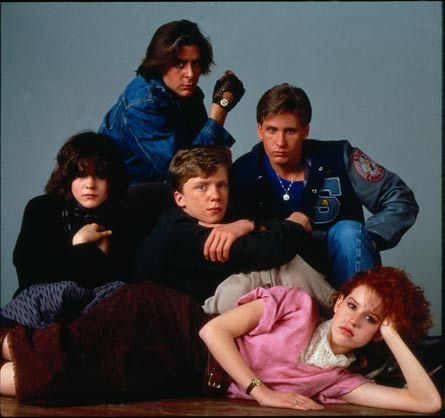
I’m not sure how I like that most of the book is from Chris’s perspective.  I’m sure it will be shorter that way.  Working with the hostage, the bank robber, the detective, and the serial killer (that sounded like a bizarre version of The Breakfast Club, didn’t it?) added so much material to my last book that culling is still going on.

Okay, which one is the serial killer?

Okay, which one is the serial killer?

Image:  starpulse.com

Bullet Points

A2Z-2013-BANNER-900_zps1a85732aWhew!

Yeah, I know; this is yesterday’s post.  Sorry about that.  I’m getting busier at work and lunchtimes have been devoted to editing Tunerville.  Guess I’ll have to save that for evenings and write my A-Z posts at lunchtime instead.

I’ve put several of the things I’ve been doing on it into bullet points.  Because I couldn’t think of anything else that began with B, and I’ve been editing reports all day.  Ha!

  • At lunch, I’ve been working my way through the book, making chapters.
  • I’m still finding unfinished scenes and places where I noted “DO THIS HERE—SEE NOTES” and just left it.  Slowly, I’m finishing those, getting transitions set up and doing some foreshadowing here and there.
  • On this read-through, I’m tweaking bits here and there where Word flags misspellings, grammar issues, and restructuring paragraphs.  I don’t know how to explain how I know where a paragraph break needs to go; I just do.  Perhaps years and years of reading?

I think bullet points are the best way to organize my time.  Each one can stand for an hour or two (or several).  It should go something like this:

  • Get up , drink coffee, play on internet, get dressed, and go to work.
  • Work all night on a drink of RUM!

Come, Mr. Tallyman, tally me bananas!

Image:  Enzik/Wikimedia Commons

Okay, it’s been a long day.

  • Write a blog post at lunch.
  • Go home.
  •  Drag myself through whatever exercise I have to do that day:  Pilates, walking, or the PT for my destroyed shoulders that doesn’t work (time to go back to the doc, I think).
  • Nom nom nom.
"Hey! What about me?"

“Hey! What about me?”

  • Oh, sorry.  Feed Psycho kitty.
  • Do a bunch of homework.
  • Do some book editing.
  • Get in bed.
  • Read until I get really sleepy or it’s time to turn out the light, whichever comes first.

There is serious rebellion going on in my brain over that New Year’s resolution to read more.  I haven’t had time!  Part of me just wants to chuck it all and lock myself in the library with a blanket, a pillow, and a bag of munchies.   There’s a Panera Bread right next to the branch closest to me; that’ll do.

If I say "bagel" three times, will that make a sandwich appear?

If I say “bagel” three times, will that make a sandwich appear?

My summer is school-free; there wasn’t anything on the schedule I needed.   Once this class is over in May, I can do whatever I like until August.  I’d like to get started on the Rose’s Hostage sequel.  And maybe have some actual fun for a change.

Aaack!

A2Z-2013-BANNER-900_zps1a85732a

Happy Easter, everyone!

I didn’t get as much done this weekend as I wanted to.  On Wednesday, I took a walk in lovely weather and, coming back, stepped on one of those evil alien seed pods from my sweet gum tree and fell on my left knee.

The doctor said I might have injured my meniscus—a squishy thing in the side of your knee.  If so, it wasn’t very bad; it’s much better now.  I skated on Saturday.  Hey, if they didn’t send me for X-rays, I figured I’d be okay.  So the rest of the holiday weekend was spent dealing with the world’s largest itchy scab and resting it as per orders.  

Instead of grossing you out with a picture, here is one of some lovely sea anemones.

Image:  Nevit Dilman/Wikimedia Commons

This morning, I had to disrupt my routine (!!!) to enroll in fall classes at 7:00 a.m. (when registration opened up).  I have a report to edit at work, and although I finished my homework today, I’m sure there will be more posted any minute now. 

So there’s a lot of “Aaack!” going on right now, as I try to organize my time. 

I started my book editing by merging the entire thing into one document in PageFour, and then exporting it to a Word document.  I do this so I can put it on a flash drive and cart it back and forth to work, instead of dragging my laptop with me. 

The first step is dividing it into chapters.  I could have done that in PageFour but didn’t want to use the laptop any more.  On this pass through the entire book, I will read it through, without really concentrating on too much rewriting or line editing. 

The chapters at this point are fluid.  As rewriting commences, they can move around, or begin or end in different places.  Sometimes I add scenes or take them away, which changes their dynamics. 

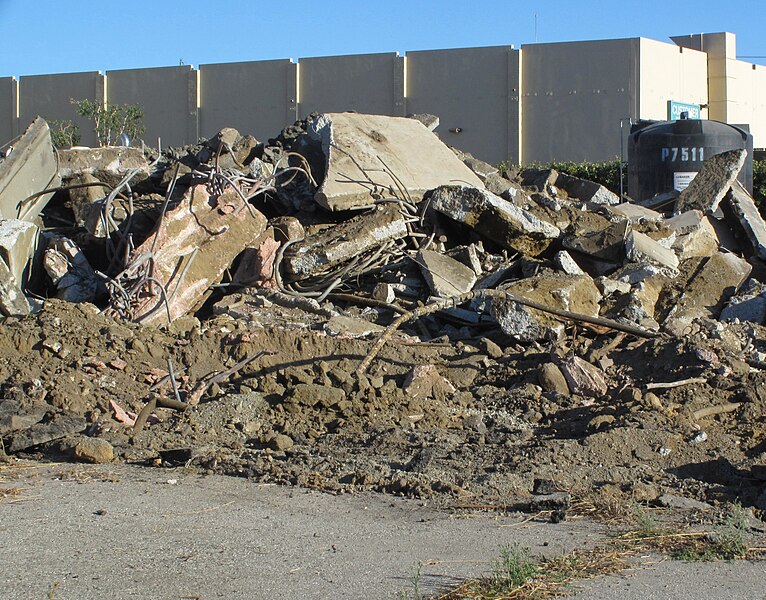
Right now, it looks like this.

Image: Downtowngal/Wikimedia Commons

It’s best to end a chapter on an unfinished note, impelling the reader forward to see what happens next.  I don’t want to tell you too many of these tricks I’m learning, because I can’t read anymore without being aware of them.  I remember reading that Mel Gibson once said, “I can’t watch movies anymore.  I can see the strings.”  That is actually true.  Once you learn how something works, it’s hard not to think about it analytically. 

So today, I’ll work on this book at lunch, and a bit in the evening too. 

Hopefully, when I’m done, it will look like this.

Image:  Manfred Heyde/Wikimedia Commons

Happy April Fool’s day, and happy A-Z!