Guillermo del Toro’s Frankenstein: Part 2 – Yes, It’s Love, but Not How You Think

WARNING!!!! THIS POST CONTAINS SPOILERS FOR FRANKENSTEIN. PROCEED AT YOUR OWN RISK!!!

Last night, a group of my colleagues and I went out, and one of them had seen Frankenstein, which meant I could wax poetic about it without spoiling. I mentioned something I alluded to in my last post, that Elizabeth’s interactions The Creature were not romantic, but motherly. My coworker asked me to explain.

I’m going to double down on this, so stay with me. This post is an expanded version of my argument.

First, in Mary Shelley’s book, Victor and Elizabeth are the couple. William is just a child, and baby brother Ernest isn’t even in the movie at all. Elizabeth Lavenza is an Italian orphan Caroline Frankenstein plucks like a puppy from a foster home and raises with the children. Victor is basically marrying his non-related stepsister, which is somewhat less incestuous than what other noble families were doing. Making William an adult with an unrelated fiancé allowed del Toro to introduce Harlander, who is so much fun we don’t care that he wasn’t in the novel.
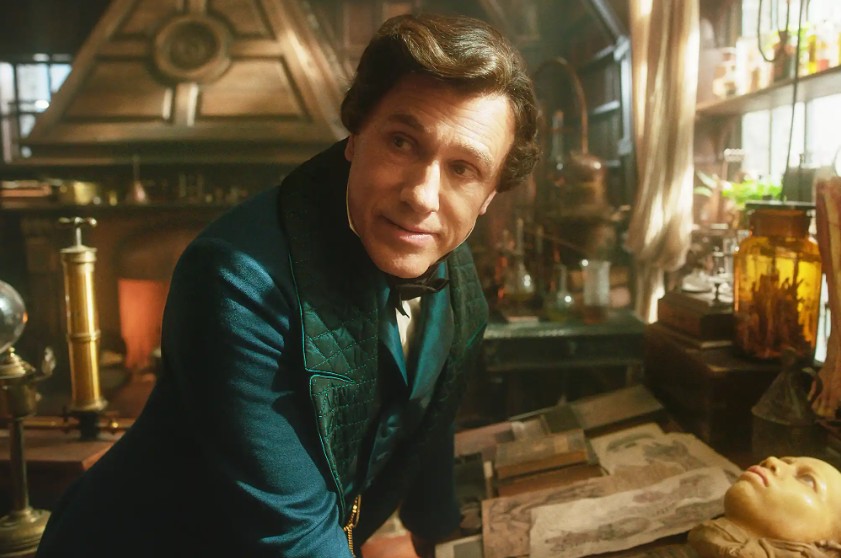
French porcelain, anyone?

Image: via Entertainment Weekly – Ken Woroner/Netflix

Their flirtation in the film alludes to their relationship in the book. If it had been preserved in the film, Elizabeth would have been The Creature’s de facto stepmother. Watching them play with each other, you get the impression that if she weren’t already taken, Elizabeth might very well decide to accept Victor – but it would be on her own terms.

Second, del Toro’s dual casting of Mia Goth as Claire Frankenstein, Victor’s mother, and Elizabeth Harlander, is significant. I can’t remember in which article I read it, but del Toro said straight out that some men marry their mothers. Victor certainly has a fixation on his.

del Toro also uses color in his films very deliberately. The dynamics are reflected in Kate Hawley’s costume designs. Claire’s clothing is all red. Victor wears red too (gloves, a scarf, a coat). Elizabeth’s primary color is green and/or teal, but around her neck is an ever-present rosary. What color is it? Red. When she visits Victor and sees the dissection, she is wearing red, and for a moment . . . but no, sorry Victor, you weren’t the chosen one.
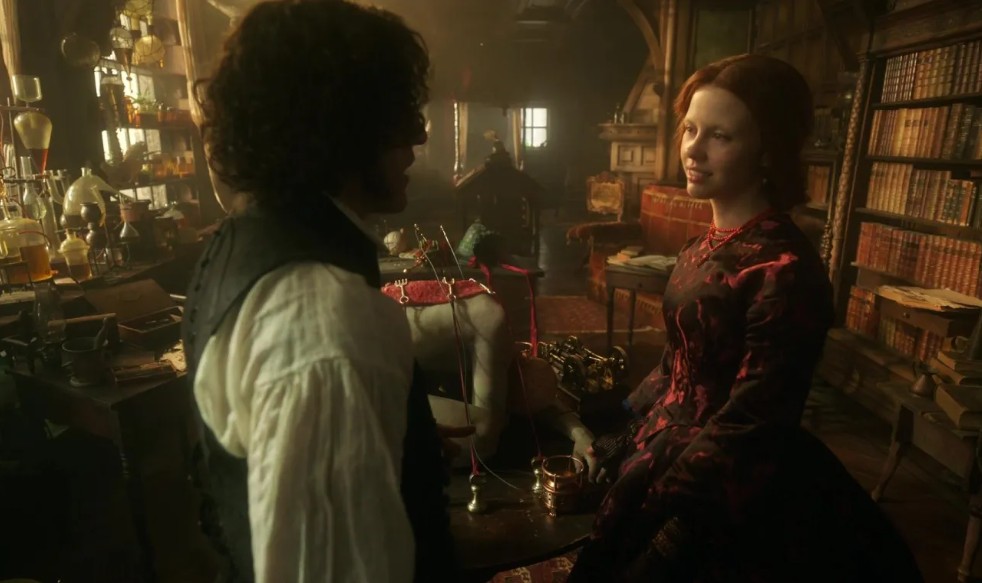
You want to be, but believing something doesn’t make it true.

Image: Netflix

Elizabeth’s first glimpse of The Creature is shocking. She sees a man in chains, with terrible wounds all over his body. He’s clearly different from anyone she’s ever beheld. She responds to his vulnerability and pain—her first words to him are, “Who hurt you?”  

When she returns shortly with William and Victor, it’s clear that Victor is not taking care of this child. He calls him “it” and says the chains are for his own protection and The Creature’s, because “He doesn’t know any better.” Just like a baby.

And he is, at first—scared of the sun, grabbing the razor like a curious baby, rattling the chains Victor puts on him like it’s a game, and playing with the water in the basement sluice like a baby in the bath. Victor tells Anderson, “Everything was new to him.”

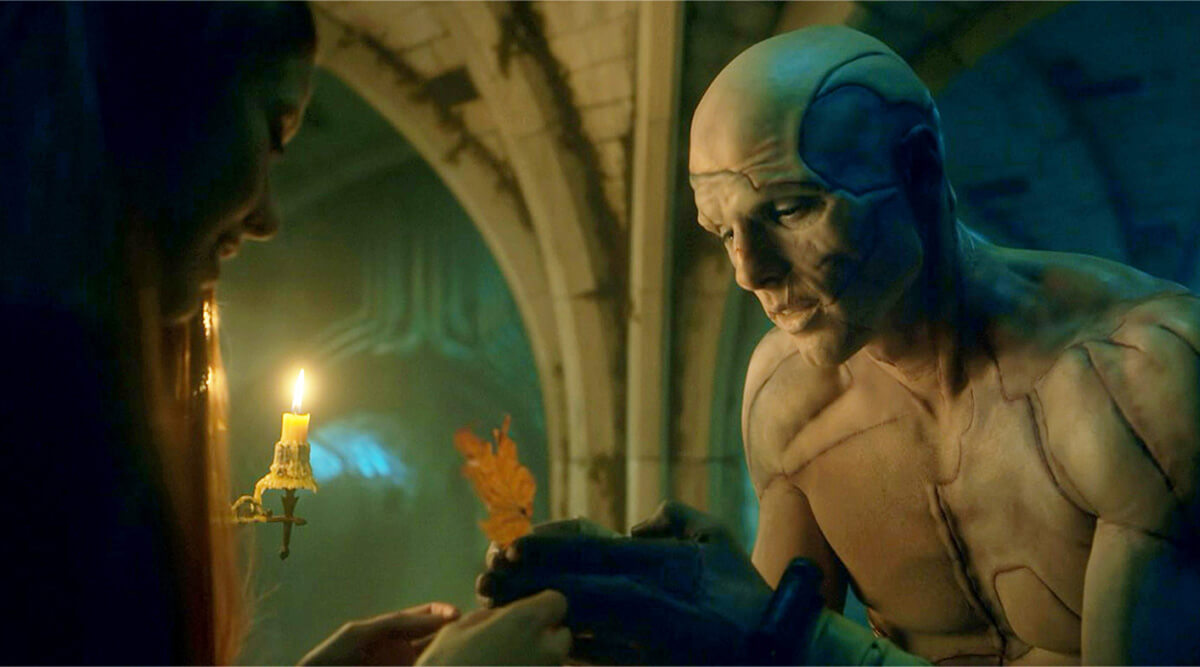
On her third visit, alone this time, Elizabeth relates to him as though he’s a small child. He gives her a leaf, and she responds, “A leaf? For me? Thank you!” Her tone is that of a mother thanking a three-year-old for giving her a flower. She continues in that tone when teaching him her name.

Then, when she goes upstairs, Victor is there, lounging with his robe half open . . . looking all sensual . . . what was I saying again? Oh right!
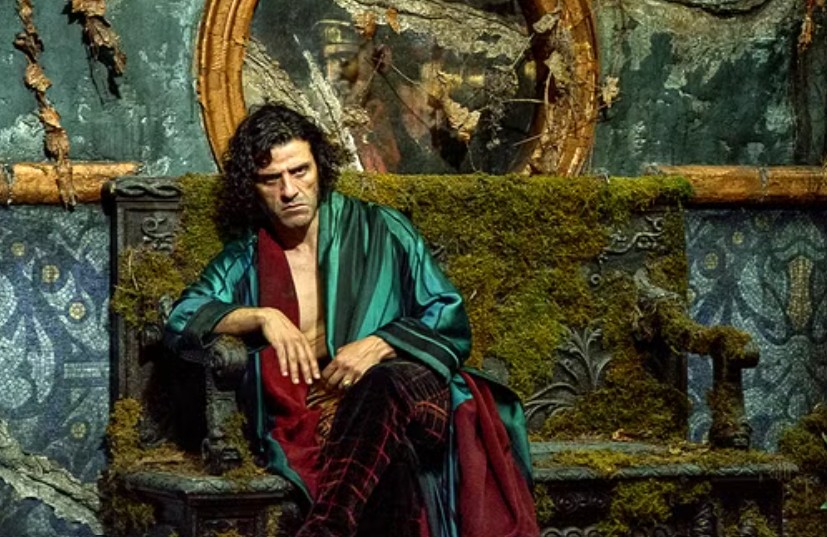
Victor may be an ass, but broody Oscar Isaac is HOT AF.

Image: Netflix

Victor is oriented to the flesh. His research centers around the body, and he’s very grounded in sensuality and his attraction for Elizabeth. Of course the first thing this man would think is that Elizabeth is attracted to The Creature. It’s pure projection on his part. And he’s jealous. She’s not tiptoeing around the tower in a nightie to visit him.

Elizabeth’s nature is of the spirit – she’s very pious despite her interest in science. The dissection reminds her of a “martyrdom painting,” i.e., religious art, and she sees God in the symmetrical structure of the spinal column. She just came out of a convent to marry William. Young Catholic women were often sent to convents to strengthen their religious education because Catholic schools were not legal at certain points in English history, and they would someday be guiding their children in the faith. The families paid the convents for boarding them, which helped keep them afloat.

When Victor accuses her of basically wanting to bang his boy, she says no very emphatically. She talks about purity of soul, that God may have breathed directly into the flesh Victor animated, etc. During the updated Victorian period in which del Toro set the film, twenty years into Queen Victoria’s reign, children were still seen as exploitable resources. It wasn’t until later that childhood began to be revered, and they gained status as people in their own right. Elizabeth, who has already expressed progressive views, is ahead of her time in seeing the innocence and purity of this unusual child.

The Creature looks very newborn and angelic in their previous scene as well – he’s bald, his skin is pale and glowing, and his expression is one of wonder and curiosity. If Elizabeth had lived and had children with William, I think she would have viewed her babies the same way.
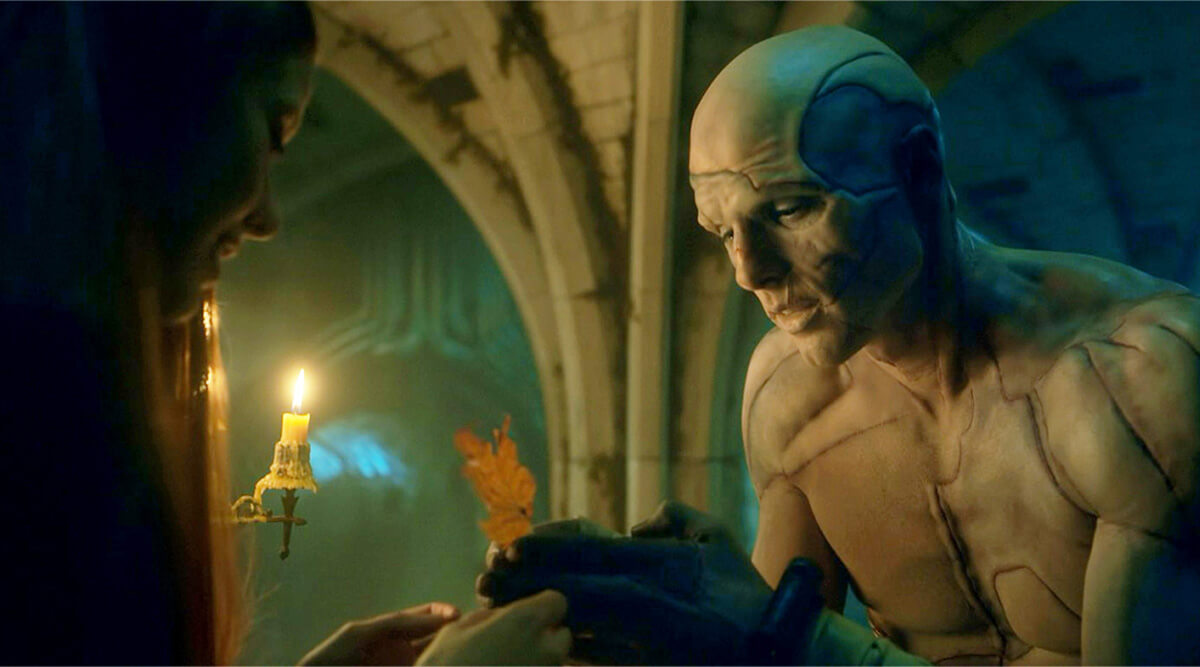
It is a love story, but it’s the love of a mother.

Image: Netflix

At her death, Elizabeth tells The Creature (I hate calling him that; his name would be Adam if Victor had even bothered) she realizes that she didn’t belong in the world. She was looking for something more elevated, and she found it with him. Not as a lover, but as pureness of soul, something finer than the earthly. Their connection hinges on seeing that in each other—he is untouched by the world, and to him, she’s just love. She’s the only person who ever treated him kindly except for the blind grandfather. It’s selfless like the love of his only friend, a maternal, caring love.

del Toro has been obsessed with this story for decades. There are references throughout the film to both the book and other adaptations. Victor and Elizabeth being a couple (novel) and the dual roles (Elsa Lanchester played Mary Shelley in The Bride of Frankenstein as well as the female creature), The Creature’s long stringy hair (novel) and his oversized, shapeless coat (Charles Ogle as The Creature in Thomas Edison’s 1910 silent film—watch it here), and too many others to mention. And good for you if you spotted that the sleeves of Elizabeth’s wedding dress look like the bandages on Elsa Lanchester’s arms in Bride. A nod is not an interpretation, however, and love is not confined to the romantic sphere.

If you want to read the book, it’s in the public domain. You can download it for free at Project Gutenberg here:  Frankenstein by Mary Wollstonecraft (Godwin) Shelley

Guillermo del Toro’s Frankenstein: The Disabled Child

**WARNING!!!! THIS POST CONTAINS MASSIVE SPOILERS FOR FRANKENSTEIN. DO NOT READ UNTIL YOU HAVE SEEN THE MOVIE!**

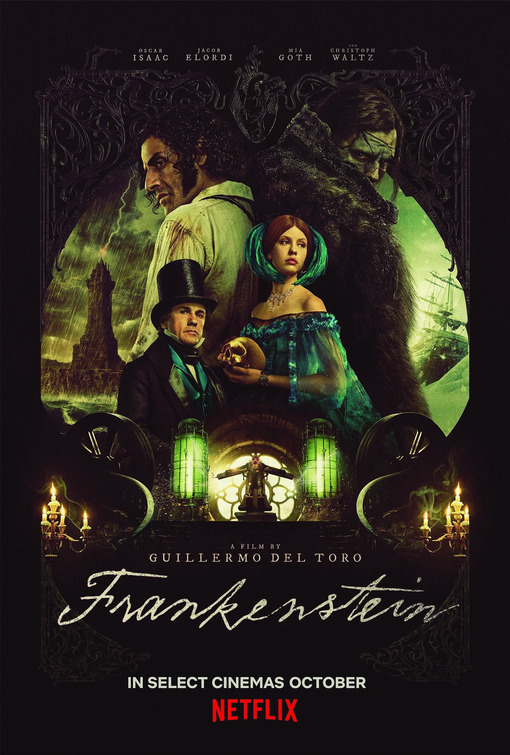
Poster for Guillermo del Toro's 2025 film Frankenstein, a Netflix film, showing a montage of the main characters. At the bottom it says "In select cinemas October, Netflix."

Poster designed by Empire Design

If you haven’t yet seen Guillermo del Toro’s Frankenstein on Netflix, drop what you’re doing right now and go watch it. I’ll wait.

Now that you’ve dried your tears (you did cry, didn’t you? Of course you did!), let’s discuss this seminal tale that set standards in the Gothic and science fiction genres that still persist to this day.

One element in this new Frankenstein that particularly stood out to me was how Victor rejects The Creature not because he’s a cadaverous monstrosity as in the book — this iteration is delicately beautiful — but because of a perceived intellectual disability.

del Toro has created a masterful adaptation of Mary Shelley’s 1818 novel. He updated the time period and changed the plot somewhat, but the themes of parental abandonment and the misuse of power and knowledge remain intact. His horror films are always sympathetic to the monster – the outcast, unwanted and discarded – and to the pain inherent in being different in a society that neither understands nor seeks to do so.

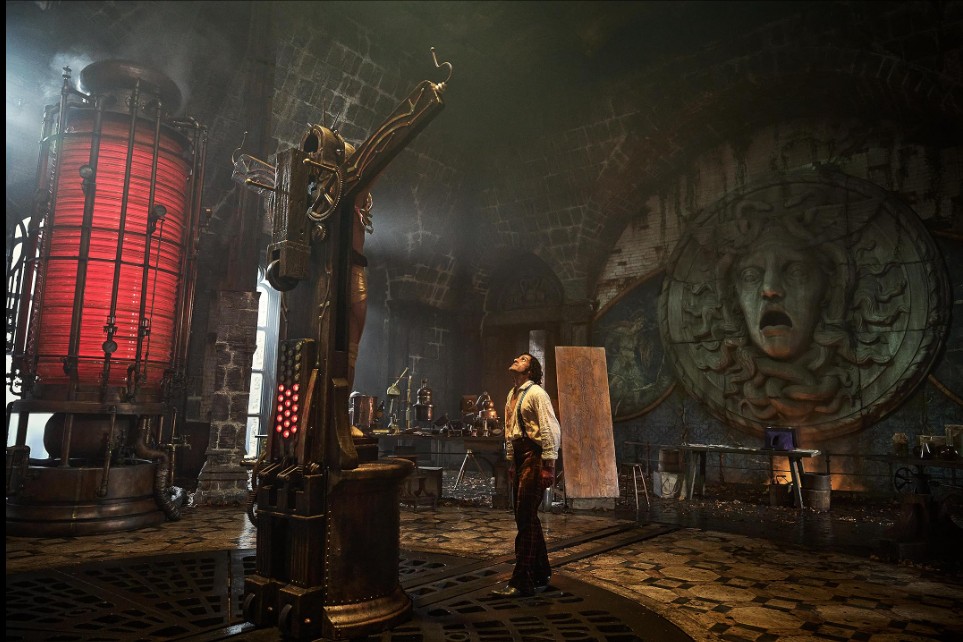
The movie is a visual feast for the eyes. Victor’s laboratory is a pure mix of Gothic and steampunk, and the ship on which he is rescued at the beginning feels real because it IS real. del Toro’s penchant for practical effects and fully constructed sets looks far better than CGI and must be a wonderful tactile experience for the actors. A lush score by Alexandre Desplat makes you feel all the feels right along with them.

Victor Frankenstein stands beneath a cruciform apparatus for bringing his creation to life. The room is circular, dark, and imposing, with a massive stone carving on the back wall and at left, a huge metal and red glass cylinder - the battery by which he will harness the lightning's energy.
Look at this laboratory. LOOK AT IT.

Photo: Netflix

In Shelley’s novel, Victor Frankenstein is a student in pursuit of a curriculum he can no longer hope to attain at school. His quest for artificial life takes into account all that science has to offer, but the ethics of what he is doing don’t seem to penetrate: 

I doubted at first whether I should attempt the creation of a being like myself, or one of simpler organization; but my imagination was too much exalted by my first success to permit me to doubt of my ability to give life to an animal as complex and wonderful as man….my operations might me incessantly baffled, and at last my work be imperfect, yet when I considered the improvement which every day takes place in science and mechanics, I was encouraged to hope my present attempts would at least lay the foundation of future success.

Frankenstein, or the modern prometheus, by mary shelley

In the film, Victor (Oscar Isaac, amazing as usual) embodies this attitude by behaving like a modern tech bro, an arrogant know-it-all, with no thought to the possible consequences of his actions. He even makes a play for Elizabeth, his brother’s fiancée. Victor was forced to learn medicine from his domineering physician father, who wants a boy just like him, a veritable mini-me. He finds refuge with his French mother, Claire, but she tragically dies when brother William is born. The seeds of his terrible parenting are obviously sown.

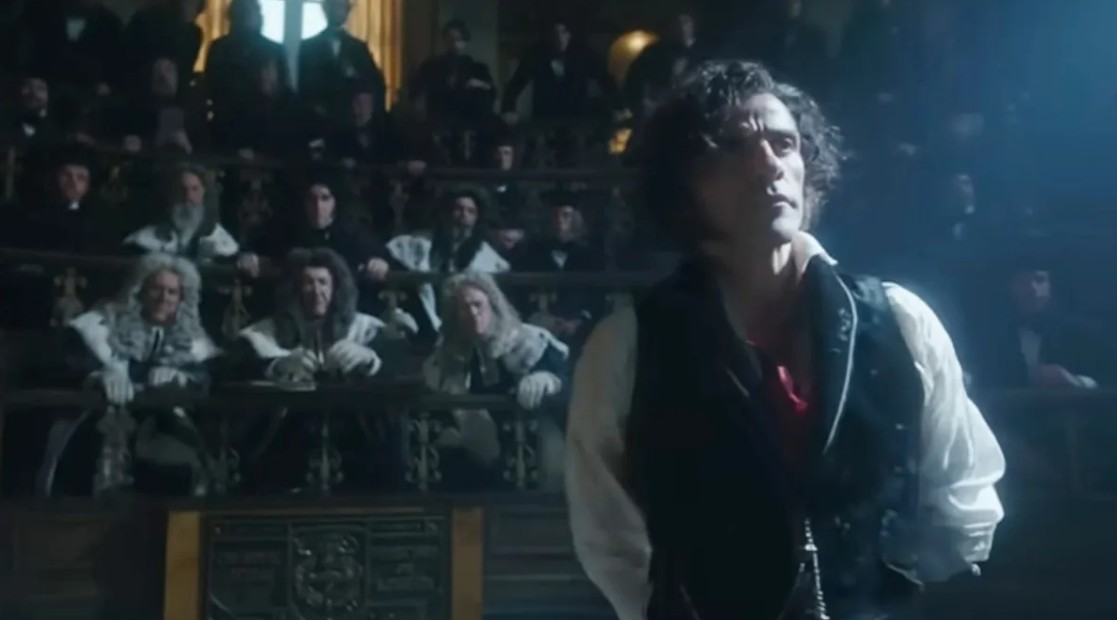
An unflinching scene where Victor demonstrates the animated fragment of a corpse fails to deter his hubris even when he’s thrown out of the Royal College of Surgeons for his gruesome research. Who gave him permission to take this body of a shopkeeper? I doubt the family knew he would do THAT with it.

A defiant Victor Frankenstein stands in front of a tribunal of skeptical and concerned medical professionals in old-fashioned white wigs.
“Yuck” seems to be the general reaction.

Photo: Netflix

The addition of sketchy financing by Henrich Harlander, a wealthy arms dealer and former surgeon, played by the always delightful Christoph Waltz (you know him best as Hans Landa in Tarantino’s 2009 film Inglourious Basterds), cements Victor’s fate. The ethics are way out the window by this time.

Book Victor dreams of his creation’s physical perfection. This is shockingly thwarted; his efforts to engineer his child as beautiful fail to take into account the poor quality of his materials (Shelley never actually says he’s built from corpses). Upon beholding the abomination he has created, he flees.

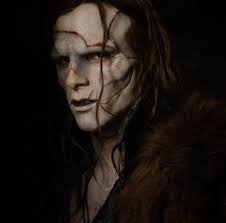
del Toro’s film flips this element of the book while still keeping Victor’s revulsion intact, though for a different reason. Movie Victor makes a point of seeking out bodies that are relatively fresh. The Creature, played with heartbreaking nuance by Jacob Elordi, is physically proportionate to his looming height (Elordi is 6’5”), and despite scarring that makes him look like a walking anatomy lesson, he is an attractive being.

The Creature in Guillermo del Toro's Frankenstein. He is a handsome man but unnaturally pale, with numerous scars across an unhappy face and long stringy dark hair.
Cue a million erotic and angsty fanfics on Tumblr.

Photo: Netflix

The handsome actor is nearly unrecognizable in prosthetics and makeup and still gives a performance that is already garnering awards buzz. Netflix released the film for a limited run in theaters to qualify for Oscar nominations, and I suspect Elordi will get one. He puts me in mind of another del Toro muse, Doug Jones (Amphibian Man in the director’s 2017 romantic fantasy The Shape of Water), who has never been nominated but should be.

Like many new parents, Victor is at first enamored of his child. Newly minted, The Creature is literally a baby. In a scene where Victor shaves the fragments of his scalp that actually grow hair, he reaches for the discarded razor EXACTLY as a curious baby would. He cuts himself, and Victor discovers his healing ability. He’s done it! Immortality!

However, the baby doesn’t intellectually progress fast enough for his impatient father, and the caring ceases. When he can’t say anything besides his dad’s name (honestly, the egoism!), Victor beats him and relegates him to the basement in chains. The one person who should love him wants nothing to do with him. He doesn’t even bother to name him.

The Creature, bald and naked but for bandages on his arms and a sort of underpants garment, crouches in the woods holding a mossy skull.
Contemplating a skull in the woods. Who, or what, am I?

Photo: Netflix

The Victorian era in which del Toro set his adaptation saw an explosion in the institutionalization of disabled and mentally ill people. This persisted well into the twentieth century. We still do this to kids with behavioral problems despite the constant exposure of abusive boot camps and reform schools.

Visibly disabled people are still portrayed in media as either monsters (the woman in the basement in Barbarian), mystics (Ruben the oracle child in Midsommar), or objectified as exceptional to make abled people feel good, a trope often referred to as inspiration porn. And disabled characters are mostly played by actors who are not disabled (NOTE: I don’t include Elordi here because I’m discussing one possible interpretation of the movie, not an intentional choice by the director).

Film Elizabeth is Harlander’s niece. Unusual in her outspokenness in an age when women were expected to keep quiet, she is the only one to actually see The Creature as a person. It’s worth mentioning that women who failed this basic test of femininity—that is, keeping their opinions to themselves—were often branded as “insane” and confined in their homes or relegated to the asylum.

Some articles have said the connection between Elizabeth and the Creature is romantic, but is it? It looks more like mothering to me. (The same actress, Mia Goth, plays both Elizabeth and Claire.) Literally the first thing she says to him is, “Who hurt you?”

In the basement, the Creature hands a dried leaf to Elizabeth, who has come down to see him.
The Creature gives Elizabeth a leaf.

Photo: Netflix

Clearly he touches her heart; like a mother whose toddler bestows a flower picked by a grubby fist, she keeps the leaf he gives her to her dying day. (Of course she dies. Women are always pain fodder for men, it seems.) Both Victor and The Creature lose their mother figures through the vagaries of their fathers.

Elizabeth’s tragic death is preceded by a conversation where Victor is emphatically disgusted by the idea of his disabled child reproducing. (Eugenics, anyone?) The Creature demands a companion, but Victor says no. Playing God aside, Victor has committed a more grievous offense; he has failed to accept his responsibility. He will die, but his offspring can’t. He’s ready to condemn him to an endless existence as an outcast, alone.

A spurned and neglected child, the creature in Shelley’s novel becomes angry, and a frightening juvenile delinquent is born. He lives in revenge of Frankenstein, destroying everything he loves. The child, who has not matured (and is not immortal), is nothing without the parent and goes away to die alone in a frozen wilderness. Book Creature finds no reconciliation with Victor in the end (although he does share his tale of woe). He who had professed such hatred for his father, upon learning of his death, is grief-stricken:

“Oh, Frankenstein! Generous and self-devoted being! What does it avail that I now ask thee to pardon me? I, who irretrievably destroyed thee by destroying all thou lovest. Alas!  He is cold, he cannot answer me.”

frankenstein, or the modern prometheus, by mary shelley

Fortunately for our throbbing, broken hearts, del Toro allows his Creature to grow. He’s able to be with his father at the end, forgive him, and embrace his life as it is (we hope). He is no longer a child. The director has said the moment when The Creature faces his maker is akin to when a child is able to confront a parent.

“The first part of the movie is told from the point of view of the scientist, Victor,” del Toro says. “And the second part is when your kids come to you and say, ‘This is what you did wrong.’ And you have an epiphany, and you go, ‘That’s right.’”

Quote from Dissect the Emotional Ending of Frankenstein by John Dilillo (Tudum: Netflix)

When children are not given the love and care they need to thrive, they wither. Among disabled children and adolescents especially, rates of violence and neglect are higher than those of abled children. Disabled people face numerous barriers in society—they’re less likely to be employed, earn less, and the restrictions they face when trying to obtain services can be draconian. Discrimination persists despite the passage of the Americans with Disabilities Act (ADA) in 1990.

One wonders exactly how del Toro’s Creature will live. By the end of the film, forgiveness has given him a new start, but whether he can make something of it in the unforgiving world is up for debate. He’s learned to read and speak eloquently, but he will always be different. Those who look at him and see his soul and not his scars will still be few and far between.

I sincerely hope that, instead of an unnecessary and likely weak sequel, the movie sparks a conversation about what it means to be accepted in a society focused on the relentless pursuit of narrowly acceptable perfection through surgical and chemical means, and the illusion of it by removing representations of diversity as well as the actual people who embody it.

“An idea, a feeling became clear to me. The hunter did not hate the wolf. The wolf did not hate the sheep. But violence felt inevitable between them. Perhaps, I thought, this was the way of the world. It would hunt you and kill you just for being who you are.”

-The Creature, Guillermo del Toro’s Frankenstein (2025)

NaNoWriMo 2019: And Here We Go

Happy Halloween and NaNoWriMo 2019 Eve!

I’ll post a word count, etc. every day during NaNoWriMo. Posts may be short, especially during the first week, since I’m moving and hopefully at least temping while I continue the job hunt in a bigger market.  

It bugs me that I didn’t make more progress on editing Book 2 this year. I got distracted by the conlang and life things. I decided to proceed as if nothing will happen with Pitch Wars and Tunerville. While I will be disappointed I’m not selected, writing New Book will undoubtedly take my mind off it for a bit.

The advice “Write what you want to read” has produced some really amazing works. I mostly read genre fiction. I’ve been struggling to land on a type in which to specialize. When I decided to get serious about my writing, I originally intended to do whatever I wanted, regardless of genre. No restrictive branding slots for me!

Of course, publishing and marketing don’t work that way. Bookstores have categories, and if you do well in one, you tend to get locked into it. Only huge success a la Stephen King allows you to break out and write whatever and still make money, and even then, you’ll have readers who eschew any non-conforming works.

More skeletons, please.

Image: Goodreads

For the record, I’m a die-hard SK fan who really liked Joyland.

While I enjoy literary fiction, I’m not sure it’s best for me as a writer. Secret Book, despite its ignominious end as a trunk novel, taught me how to elevate my writing. It contains some of the best prose I’ve ever produced, even if the premise was cringingly awful. My grad school writing professor, a Mark Twain scholar, told me that no time spent writing is wasted, and she is right.

Neither is time spent reading. Even as an unpublished writer, I get questions from non-writers about craft, and the two things I emphasize most are writing (butt-in-seat!) and reading. Although there really are no new stories, there are as many ways to write them as there are writers, and reading will fill your inspirational well. If you read widely, you’ll see what works and what doesn’t.

If you’re a screenwriter, you must watch movies (and read scripts). It does not matter what kind. Despite what certain directors have said recently, there is value in all cinema.

Speaking of that, I just want to disavow people of the notion that comic books, horror films, and comic book films can’t be recognized as fine art.

Some of the most beloved classics are fantasy. Peter Pan, The Lord of the Rings, Alice in Wonderland . . . I’m sure you can think of some. Frankenstein, or The Modern Prometheus is arguably science fiction but I had it twice in college. 

Where’s the love for me? I’ve never been out of print since I was published in 1897!

Image: Wikipedia (public domain)

When Peter Jackson’s adaptation of The Return of the King won 11 Oscars in 2004, including Best Picture, I cried. It was the penultimate film from a book that has set a nearly unsurpassed standard for the high fantasy genre, a film with elves and orcs and hobbits and dwarves and all manner of beasties, with a villain who is nothing more than an immense, ever-open eye. I cried because it was like the opening of the Black Gate in real life, behind which the books and movies we loved were dismissed and imprisoned.

And it’s given us movies like Avengers: Infinity War and Endgame. Story arcs with iconic and beloved characters like Captain America and Iron Man, whose actors can play them with depth and nuance because the writers want us to see them that way and there’s room now to do it.

No longer are comic books a joke; now they’re winning Oscars for costume design and music (Black Panther, in 2019), and even acting. Heath Ledger’s posthumous award for playing the Joker might have seemed a nod toward the tragic cutoff of a promising career, but it absolutely was not. Anyone who saw The Dark Knight knew they were watching a darkly brilliant performance, and it didn’t matter that he played a comic book character.

To be fair, Martin Scorsese has a point in that Marvel’s dominated the movie house to the point where indie-style pictures can’t get greenlit easily or at all. Publishers have behaved similarly in blowing off new and midlist authors for fiction with mass-market appeal, because publishing is a business, after all.

Looking at my past works, I see speculative elements in every one of them (with the exception of Rose’s Hostage, another trunk novel). Very well then. Tunerville and Book 2 are urban fantasy, with ghosts and portals but set in the real world. It leads to you didn’t think I was actually going to tell you what happens, did you?

Now I shall try my hand at a full-on fantasy.

It may be a complete failure, but as my professor said, it won’t be a complete waste of time. Since these genres have become commercially viable, that gives me hope. Writers who enjoy fantastic fiction have a shot. But we still need to be true to ourselves, even while hoping it hits that sweet spot leading to publication and even moderate success.

We want to write it, and we want you to be able to read it. That’s a worthy reason to keep doing this. To everyone participating in NaNoWriMo, good luck!

NaNoWriMo 2018 Day 24: 753 Words Left!

CHECK IT OUT. 3,299 words this afternoon and evening. 

I’m so close it’s not even funny. And there are six days left. The book is two-thirds finished, by my reckoning. I should have it done sometime before Christmas, if I bust my ass between now and then. 

I bought Ant-Man and the Wasp and Beetlejuice for my movie collection, and I’ve rented Rememory with Peter Dinklage. Since I finished for the day well before midnight (!), I shall watch one of them. 

Speaking of movies, you need to see Loving Vincent, if you haven’t already. 
I saw it at the cinema and loved it. It’s a sort of mystery set around the events of Vincent van Gogh’s death. The movie stars Douglas Booth, Chris O’Dowd, Saoirse Ronan, Eleanor Tomlinson, and features Polish actor Robert Gulaczyk as Vincent.

Artists animated the film by hand with hundreds of paintings, and visually, it will blow you away. It’s available for rent on YouTube for $1.99. Here’s a link. I think you’ll like it. 

NaNoWriMo 2018 Day 13: Not Today, Satan

Job hunting stuff this morning. I took a break tonight to watch Outlaw King, the Netflix original historical film about Robert the Bruce. 

Image: Netflix / TIFF / The Hollywood Reporter 

The film stars Chris Pine, of Star Trek fame. But the reason everyone’s been talking about it is that Pine appears completely nude in it. Yep, full-frontal. Granted, it’s brief, but it’s definitely there. 

The reason the Pine Peen is important is a basic one; for decades, women have bared it all in films, but we rarely see the men do it. Ben Affleck did it in Gone Girl (and apparently Neil Patrick Harris did too; I haven’t seen the movie).  28 Days Later opens with a naked Cillian Murphy in the hospital. And who could forget Dr. Manhattan’s blue dick flapping around in Watchmen


That last one was digital, but hey, we’ll take what we can get. 

The film was watchable; it started out a little dry, but it got more interesting as it went along. If you’re a fan of medieval battle scenes, you’ll like it.  I admit interest in seeing the dong scene (hey, I’m human!) but I probably would have watched it anyway. I like Pine and I like period films. I think it could have been a little more emotional. It didn’t have the depth of Braveheart, but they did an okay job.

Anyway, I’m glad to see the men getting on this bandwagon. Why should women be the only ones? As Lea Palmieri points out in this Decider article, nobody gets excited about topless scenes because they’re just too common. It’s time for the men to join in. 


Book 2 is going as well as I can expect for a first draft. I’m working off an outline, but the best times are when characters do whatever they want to do, and stuff happens that didn’t occur to me. I haven’t written a whole chapter in one sitting, like I did yesterday, for a long time. Felt good. 

Tunerville is urban fantasy, and while some characters did step out of their familiar world, they didn’t go as far as you’d expect. This time is different. I’ve got some multiverse stuff going here, and it’s tough. You really do have to make up EVERYTHING. Worldbuilding is hard. But it’s fun. 

Back to it tomorrow. 

Sorry, I’ve Been Away Fighting For Your Rights and Let’s Talk About Revision

*peeks*

U up?

If you follow me on Twitter, you know I’ve been spending a ton of time there tweeting about voting, Brexit, and kittens, oh my! It’s hard to think about anything else right now. Every day brings us more crazy.

In addition to that, I’ve been job hunting. Still nothing there. I’m still halfway between overqualified and underqualified for just about everything, as well as trying to figure out how to make a career change with my old pal dyscalculia. But enough about that

Been busy with this, too. Go see it before it’s out of cinemas or I will disown you.

Let’s talk about revision!

Tunerville has been copyedited a total of fifteen times. I’ve had three beta readers and two editors (thank you omg, free copy for sure). It’s the latter I want to talk about.

You may think your manuscript doesn’t need a professional look-see, but you’d be wrong. Writers who aren’t working with a publisher, you need to budget in professional editing services if you can (or furiously cultivate some friendships and your network). You cannot properly edit your own work. You just can’t. You’re too close to it.

“In writing, you must kill your darlings,” said William Faulkner, Stephen King, and this glaring white-tailed sea eagle. Believe them.

Image: Phil_Bird / freedigitalphotos.net

I just finished a massive revision of Tunerville on the advice of Editor #2. And I mean massive. We’re talking major restructuring, the painful but necessary killing of many darlings, rewrites, and even brand new scenes. I went in with a plan; it took two weeks of intense and focused work.  

Despite how exhausting it was, I LOVED IT. I love editing. I love rewriting. If you’ve been with me for a while, you know I hate writing first drafts. I wish I could just download my brain. Yes, of course my dream is to do this all the time. And to secretly be an Avenger. A grad school wisely teacher told me no amount of writing is wasted. So even if something is less than perfect, you will learn from every mission. Every encounter with an Infinity Stone will exponentially increase your power. Oh sorry, I mean every time you sit down at the computer. 

Is it better? I hope so. I probably won’t hear back until the end of August, but in the meantime, I have a lot of other work to do — and hopefully actual work to do. Unemployment is not a vacation.

Book 2 has commenced. I’m mulling over whether a grand overhaul of Secret Book is even worth it. I have two other books in notes stage. A garage sale is in the offing, in case I have to move. I’m still resisting (online, even if I can’t travel to marches).

Meanwhile, please enjoy the smooth beauty of this heirloom tomato. I grew it myself. And check your voter registration. We outnumber them, but it only works if we show up at the polls in November.

Cherokee Purple variety, if you please. A fine tomato for fresh consumption.

*shameless plug*

If you haven’t yet read my short story collection, hop on over to the Buy Me! page of this blog and download a copy for only 99 cents. Bought it and liked it? Share the link!

*addendum*
For a friend who is hotly anticipating Avengers 4 along with me because more Cap and Bucky.  :)

Molly Ringwald’s New Yorker Piece on John Hughes is Right, and Here’s Why

Recently, Molly Ringwald, a member of the popular 1980s “Brat Pack” group of young actors, wrote a piece for The New Yorker where she analyzed watching some of her old films with her daughter, notably the John Hughes vehicles that made her a star.

Ringwald rightfully pointed out how Hughes altered the face of teen films. To paraphrase, until then, actors playing teens were older; the everyday aspects of their lives were not given focus; female characters had no real efficacy. Hughes changed all that. His films were popular, funny, engaging, and those of us who watched them could identify with the characters. We saw ourselves on screen — our fears, triumphs, and foibles.

She also noted how uncomfortable it made her to view these films in the current #MeToo atmosphere. In particular, the sexually aggressive and harassing behavior of the John Bender character in The Breakfast Club could be grounds for a lawsuit today. In the film, it’s played for laughs, and Claire, Ringwald’s character, responds positively to it in the end. In Sixteen Candles, Farmer Ted’s deal to return a classmate’s pair of underpants for a chance at an unconscious (and non-consenting) woman is equally problematic in light of our newly awakened sense of how women in 2018 are still treated as if they aren’t quite human.

Sexy anti-hero and “criminal” John Bender, played by Judd Nelson.

Image: thebreakfastclub.wikia.com

In those days, behavior like Bender’s (and in real life, Harvey Weinstein’s) was ubiquitous. Pushback was rare. Nobody talked about consent. In most of these films, men, or boys, did have all the power. The female characters existed as a means to an end (status) or offered an end in themselves (the quest to get laid as seen in Porky’s). Getting the girl one had a crush on was a major achievement that implied a woman can be acquired like a coveted object or trophy.

I think Ringwald made a good case for viewing these things as debatable. They always have been, but for some reason, perhaps self-preservation or internalized misogyny, many women who grew up during that time did not view them as such. I’ve already seen pushback on her article in my own circles. A notable example came from a male writer I know, who stated that he saw Hughes’ portrayals of teenagers as semi-authentic for the time, and that Ringwald doesn’t speak for everyone.

Of course, they were authentic. And Ringwald does point that out. But when does nostalgia become a reason to dismiss acknowledgment that these characters exhibit attitudes we no longer wish to entertain? Society evolves and the things we took for granted then absolutely should make us uncomfortable now.

I have the same feelings as Ringwald when I read some young adult (YA) literature from that era. In my own personal library, which contains a large amount of YA and children’s literature largely because I have a horror of discarding books, I had one from a library book sale called A Different Kind of Love (1985)Protagonist Elizabeth, nicknamed Weeble, is a fourteen-year-old girl in a single-parent family whose visiting uncle’s affections become inappropriate.

Author Michael Borich deals with something we don’t often think or talk about when discussing child molestation — that being touched and held and in turn, loved, feels good. That it’s possible for a child who is being victimized to have affection for an abuser. And that abuse often comes from people we feel we should trust or love, and how difficult and confusing that can be for victims, and why it’s so hard for them to speak up.

Reading it did make me squirm, mostly because the adults, though concerned, are so blasé about the situation. At the time of publication, teachers were not mandated reporters, so a trusted educator in whom Weeble confides does nothing more than advise her. Her mother kicks her brother out of the house (good), but no one calls the police. And though Borich declines to explore it, the mother’s first reaction is a common one in molestation cases where a family member is involved: disbelief.

Though some might think dated materials can be safely retired, I think it’s fine to use them for a larger discussion. I did end up ultimately discarding the book in the interest of space. But in my mind, I’ve moved forward from that time along with society. I know if I have children that talking to them about Weeble’s confusing feelings and the proper adult reactions, whether I use her as an example or not, would have to be part of that particular discussion.

And I would let them watch Hughes’ films, once they’re old enough to understand and talk about them. Ringwald makes mention of racism and homophobia in Hughes’ writing; it’s there, and it’s obvious. Hughes was both progressive and backward, and this uneven dichotomy shows glaringly in his treatment of exchange student Long Duk Dong in Sixteen Candles.

Yes, Long Duk Dong was a horrible Asian stereotype. Even his name is a racist joke. In contrast, we have his sexy girlfriend Marlene, a character referred to as “Lumberjack” (Deborah Pollack) because she’s taller — and thus less desirable — than the prom queens. Lumberjack is athletic, strong, and confident. She takes no shit and goes after the boy she likes. She’s also affectionate and in touch with her desires. She’s the best character in the film.

Debbie Pollack and Gedde Watanabe in Sixteen Candles (1984)

Image: imdb.com

I can’t blame Gedde Watanabe for playing The Donger; at the time, few non-caricature roles for Asian actors existed.  Despite this and Samantha’s father referring to his oldest daughter’s fiancé as “an oily bohunk,” a slur used to refer to people of Hungarian or Slavic descent, I don’t think these films should be binned. In addition to Lumberjack’s positive portrayal, the targeted audience of this film found much to identify with in Samantha’s family dynamics and her attempts to navigate a crush on the cutest boy in school.

In closing, Ringwald writes:

John wanted people to take teens seriously, and people did. The films are still taught in schools because good teachers want their students to know that what they feel and say is important; that if they talk, adults and peers will listen. I think that it’s ultimately the greatest value of the films, and why I hope they will endure. The conversations about them will change, and they should. It’s up to the following generations to figure out how to continue those conversations and make them their own—to keep talking, in schools, in activism and art—and trust that we care.

My writer friend can discount the misogyny in Hughes’ films because as a man, he never had to deal with it. We’re not too disparate in age and we both grew up with these attitudes. It took time for me to parse my own internalization and discard them. I still enjoy the films too and I understand where he’s coming from. It’s hard not to romanticize the past, but we also have to recognize the tarnished aspects of it.

Ringwald’s instinct to watch her films with her children is a good one. So is her desire to initiate a discussion involving the elements that have changed or evolved over time. No, we no longer feel that sexual harassment is funny or entertaining. Yes, you’re right to feel uneasy about it, and here’s why. If kids today can recognize that when they watch the films, and parents are engaging them on these topics, then we’re on the right path to a more respectful society. John Hughes’ films can serve as a tool to get us there.

I Saw the New IT Film and I Bloody Hated It

WARNING!!! THIS POST CONTAINS MAJOR SPOILERS FOR THE 2017 ADAPTATION OF STEPHEN KING’S IT.

Today, I took advantage of an Alamo Drafthouse $6 ticket price special for shows before 2 p.m. and I chose IT. Well, the chicken strips were good, anyway.

Everyone knows I’m a huge Stephen King fan, and I had high hopes for this film. I really did. Special effects have grown leaps and bounds thanks to CGI since the first TV adaptation. And they really nailed the look of Pennywise (Bill Skarsgård). That made me think it might be worth seeing.

Silver suit–check. Orange pompoms–check. Malevolent smile–check.

Image:  youtube.com

Alas, it was not to be. Instead, I got an overblown, shallow version with myriad jump-scares that didn’t even make me jump.  Not once. In short, it was shit.

Stephen King’s novel is a behemoth at 1,138 pages. There is no way you could do it all in one film, and this is the first of two. The filmmakers wisely chose to put the kids in the first film and save the grownups for Chapter Two.

The children’s section of the book is set in the 1950s. Characters have 1950s names – Richie, Beverly, Bill, Stan, and Betty. Obviously when these kids grow up, they’re adults in the 1980s.

The kids’ period has been updated to the 1980s. Kids then had names like Matt, Jennifer, Shelley, Daniel, Becky, and Kenny. Of course, millennials wouldn’t know that, but anyone old enough to have read the book when it came out absolutely will notice. Though not a huge problem, it lends a jarring note to the film’s atmosphere.

I blew that off and kept watching.  Didn’t take long before I started to squirm in my seat. It physically hurt to watch them gut the story. I recognized moments from the book as they began, and then they shot off track into unknown and ridiculous territory.

The deviations robbed many of the story’s most powerful moments of their punch and skimmed the surface of the characters. Sloppy writing and contrived dialogue (there is TONS of great dialogue in the book; they should have used it) only made it worse.

In the novel, each kid has a separate encounter with It before they are drawn into the Losers Club. These scenes establish not only the kids’ characters but the monster’s (it’s a shape-shifter, and clever).  Only Beverly, Bill, Stan, and Eddie get to do this. We lose Mike’s giant bird, and Richie’s narrow escape from the big plastic Paul Bunyan statue.  Paul appeared in the background of a scene and I got super excited when I saw him; then he vanished for the rest of the film.

HI RICHIE! Wait–what? I only get a cameo? Well bust my buttons and call my agent!

Image: northumberlandnews.com

The dead boys at the Derry Standpipe who chase a horrified Stan Uris (Wyatt Oleff) become instead a misshapen painting in his rabbi father’s office. It’s inspired by something that scared the film’s director; it had nothing to do with the book, mind you. Like most of the film, actually.

Other choice missteps:

  • Mike Hanlon (Chosen Jacobs) is still a farm kid, but now an orphan. They barely spend any time on him before he joins the Losers Club. The adult story hinges on Mike, and they should have plumbed his character more here.
  • George Denbrough dies in the same way at the beginning of the film–Pennywise tears his arm off. Pretty awful, right? A kid getting his wing ripped completely off! He screams, he bleeds–and then the clown yanks him down into the storm drain and eats him. Not only is this anti-climactic (yes, really), now big brother Bill’s (Jaeden Lieberher) motivation changes from white-hot revenge to the anemic “Georgie isn’t dead; he’s only missing. We have to find him.”
  • Ben Hanscomb (Jeremy Ray Taylor) is still fat, but he looks a good two years younger than he should. Ben was supposed to be a BIG fat kid, not a teeny fat kid. His tormentor, bully Henry Bowers (Nicholas Hamilton) also looks far too young and isn’t really all that menacing, though Hamilton does his best. Taylor’s performance is good, but he gets eclipsed by Richie.
  • Patrick Hockstetter (Owen Teague), a shudderingly creepy character in the book, was barely in the film and should have been left out entirely if they weren’t going to do anything with him.
  • Not far in, I found myself asking, “Where the hell is little asthmatic Eddie Kaspbrak’s (Jack Dylan Grazer) aspirator?” A huge character tag for this hypochondriac kid, it pops up halfway through as though the writers forgot about it. We also get no sense of the power his fearful mother Sonia (Molly Atkinson) holds over him; it’s merely hinted at, and Atkinson’s part is also wasted.
  • The abandoned house on Neibolt Street made it into the film, but they bloated it into a giant burned-out haunted looking monstrosity, instead of the ordinary facade it was in the book. No werewolf because no 1950s; just Eddie’s leper, who starts out cool but devolves into another overdone effect.
  • A well in the house also becomes the portal to It’s lair, instead of the sewers in the Barrens. The Barrens themselves are merely backdrop here; they’re mentioned often and then discarded.

Why no, Myrtle, that house couldn’t possibly be haunted.

Image: mashable.com

The most egregious fail involves Beverly Marsh (Sophia Lillis). She’s the only girl in the Losers Club. Book Beverly is tough and yet vulnerable, with a father who beats her, a pattern she repeats as an adult by marrying an abusive man.

To my disgust, the film utterly sexualized Beverly. This is what Hollywood does to girls. It starts by bumping up the book’s popular kids’ rumors that Beverly is a slut and will sleep with anyone.

It permeates the relationship between and her father; instead of hitting her, he sniffs her hair lasciviously after she comes back from the drugstore with a box of tampons (not in the novel). Nobody outright says he’s molesting her, but you get the sense that he wants to. This was only hinted at in the book–King focused on the beating because Bev’s husband Tom Rogan is also a violent man.

The film subverts Beverly’s role as an actual member of the group in a scene where all the boys stare mesmerized at her body as she sunbathes, thus establishing her merely as a sex object. Although Ben has a mad crush on her, in the book they don’t really think of her as a “girl” per se. She swiftly becomes one of them. This moment ruined that burgeoning dynamic entirely.

The rumors surface again when Bev’s father literally tries to rape her (“I’ve been hearing things about you, Bevvie.”).

Worst of all, at the climax of the film, Beverly is objectified again when Pennywise kidnaps her and plunges her into a catatonic state with its deadlights, so this otherwise resourceful girl cannot save herself (also ruining the deadlights for Chapter Two).  The boys have to save her.

Let me reiterate. THE BOYS HAVE TO SAVE HER.  It’s the power of the penis!  And how do they do that?

WITH A KISS. Yes, when Ben kisses her, Beverly comes out of her catatonic state. True love (not friendship, mind you!) wins the day!

At this point, I badly wanted to get out of the theater. I didn’t even wait for the credits to roll, something that as a soundtrack nerd, I usually anticipate.  Nope, up and out as if Pennywise himself were after me.

A very few things were okay.

  • Finn Wolfhard, whom I love as Mike Wheeler in Netflix’s Stranger Things, plays Richie “Trashmouth” Tozier. Despite the film’s lack of character development, Richie has a very strong personality and Wolfhard does a great job with it. He’s the character I felt was closest to the book version.
  • Instead of being a whiz at building things (adult Ben is a famous architect), kid Ben gets to be a history nerd. It provided an easy way to shoehorn the history of Derry and the ubiquitous presence of the clown into the story. And they left his anonymous love haiku to Beverly, a sweet moment in the book, intact.
  • The Apocalyptic Rock Fight survived, though short and clumsy in execution.

The jump scares are run-of-the-mill standard horror fare. I’ve seen so many scary movies that directors have to try much harder if they want to actually frighten me. The film was infested with them–they took up time that could have been used for character development. Instead of slowly building tension with each child’s It encounters, the film tried to cram it down the viewer’s throat–Here! This is gross! Fear it! FEAR IT!

IT said “Boo!” over and over but failed to get me on every level. I do not recommend this film. I don’t know if I’ll even bother to see Chapter Two.  If I do, I’ll most likely rent it from Redbox for a couple of bucks. But I won’t waste my popcorn money on it, or throw an Alamo experience down the drain again.

Just read the damn book.

Rating:  D-minus

Screw You in the Ass with a Cactus, 2016

You really are clawing at everybody on your way out, aren’t you, 2016?

Carrie Fisher, actor best known for Star Wars (Princess Leia, General Organa!) / writer (Postcards from the Edge and other books) / mental health and women’s rights advocate, at 60 (WAY too young), of a heart attack.  I have no words.

Mandatory Credit: Photo by Marion Curtis/StarPix/REX/Shutterstock (6196713x) Carrie Fisher with Dog Gary 54th New York Film Festival Screening of HBO's Documentary 'Bright Lights', USA - 10 Oct 2016

Photo by Marion Curtis/StarPix/REX/Shutterstock (6196713x)
Carrie Fisher with Dog Gary
54th New York Film Festival Screening of HBO’s Documentary ‘Bright Lights’, USA – 10 Oct 2016


Image:  tvline.com

Ricky Harris, comedian / actor (Everybody Hates Chris)at 54 (also WAY too young), of a heart attack.  I wasn’t a huge fan of Ricky’s, but I liked him on the show and I didn’t want to forget him here.

Jerod Harris / Getty Images, file

Ricky Harris in 2011. Photo: Jerod Harris / Getty Images, file

Image: nbcnews.com

George Michael, musician (formerly of the 1980s pop duo Wham!) / secret philanthropist, at 53 (okay, now this is getting stupid) of heart failure–quietly in his sleep, apparently.  I know a story about George where he doesn’t come off so well, but anyone can have a shitty day.  I liked his music.

Image: tvline.com

Richard Adams, writer (Watership Down–the bunny book) at 96, which is kind of old (but awesome).  He also wrote The Plague Dogs–it’s a very hard read because after you finish it, you want to kill anyone who experiments on dogs.

richard-adams-2016

Image: rte.ie

Liz Smith, actor, Royle Family and The Vicar of Dibley, at 95, also of being old (but still awesome).  I loved her as the dim-witted Letitia Cropley on Vicar.

Nooo not Mrs. Cropley!

Nooo not Mrs. Cropley!

Image: BBC / theguardian.com

RIP, folks, and party hearty with those who have gone before you.  Our only consolation is that this bastard tire fire of a year from Planet Hell has only four more days left.

To end on a lighter note, read this tweet.  It made me laugh out loud, which I think Carrie Fisher would have liked.  And everybody please take good care of your hearts.

Star Trek: Into Darkness–J.J. Abrams’ New Romp is a Must-See

StarTrekIntoDarkness_FinalUSPoster

Image:  Wikipedia

I just got back from watching Star Trek: Into Darkness, where I learned three things:

  1. When you have good characters and you stay true to them, you can do almost anything.
  2. Roddenberry’s universe just does not get old, even in repetition.
  3. Never, ever, ever, EVER piss off a Vulcan.

A boiling cauldron of seething rage.

A boiling cauldron of seething rage.

Image:  Wikipedia.com

I don’t know what I expected as a follow-up to the first reboot film, which I did enjoy.  For years, sequels followed a pattern of sucking madly, never quite reaching the pinnacle of the first film.  They get rushed out to make a buck; it still happens.

But Terminator 2: Judgment Day set  a new bar, that of a carefully crafted, separate movie that continues the first story and yet stands on its own, of taking time to do a follow-up that actually works.

Into Darkness does not disappoint.

I found it predictable in spots.  As a longtime Trek fan, I know these characters.  I know how they react to things, how they should react.  I know their personalities and the way they think.  Because of this, I have to turn off a tendency to look ahead and see if I can figure out what’s coming.

At times, I saw things before the characters did, but only just.  Audiences are more sophisticated these days.  We can see plants a mile away.  And if you know a universe well, it’s not hard to guess what might happen next.

Kirk (Chris Pine) is as cocky and headstrong as ever.  I like the whole Uhura (Zoe Saldana) and Spock (Zachary Quinto) thing, carried over from the first film.  It lends a bit of emotional depth to the characters in a new way, and gives Quinto, a delightful actor in any role he does, a chance to really touch on Spock’s half-human side.

The plot starts out running.  The setup is super easy to spot, as Kirk gets in deep doo-doo for breaking the good old Prime Directive to save a crew member during an observation-only mission gone wonky (big surprise there).  Conveniently, his mentor’s faith in him restores him to first officer on the Enterprise, and when an even more convenient and transparent tragedy occurs, guess who gets another chance?

Soon, the Enterprise crew, minus one hotheaded (and rightly cautious) member, gets embroiled in a secretive, classified mission that of course, Kirk will improvise his way through again.  It all seems very straightforward–shoot these mysterious missiles at the scary Starfleet rogue terrorist and rid the world of his menace.  Straightforward, that is, until they are headed home with their dangerous target actually aboard instead of dead.  But since when did Kirk EVER follow any rules?

Which brings me to Benedict Cumberbatch.

Director J.J. Abrams and the marketers have been busting their asses to keep Into Darkness’s villain a secret.  I have been busting my ass to avoid any spoilers.  It was worth the effort—my face nearly cracked in the dark from my huge grin.  And I am NOT going to tell you who it is; you have to go see it for yourself.

Nope, not gonna.

Nope, not gonna.

Image:  scifichronicle.com

Cumberbatch seems in imminent danger of being typecast as a complete sociopath.  His acerbic portrayal of a modernized BBC Holmes in Sherlock pissed me off royally at first, but by the time I made it to the damn cliffhanger at the end of Series 2, he had wormed his antisocial way into my heart.  As awful as his Into Darkness character is, there comes a moment when you drop your guard, where a tiny mote of sympathy tries to misdirect you.

All the best villains are great for one reason:  they care about something.  They have motivation more complex than just a desire to create chaos.  Even if we don’t find out what is actually driving them, we sense that there is something underneath.  That is why Heath Ledger’s Joker was so amazing instead of just a directionless asshole.

Cumberbatch’s [still not gonna tell you] cares about a thing.  Cares so much, in fact, that he will do literally anything to get what he wants.  He’s a master of manipulation, but Kirk, even with the world’s easiest buttons to push, isn’t stupid.  His decisions aren’t always terrific, but they get the job done, and that’s why we love his crazy butt.

The last third of the movie is all action, but because we aren’t quite sure where loyalties lie, a nice tension flows through it.  Overall, it has good emotional range and stays true to the Star Trek universe despite the updates.  Much has been made of its dark, 9/11 influence, but you can ignore that and still enjoy it.

My only nitpicks are relatively minor:  the predictable plot turns, and a woefully brief scene with Klingons (who look FANTASTIC), perhaps a plant for a future film.    And I really don’t think Uhura needs any help to be awesome, do you?  I really would like to see Abrams do more with Star Trek’s female characters.  Finally, a bit where science officer Carol Wallace (Alice Eve) gets to be the token underwear model seems forced and obvious.

Oh, but thanks for the shirtless Kirk thing, there.  Whee!

Oh, but thanks for the shirtless Kirk thing, there. Whee!

Image: treknews.net

Things I enjoyed:

  • Special effects.  Fantastic, as expected, but because the story rocked, they didn’t overshadow anything.
  • You’ll need an extra snack bar napkin for a climactic scene with Kirk and Spock.
  • Cumberbatch.  Did I mention how fabulous he was? I think I might actually love this guy.  I’m dying for more Sherlock, although his and Martin Freeman’s burgeoning popularity and BBC’s insistence on quality episodes might make that wait quite long.
  • All the lovely little bits sprinkled throughout that could lead to more stories.  Klingons, crew stuff, and [nope, still not gonna tell you] at the end.

Go see Star Trek: Into Darkness before it leaves theaters.  You’ll be glad you did.