WARNING! SPOILERS BELOW FOR DEL TORO’S FRANKENSTEIN!
Just go watch it on Netflix already!
This is the last post I’ll make about this movie, unless I think of something else I want to talk about. It’s a bit long, sorry. But also not sorry. Is this a special interest for me? Considering I’ve seen it enough times to know all the lines and the score by heart and have given it enough thought to write three blog posts, maybe! :)
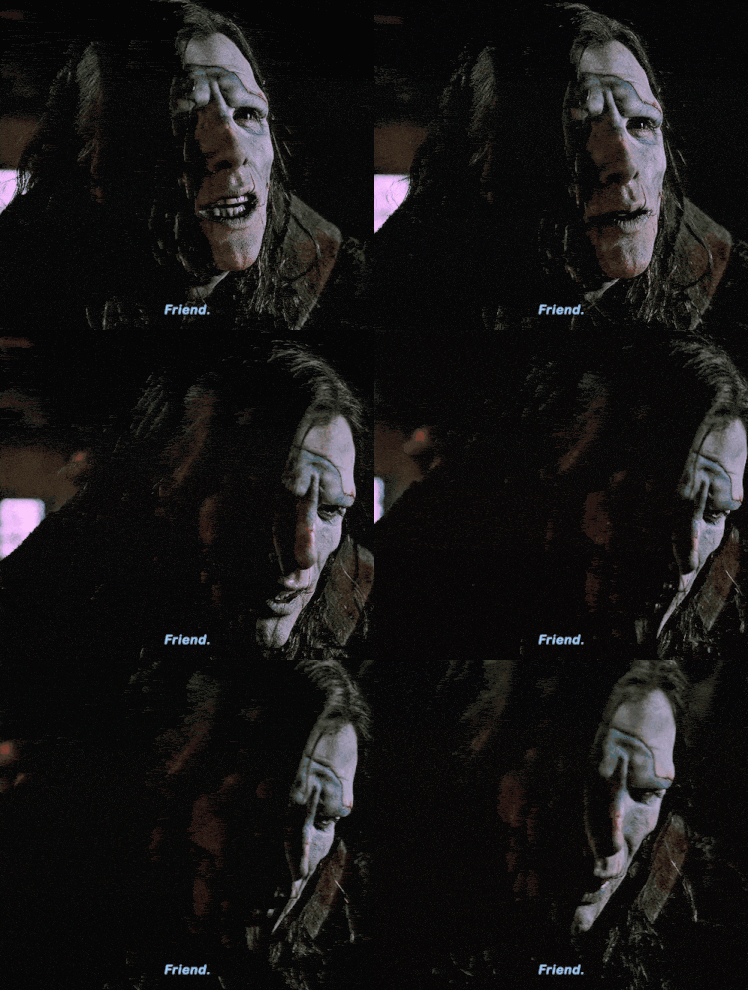
Image: Netflix
My coworker came over a while ago and watched it, since he doesn’t have Netflix. (He also made me watch Matilda, which I had never seen. I loved it.) The old man’s death got him good, and rightly so—it’s a heart-wrenching scene. A thought occurred to me later that I wanted to explore, but we haven’t had time to talk about it, so I’m sharing it with you.
Note: This discussion touches primarily on the grandfather in the movie. del Toro did not give him a name; the only family members referred to by name are the child, Anna Maria, and her mother, whose name seems to be Alma. In Mary Shelley’s novel, he’s called De Lacey, so that’s what I’ll call him here.
Question: If De Lacey, alone in the cottage for the winter, could see, would he have accepted Adam anyway?
My answer: Yes, absolutely.
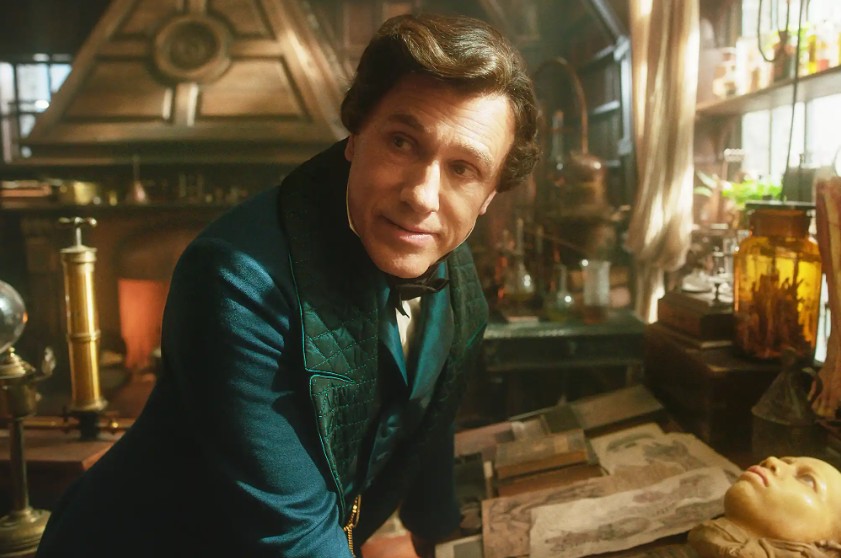
After Adam (I am NOT calling him The Creature anymore) finds shelter in the mill, he secretly watches the family through the cracks in the wall. He sees them expressing their love for each other. Throughout the film, we see characters touching someone’s face or head to indicate affection for that person as well as speaking a truth—for example, when Elizabeth gently tells an amorous Victor, “Believing something does not make it true,” she touches his cheek.
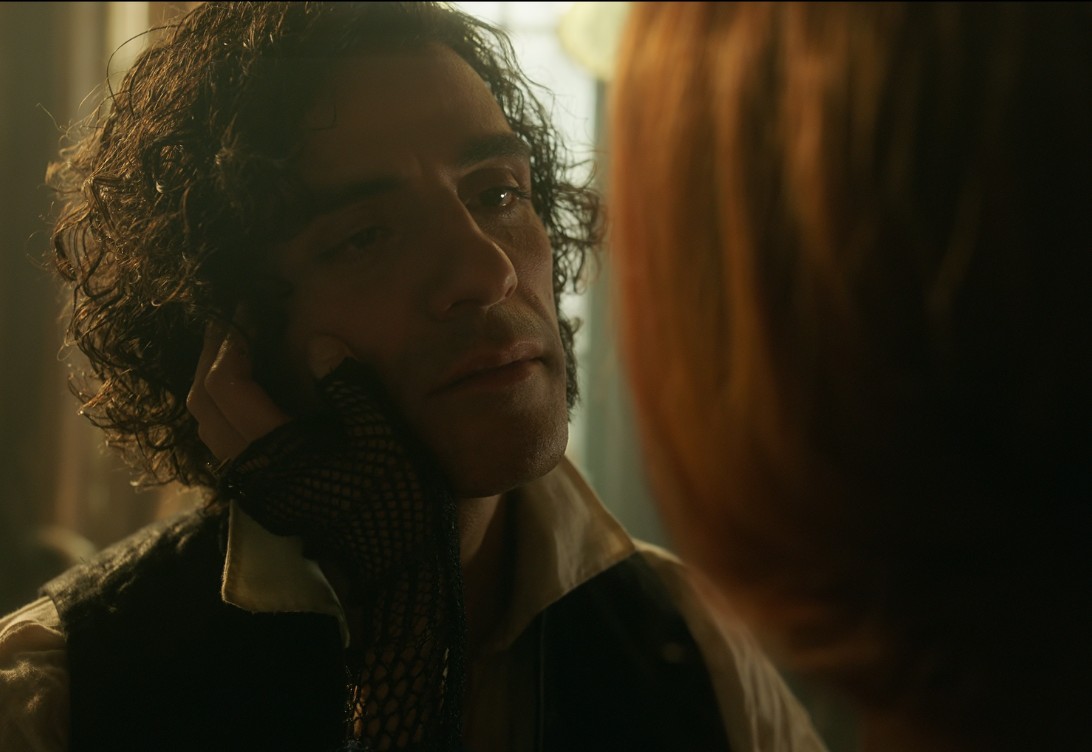
Image: Netflix
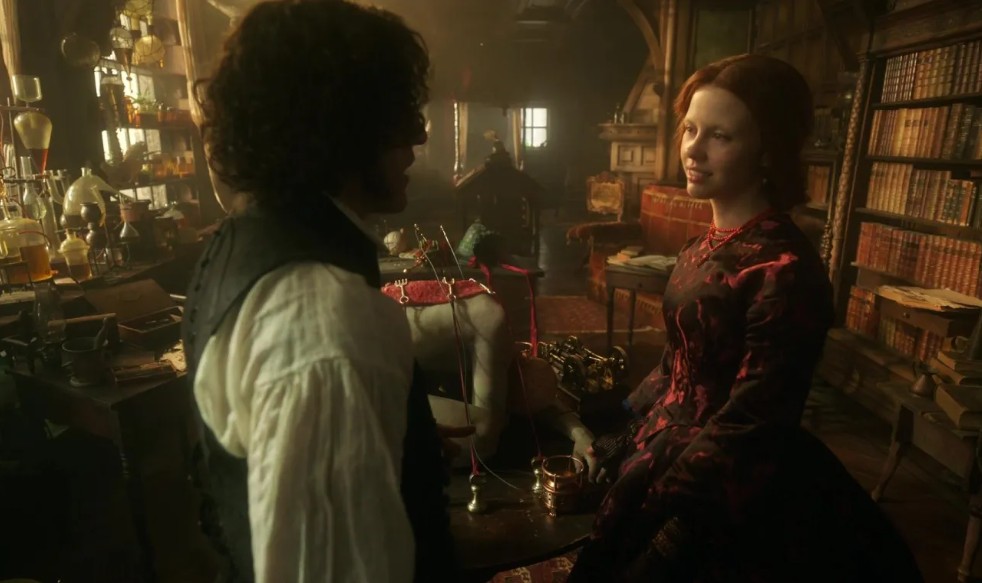
Similarly, when William is dying, he puts his hand on Victor’s face when he says, basically, “Bro, this is all your fault.”
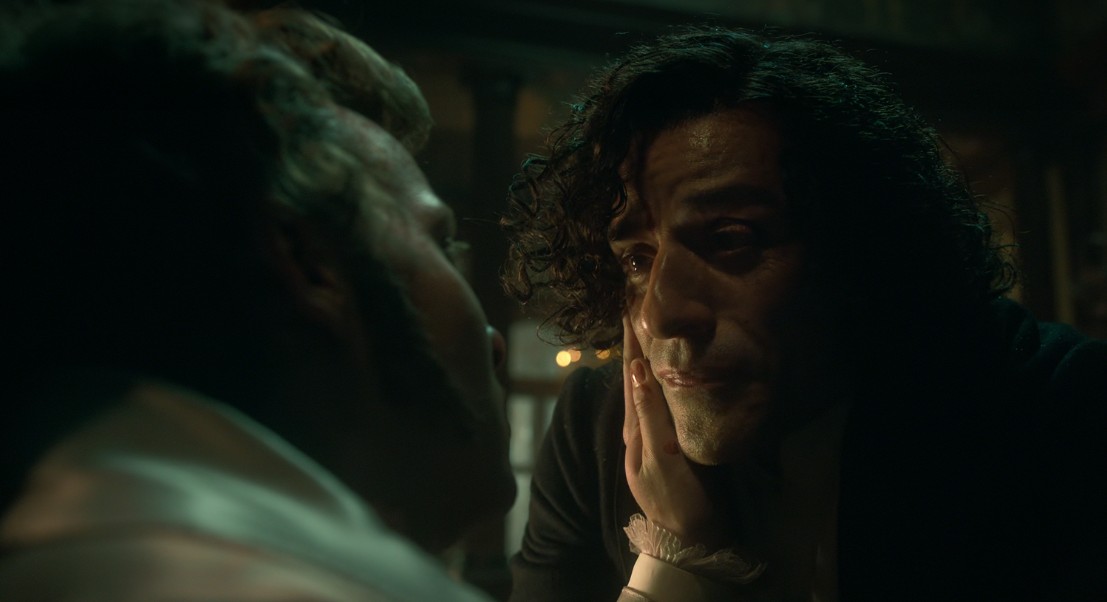
Image: Netflix
Adam sees De Lacey pat his granddaughter’s head and deduces that pats or touches on the head convey sincere feelings for someone. Remember this, because it comes back full circle later.
He learns to speak by listening to them talk to each other. He tells Victor and Anderson, “These people possessed a sound—used it to tell each other about feelings and ideas. They called them words.” This is how babies pick up language, and it makes sense, since his newly animated brain is redrawing synapses. If Victor had kept him upstairs and talked to him often instead of ignoring him in the basement, it might have happened sooner.
He also learns to read when De Lacey is teaching Anna Maria. In the novel, Mary Shelley rather clumsily has Adam acquire language by listening to Felix (the son) teach his girlfriend, a runaway Arabian noblewoman, how to speak theirs (I’m not making this up, I swear). Later, Adam conveniently finds a box of books in the woods and reads them.
A brief aside on language:
The De Lacey family in the novel, as well as the Frankenstein family, speak French, so this is the language Book Adam learns. Book Victor, raised near Geneva where both German and French are official languages, has been classically educated (likely in German) and would have learned other tongues academically, including Latin, Greek, and English.
Movie Victor goes to medical school and teaches in Edinburgh (Scotland) and would speak English there. In modern-day Europe, many countries require that English be taught in schools (it’s the international language of business), and 59% of the EU population speaks at least two languages. So people from different areas being able to talk to each other is a thing that happens.
Movies made by Hollywood studios are usually in English because it is the primary language in the U.S. Foreignness is implied by giving everybody speaking English a British accent regardless of where they’re located. Frankenstein follows this practice, though the Horisont’s sailors all speak Danish with subtitles.
Judging by their location, and the cards De Lacey holds up for Anna Maria, Adam is learning in German—Vaduz, where Victor says the fictional lake and tower are located (“across the Channel”—likely meaning the English Channel), is in Lichtenstein. The Deutsche word for “boy” is junge, and the boy card has a J on it. Auge is “eye,” and the card shows an A along with the illustration.
In addition to updating the time period, del Toro kept the French connection with Victor’s mother Claire in his film adaptation. He improves on Adam’s language acquisition by mashing up the listening and the box of books into the same segment. When you adapt a work for the screen, you often must consolidate to save time. I also think this makes a lot more sense, and if Mary Shelley could see this movie, I feel like she might slap her forehead and say, “I wish I’d thought of that!”
Did you notice that the alphabet cards have small divots in the edge? De Lacey touches them to know which one he has before he asks, “What is this?” The movie is packed with these great details.
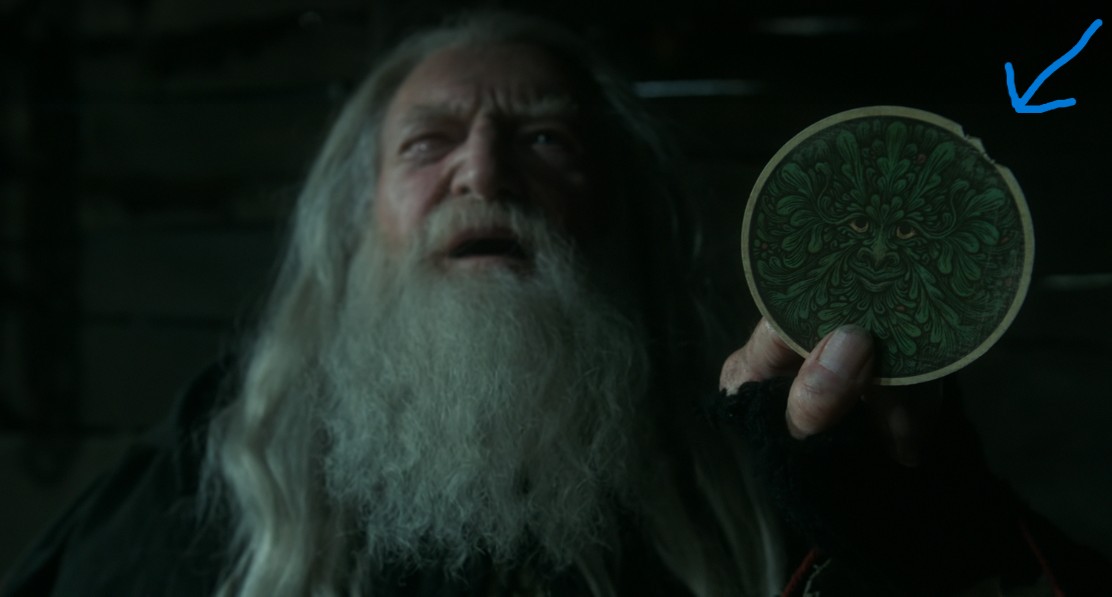
Image: Netflix
Back to the discussion. De Lacey eventually figures out that someone is living in the mill gears. When Alma asks, “Who could have done this?” at the corral gate, he mutters, “The Spirit of the Forest, eh?” He obviously has figured out that whoever is helping them is the same person who is hiding in there.
I believe that his loss of sight was recent. He tells Alma and the young redheaded hunter (I’ll call him Felix), who seems to be Alma’s husband and Anna Maria’s father, that he stays alone in their cottage to pray every winter and will continue to do so. But De Lacey knows something they don’t — he’s not alone.
Now, here’s why I think he would have accepted Adam even if he could see.
When Adam comes to him, he is still wearing bandages. De Lacey can feel them along with the ridges of the scars on his face, and he rightfully understands that this man has been hurt. He knows the coat Adam wears is a soldier’s coat by the shape of the collar and cuffs and probably the texture of the fabric.
And Adam never answers his question, “Were you injured in battle?” because he doesn’t have an answer. In a country where numerous skirmishes have occurred, so many and so recent that the dead are still lying about moldering in the woods, De Lacey could assume that was the case.
Blind or not, he would come to the logical conclusion that a terribly wounded soldier suffering from memory loss has hidden in their mill and is helping them out in exchange for shelter. De Lacey was trying to atone for his own misdeeds, and so he would embrace the chance to help this poor unfortunate no matter how fearsome his appearance. He might have still asked Adam to read to him, as he was pretty advanced in years and presbyopia starts to set in around your forties or so.
And Adam is actually very non-threatening. He’s tentative and frightened. I love that when he goes in for a hug, De Lacey completely understands and just rolls with it.
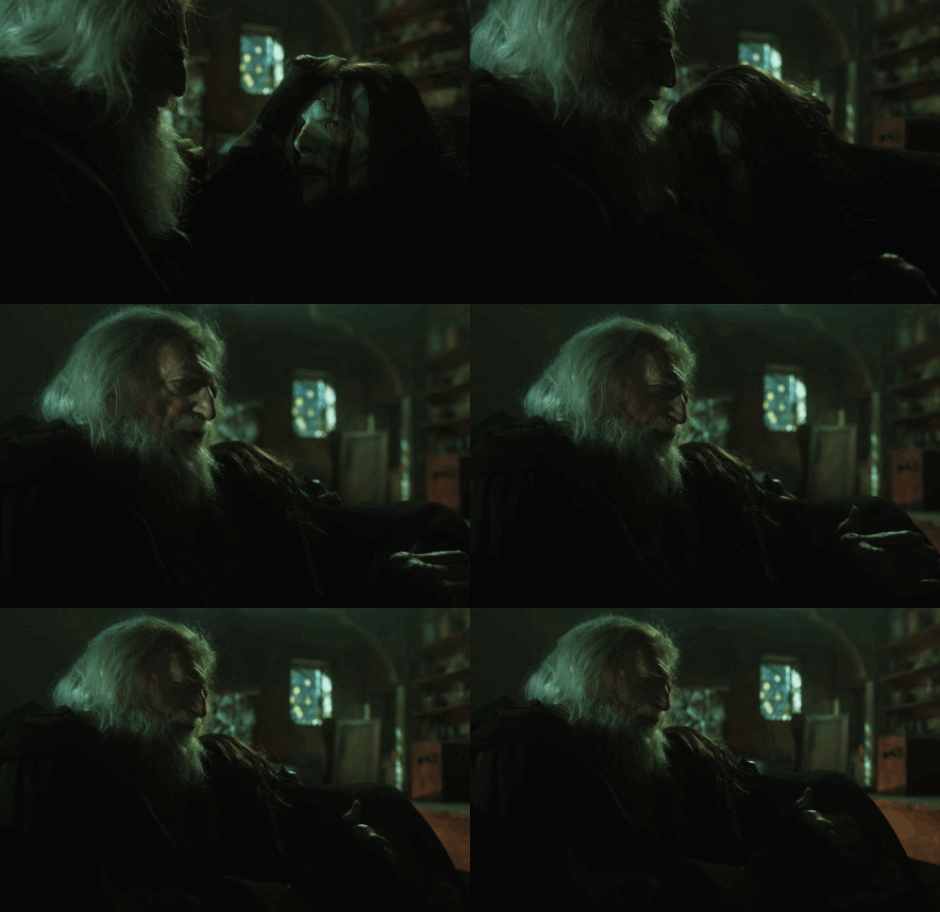
Image: Netflix
I’m quite sure they had many discussions on numerous topics both from the books and in general—you will never convince me that Adam, whose first book ever was the Christian Bible, would fail to ask what “beget” means. So he probably learned some things about life, as well as helping De Lacey take care of himself. We don’t see them sharing meals, but I think it’s fair to assume that Alma left his food in some state of easily managed preparation.
In heartbreaking irony, I think if De Lacey had been sighted, he might not have died, because I’m convinced he didn’t close the door all the way and couldn’t see that it had swung open, thus allowing the wolves to come in.
And Adam might not have been slaughtered when Felix and the other two hunters came back, because De Lacey would have been alive and could have said, “No, no, my children! This is the Spirit of the Forest. Do not harm him, for he is my friend. He has been a great help to me this winter, and to our family.”
This is the stand-in for an angry mob. See, del Toro didn’t leave it out.
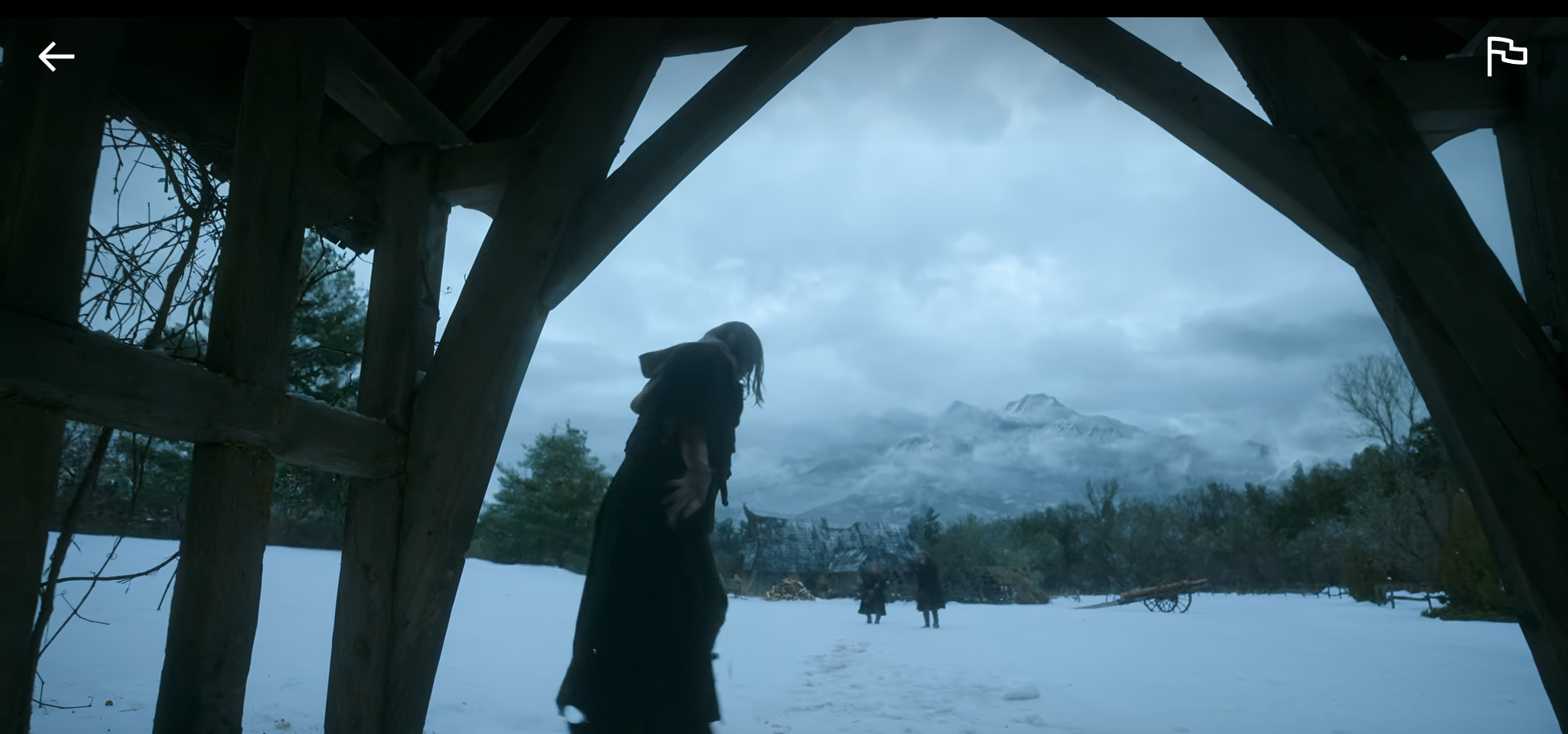
Image: Netflix
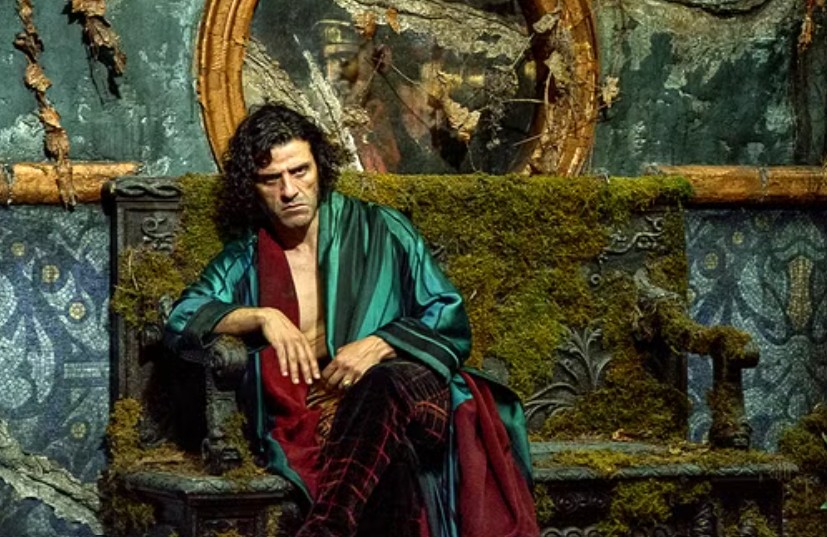
I don’t think the family would have allowed Adam to stay if the grandfather had been alive, but at least he could have left them without all the trauma. But dramatically, this outcome, however much it would have soothed our broken hearts, isn’t strong enough to fuel his resentment at Victor for cheating him of Death, his only escape from a never-ending existence of pain, rejection, and loss. As sad as it was, del Toro chose to emphasize the theme of loneliness and alienation from the book; giving Adam immortality was a masterful twist on it.
I told you I’d get back to the face touching. When De Lacey is dying after the wolf attack, he lays his hand on Adam’s face and says, sounding surprised, “You came back.” Of course Adam came back; this was his friend, the one person besides Elizabeth who actually treated him like a person and not a thing. He still accepts him even after being told the truth about Adam’s origin. And we know it’s true because of the touch.
At the end, when Victor says, “Forgive me, my son,” I think Adam knew he was sincere due to his observation of touch as an expression of love. At the beginning, Victor is excited by this new life he’s made and even lays his hand on Adam’s cheek, but as his patience ebbs, so does the affection. Remember earlier in the film when baby Adam cuts his hand on the razor? Victor yells at him, “Don’t touch me! Don’t ever touch me!”
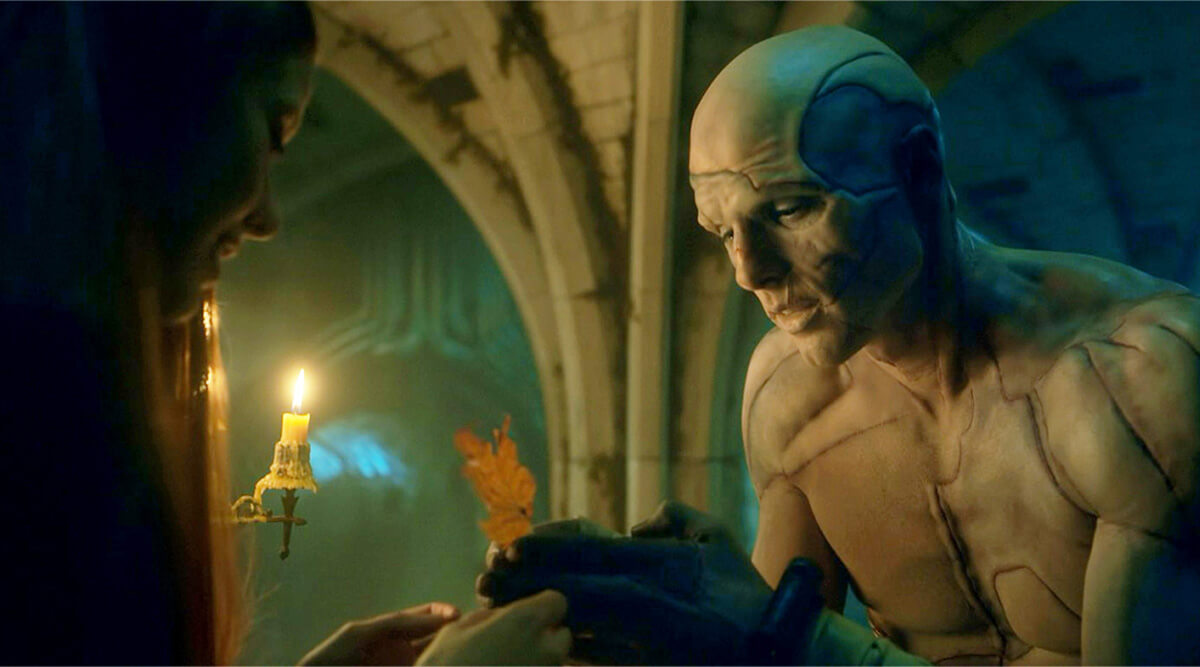
After he hears Adam’s tale, he genuinely regrets his actions. How do we know? He reaches for Adam’s hand, and then he touches his head. You can see the realization on Adam’s face; it’s all he ever wanted from his father. Jacob Elordi and Oscar Isaac both played it perfectly.
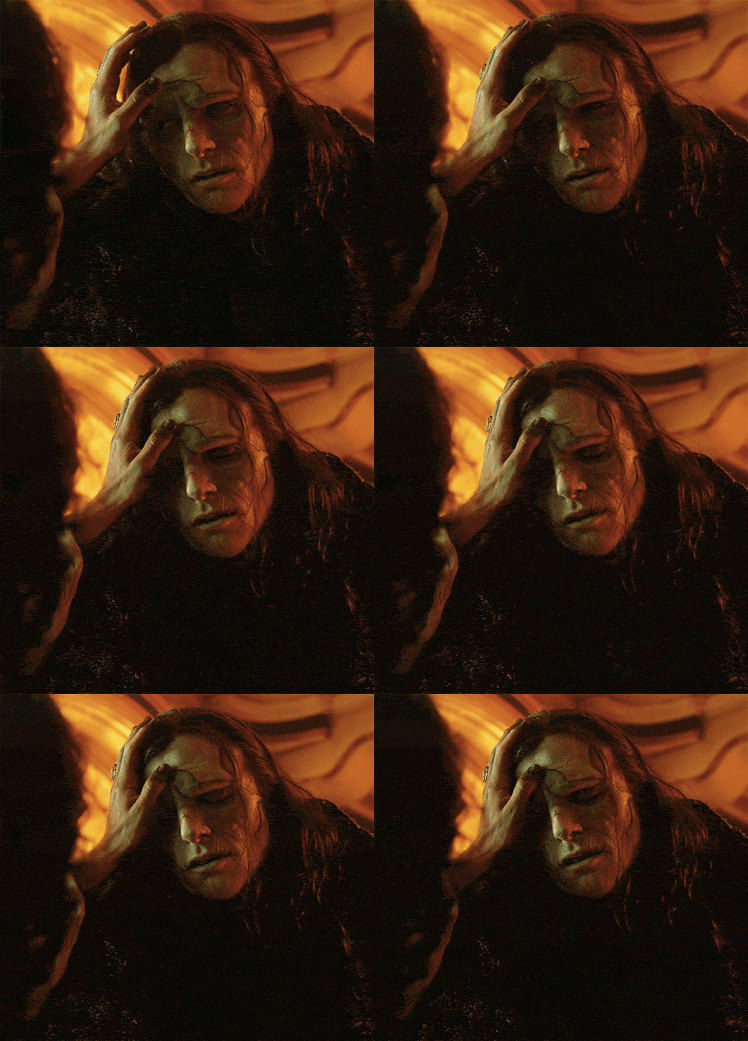
Image: Netflix
It was not death Victor sought to conquer; it was grief.
BOOK 3:
I’ve been writing again, but it’s fanfic. The problem wasn’t my story but creative burnout. I wasn’t able to produce anything, so a hiatus seemed wise. I don’t consider the fanfic time wasted, because 1) it’s put me back in the writing habit, and 2) there is a future idea percolating inside it that might be worth exploring. I’m almost done with the fanfic, so soon I’ll be back in Ilarrya.