Guillermo del Toro’s Frankenstein: Part 2 – Yes, It’s Love, but Not How You Think

WARNING!!!! THIS POST CONTAINS SPOILERS FOR FRANKENSTEIN. PROCEED AT YOUR OWN RISK!!!

Last night, a group of my colleagues and I went out, and one of them had seen Frankenstein, which meant I could wax poetic about it without spoiling. I mentioned something I alluded to in my last post, that Elizabeth’s interactions The Creature were not romantic, but motherly. My coworker asked me to explain.

I’m going to double down on this, so stay with me. This post is an expanded version of my argument.

First, in Mary Shelley’s book, Victor and Elizabeth are the couple. William is just a child, and baby brother Ernest isn’t even in the movie at all. Elizabeth Lavenza is an Italian orphan Caroline Frankenstein plucks like a puppy from a foster home and raises with the children. Victor is basically marrying his non-related stepsister, which is somewhat less incestuous than what other noble families were doing. Making William an adult with an unrelated fiancé allowed del Toro to introduce Harlander, who is so much fun we don’t care that he wasn’t in the novel.
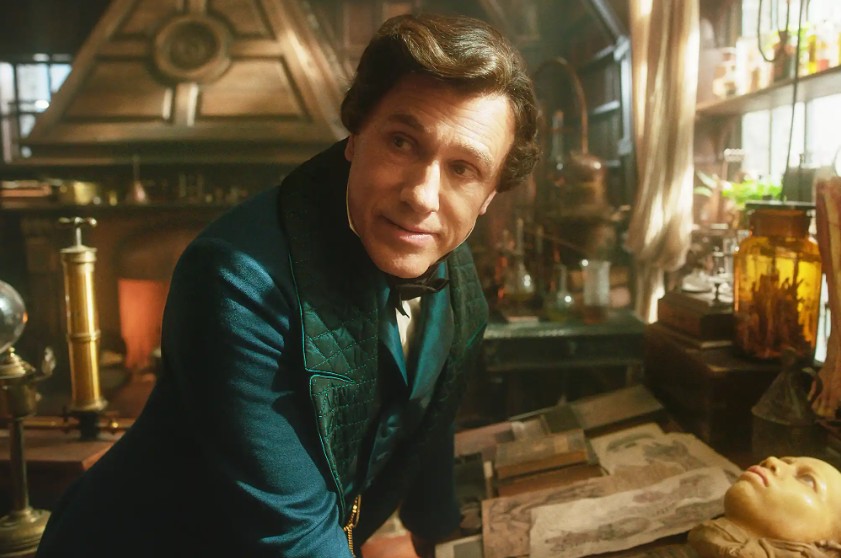
French porcelain, anyone?

Image: via Entertainment Weekly – Ken Woroner/Netflix

Their flirtation in the film alludes to their relationship in the book. If it had been preserved in the film, Elizabeth would have been The Creature’s de facto stepmother. Watching them play with each other, you get the impression that if she weren’t already taken, Elizabeth might very well decide to accept Victor – but it would be on her own terms.

Second, del Toro’s dual casting of Mia Goth as Claire Frankenstein, Victor’s mother, and Elizabeth Harlander, is significant. I can’t remember in which article I read it, but del Toro said straight out that some men marry their mothers. Victor certainly has a fixation on his.

del Toro also uses color in his films very deliberately. The dynamics are reflected in Kate Hawley’s costume designs. Claire’s clothing is all red. Victor wears red too (gloves, a scarf, a coat). Elizabeth’s primary color is green and/or teal, but around her neck is an ever-present rosary. What color is it? Red. When she visits Victor and sees the dissection, she is wearing red, and for a moment . . . but no, sorry Victor, you weren’t the chosen one.
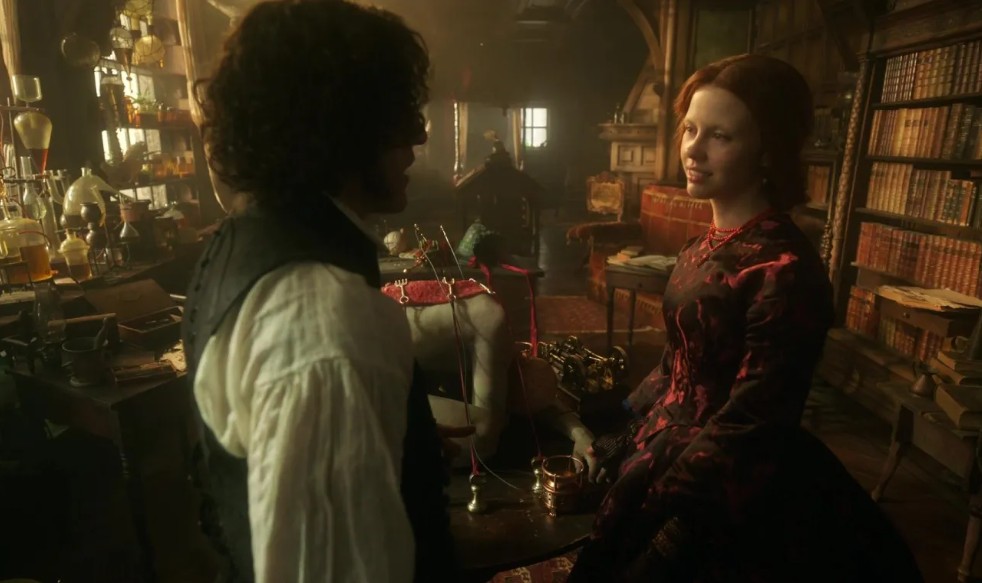
You want to be, but believing something doesn’t make it true.

Image: Netflix

Elizabeth’s first glimpse of The Creature is shocking. She sees a man in chains, with terrible wounds all over his body. He’s clearly different from anyone she’s ever beheld. She responds to his vulnerability and pain—her first words to him are, “Who hurt you?”  

When she returns shortly with William and Victor, it’s clear that Victor is not taking care of this child. He calls him “it” and says the chains are for his own protection and The Creature’s, because “He doesn’t know any better.” Just like a baby.

And he is, at first—scared of the sun, grabbing the razor like a curious baby, rattling the chains Victor puts on him like it’s a game, and playing with the water in the basement sluice like a baby in the bath. Victor tells Anderson, “Everything was new to him.”

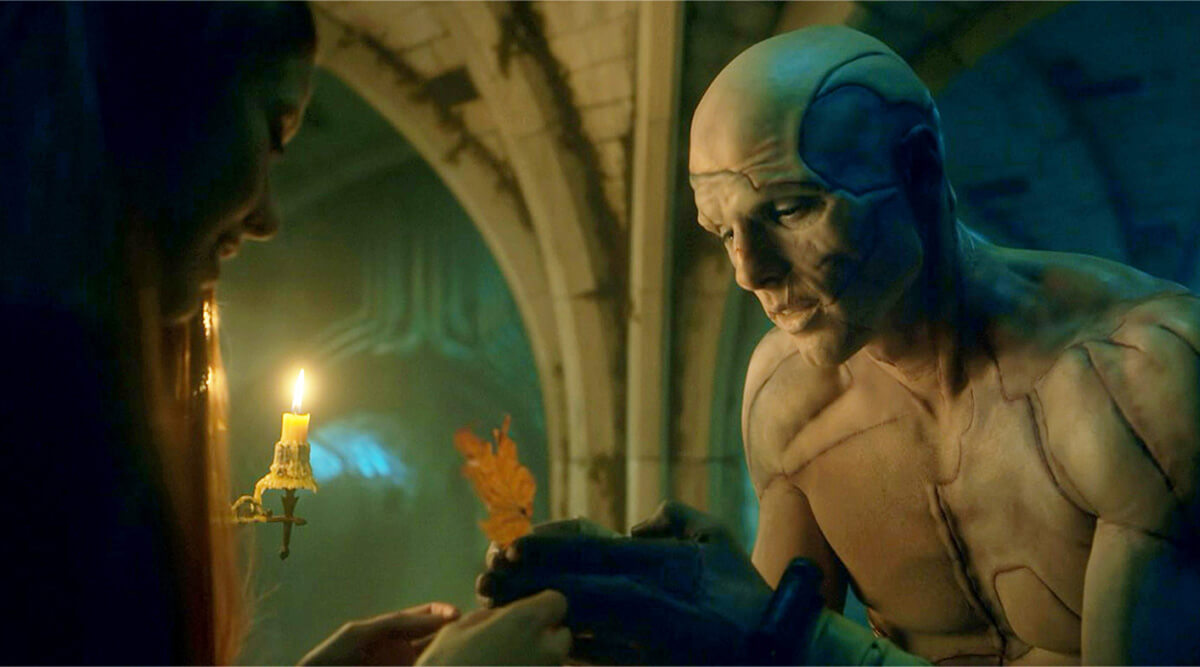
On her third visit, alone this time, Elizabeth relates to him as though he’s a small child. He gives her a leaf, and she responds, “A leaf? For me? Thank you!” Her tone is that of a mother thanking a three-year-old for giving her a flower. She continues in that tone when teaching him her name.

Then, when she goes upstairs, Victor is there, lounging with his robe half open . . . looking all sensual . . . what was I saying again? Oh right!
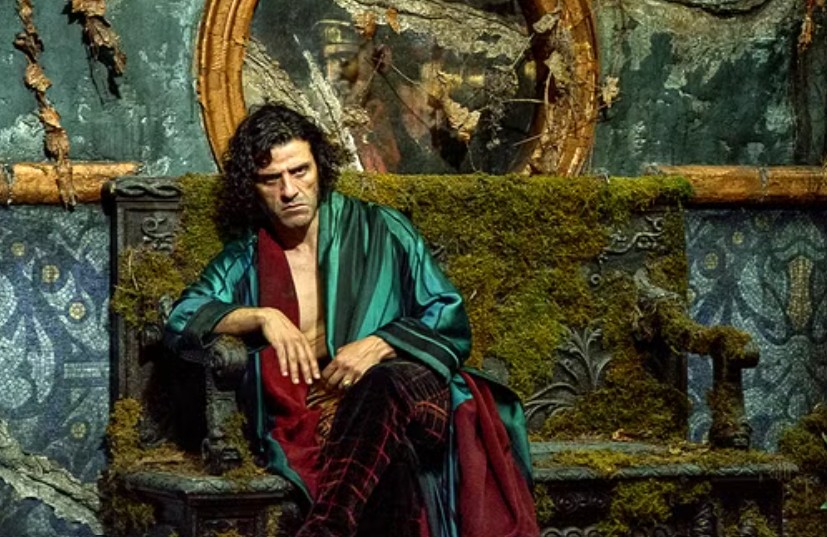
Victor may be an ass, but broody Oscar Isaac is HOT AF.

Image: Netflix

Victor is oriented to the flesh. His research centers around the body, and he’s very grounded in sensuality and his attraction for Elizabeth. Of course the first thing this man would think is that Elizabeth is attracted to The Creature. It’s pure projection on his part. And he’s jealous. She’s not tiptoeing around the tower in a nightie to visit him.

Elizabeth’s nature is of the spirit – she’s very pious despite her interest in science. The dissection reminds her of a “martyrdom painting,” i.e., religious art, and she sees God in the symmetrical structure of the spinal column. She just came out of a convent to marry William. Young Catholic women were often sent to convents to strengthen their religious education because Catholic schools were not legal at certain points in English history, and they would someday be guiding their children in the faith. The families paid the convents for boarding them, which helped keep them afloat.

When Victor accuses her of basically wanting to bang his boy, she says no very emphatically. She talks about purity of soul, that God may have breathed directly into the flesh Victor animated, etc. During the updated Victorian period in which del Toro set the film, twenty years into Queen Victoria’s reign, children were still seen as exploitable resources. It wasn’t until later that childhood began to be revered, and they gained status as people in their own right. Elizabeth, who has already expressed progressive views, is ahead of her time in seeing the innocence and purity of this unusual child.

The Creature looks very newborn and angelic in their previous scene as well – he’s bald, his skin is pale and glowing, and his expression is one of wonder and curiosity. If Elizabeth had lived and had children with William, I think she would have viewed her babies the same way.
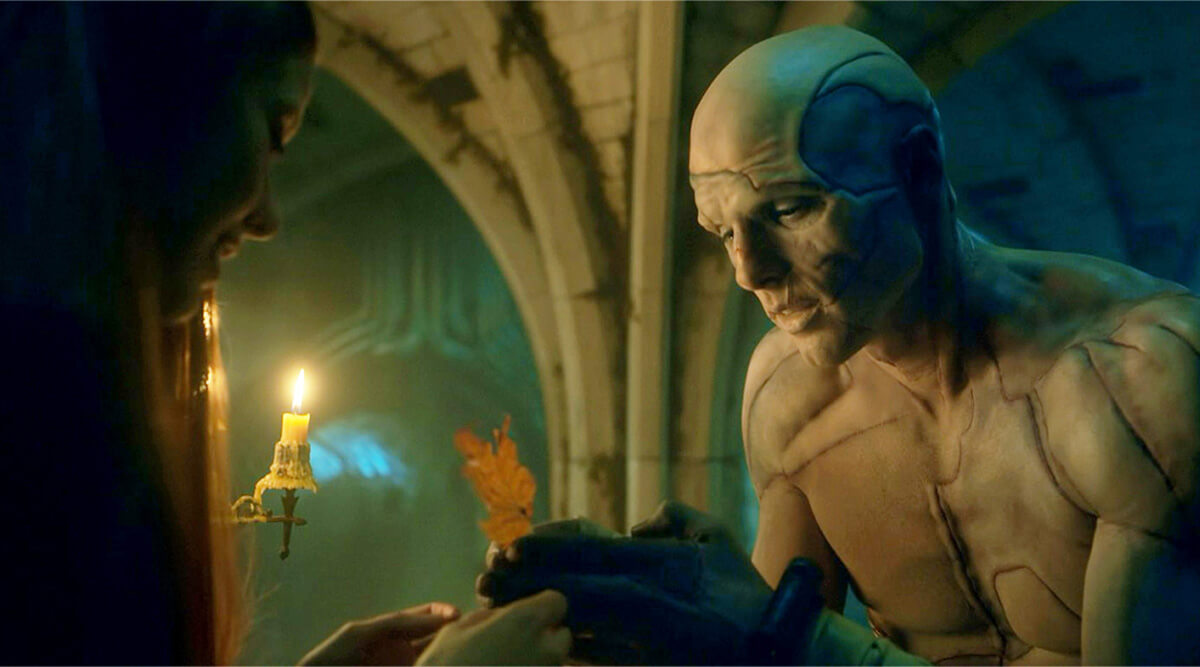
It is a love story, but it’s the love of a mother.

Image: Netflix

At her death, Elizabeth tells The Creature (I hate calling him that; his name would be Adam if Victor had even bothered) she realizes that she didn’t belong in the world. She was looking for something more elevated, and she found it with him. Not as a lover, but as pureness of soul, something finer than the earthly. Their connection hinges on seeing that in each other—he is untouched by the world, and to him, she’s just love. She’s the only person who ever treated him kindly except for the blind grandfather. It’s selfless like the love of his only friend, a maternal, caring love.

del Toro has been obsessed with this story for decades. There are references throughout the film to both the book and other adaptations. Victor and Elizabeth being a couple (novel) and the dual roles (Elsa Lanchester played Mary Shelley in The Bride of Frankenstein as well as the female creature), The Creature’s long stringy hair (novel) and his oversized, shapeless coat (Charles Ogle as The Creature in Thomas Edison’s 1910 silent film—watch it here), and too many others to mention. And good for you if you spotted that the sleeves of Elizabeth’s wedding dress look like the bandages on Elsa Lanchester’s arms in Bride. A nod is not an interpretation, however, and love is not confined to the romantic sphere.

If you want to read the book, it’s in the public domain. You can download it for free at Project Gutenberg here:  Frankenstein by Mary Wollstonecraft (Godwin) Shelley

Guillermo del Toro’s Frankenstein: The Disabled Child

**WARNING!!!! THIS POST CONTAINS MASSIVE SPOILERS FOR FRANKENSTEIN. DO NOT READ UNTIL YOU HAVE SEEN THE MOVIE!**

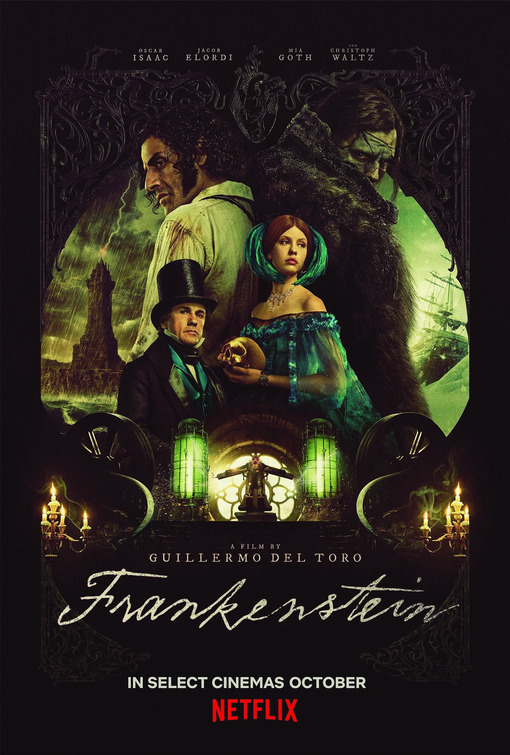
Poster for Guillermo del Toro's 2025 film Frankenstein, a Netflix film, showing a montage of the main characters. At the bottom it says "In select cinemas October, Netflix."

Poster designed by Empire Design

If you haven’t yet seen Guillermo del Toro’s Frankenstein on Netflix, drop what you’re doing right now and go watch it. I’ll wait.

Now that you’ve dried your tears (you did cry, didn’t you? Of course you did!), let’s discuss this seminal tale that set standards in the Gothic and science fiction genres that still persist to this day.

One element in this new Frankenstein that particularly stood out to me was how Victor rejects The Creature not because he’s a cadaverous monstrosity as in the book — this iteration is delicately beautiful — but because of a perceived intellectual disability.

del Toro has created a masterful adaptation of Mary Shelley’s 1818 novel. He updated the time period and changed the plot somewhat, but the themes of parental abandonment and the misuse of power and knowledge remain intact. His horror films are always sympathetic to the monster – the outcast, unwanted and discarded – and to the pain inherent in being different in a society that neither understands nor seeks to do so.

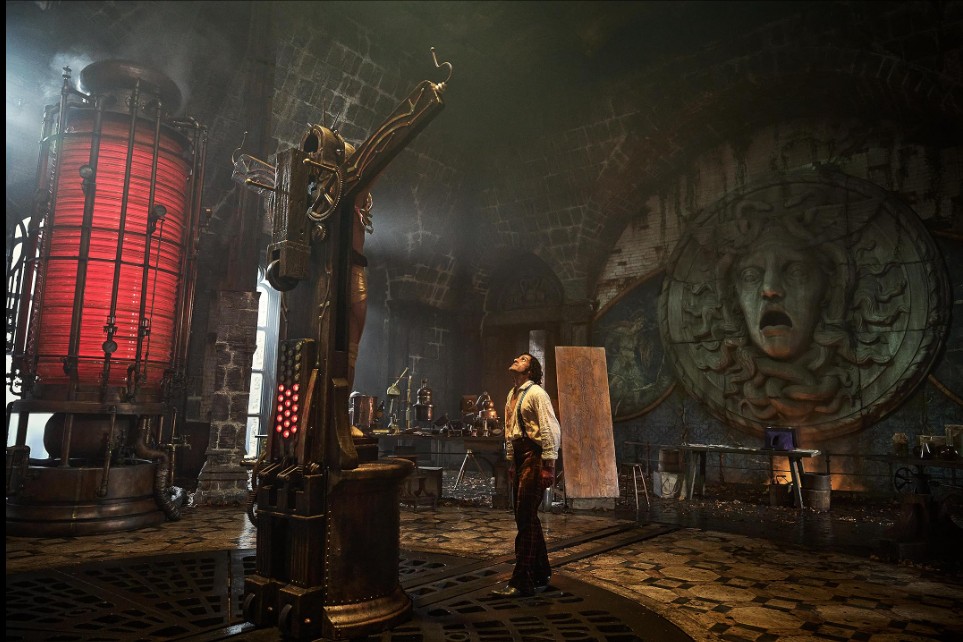
The movie is a visual feast for the eyes. Victor’s laboratory is a pure mix of Gothic and steampunk, and the ship on which he is rescued at the beginning feels real because it IS real. del Toro’s penchant for practical effects and fully constructed sets looks far better than CGI and must be a wonderful tactile experience for the actors. A lush score by Alexandre Desplat makes you feel all the feels right along with them.

Victor Frankenstein stands beneath a cruciform apparatus for bringing his creation to life. The room is circular, dark, and imposing, with a massive stone carving on the back wall and at left, a huge metal and red glass cylinder - the battery by which he will harness the lightning's energy.
Look at this laboratory. LOOK AT IT.

Photo: Netflix

In Shelley’s novel, Victor Frankenstein is a student in pursuit of a curriculum he can no longer hope to attain at school. His quest for artificial life takes into account all that science has to offer, but the ethics of what he is doing don’t seem to penetrate: 

I doubted at first whether I should attempt the creation of a being like myself, or one of simpler organization; but my imagination was too much exalted by my first success to permit me to doubt of my ability to give life to an animal as complex and wonderful as man….my operations might me incessantly baffled, and at last my work be imperfect, yet when I considered the improvement which every day takes place in science and mechanics, I was encouraged to hope my present attempts would at least lay the foundation of future success.

Frankenstein, or the modern prometheus, by mary shelley

In the film, Victor (Oscar Isaac, amazing as usual) embodies this attitude by behaving like a modern tech bro, an arrogant know-it-all, with no thought to the possible consequences of his actions. He even makes a play for Elizabeth, his brother’s fiancée. Victor was forced to learn medicine from his domineering physician father, who wants a boy just like him, a veritable mini-me. He finds refuge with his French mother, Claire, but she tragically dies when brother William is born. The seeds of his terrible parenting are obviously sown.

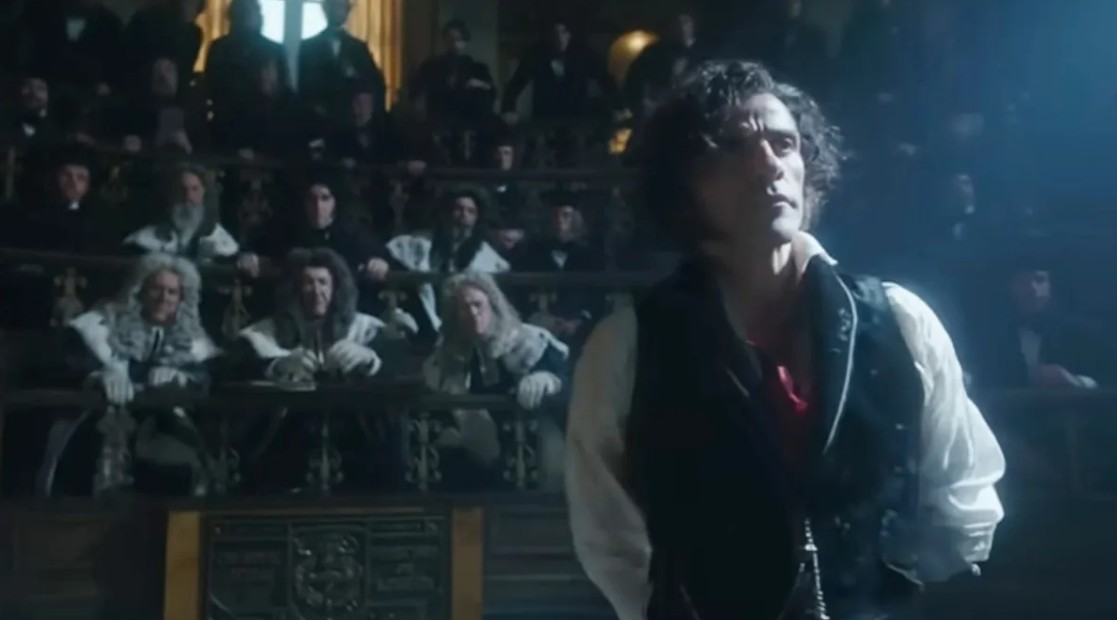
An unflinching scene where Victor demonstrates the animated fragment of a corpse fails to deter his hubris even when he’s thrown out of the Royal College of Surgeons for his gruesome research. Who gave him permission to take this body of a shopkeeper? I doubt the family knew he would do THAT with it.

A defiant Victor Frankenstein stands in front of a tribunal of skeptical and concerned medical professionals in old-fashioned white wigs.
“Yuck” seems to be the general reaction.

Photo: Netflix

The addition of sketchy financing by Henrich Harlander, a wealthy arms dealer and former surgeon, played by the always delightful Christoph Waltz (you know him best as Hans Landa in Tarantino’s 2009 film Inglourious Basterds), cements Victor’s fate. The ethics are way out the window by this time.

Book Victor dreams of his creation’s physical perfection. This is shockingly thwarted; his efforts to engineer his child as beautiful fail to take into account the poor quality of his materials (Shelley never actually says he’s built from corpses). Upon beholding the abomination he has created, he flees.

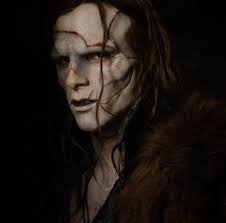
del Toro’s film flips this element of the book while still keeping Victor’s revulsion intact, though for a different reason. Movie Victor makes a point of seeking out bodies that are relatively fresh. The Creature, played with heartbreaking nuance by Jacob Elordi, is physically proportionate to his looming height (Elordi is 6’5”), and despite scarring that makes him look like a walking anatomy lesson, he is an attractive being.

The Creature in Guillermo del Toro's Frankenstein. He is a handsome man but unnaturally pale, with numerous scars across an unhappy face and long stringy dark hair.
Cue a million erotic and angsty fanfics on Tumblr.

Photo: Netflix

The handsome actor is nearly unrecognizable in prosthetics and makeup and still gives a performance that is already garnering awards buzz. Netflix released the film for a limited run in theaters to qualify for Oscar nominations, and I suspect Elordi will get one. He puts me in mind of another del Toro muse, Doug Jones (Amphibian Man in the director’s 2017 romantic fantasy The Shape of Water), who has never been nominated but should be.

Like many new parents, Victor is at first enamored of his child. Newly minted, The Creature is literally a baby. In a scene where Victor shaves the fragments of his scalp that actually grow hair, he reaches for the discarded razor EXACTLY as a curious baby would. He cuts himself, and Victor discovers his healing ability. He’s done it! Immortality!

However, the baby doesn’t intellectually progress fast enough for his impatient father, and the caring ceases. When he can’t say anything besides his dad’s name (honestly, the egoism!), Victor beats him and relegates him to the basement in chains. The one person who should love him wants nothing to do with him. He doesn’t even bother to name him.

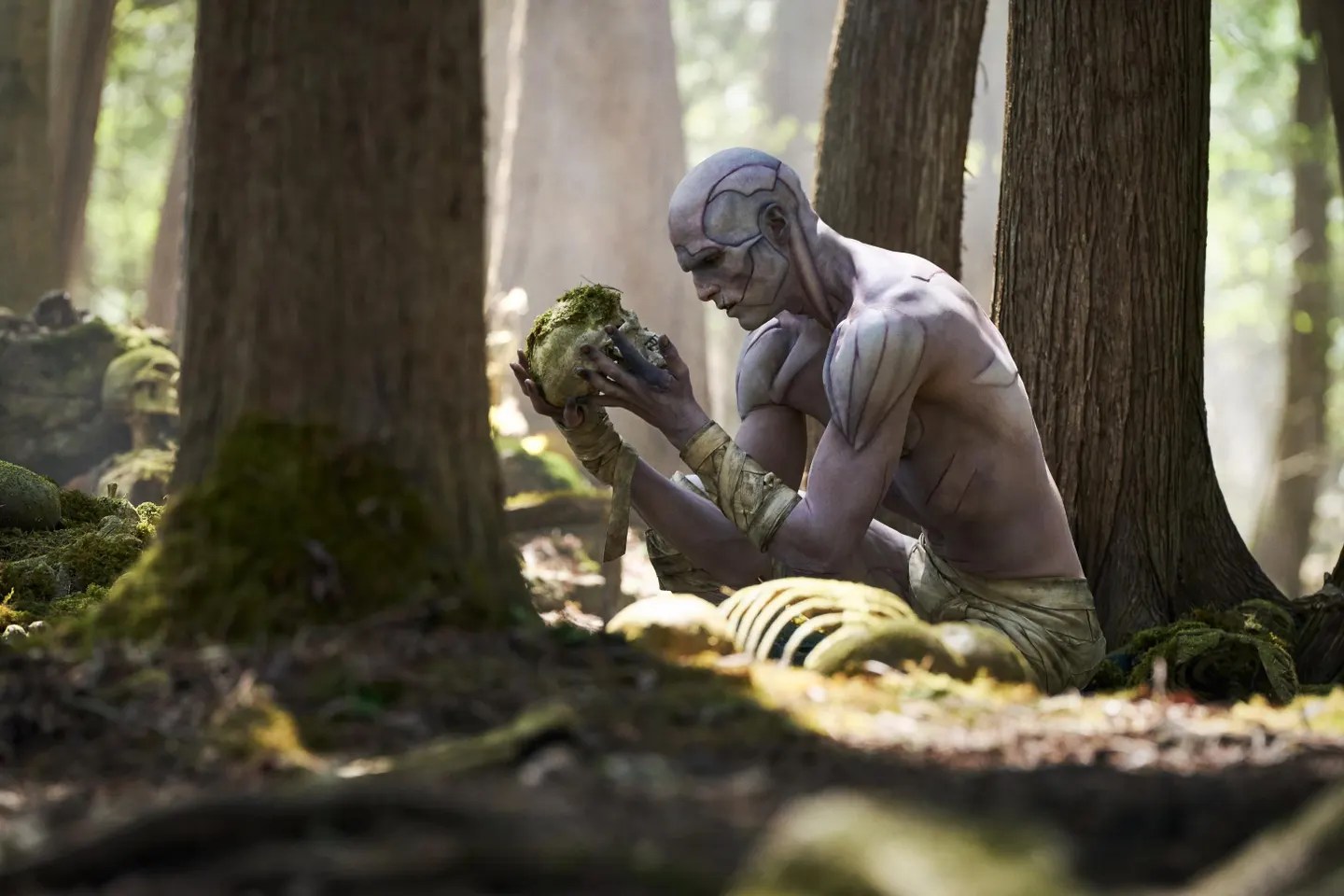
The Creature, bald and naked but for bandages on his arms and a sort of underpants garment, crouches in the woods holding a mossy skull.
Contemplating a skull in the woods. Who, or what, am I?

Photo: Netflix

The Victorian era in which del Toro set his adaptation saw an explosion in the institutionalization of disabled and mentally ill people. This persisted well into the twentieth century. We still do this to kids with behavioral problems despite the constant exposure of abusive boot camps and reform schools.

Visibly disabled people are still portrayed in media as either monsters (the woman in the basement in Barbarian), mystics (Ruben the oracle child in Midsommar), or objectified as exceptional to make abled people feel good, a trope often referred to as inspiration porn. And disabled characters are mostly played by actors who are not disabled (NOTE: I don’t include Elordi here because I’m discussing one possible interpretation of the movie, not an intentional choice by the director).

Film Elizabeth is Harlander’s niece. Unusual in her outspokenness in an age when women were expected to keep quiet, she is the only one to actually see The Creature as a person. It’s worth mentioning that women who failed this basic test of femininity—that is, keeping their opinions to themselves—were often branded as “insane” and confined in their homes or relegated to the asylum.

Some articles have said the connection between Elizabeth and the Creature is romantic, but is it? It looks more like mothering to me. (The same actress, Mia Goth, plays both Elizabeth and Claire.) Literally the first thing she says to him is, “Who hurt you?”

In the basement, the Creature hands a dried leaf to Elizabeth, who has come down to see him.
The Creature gives Elizabeth a leaf.

Photo: Netflix

Clearly he touches her heart; like a mother whose toddler bestows a flower picked by a grubby fist, she keeps the leaf he gives her to her dying day. (Of course she dies. Women are always pain fodder for men, it seems.) Both Victor and The Creature lose their mother figures through the vagaries of their fathers.

Elizabeth’s tragic death is preceded by a conversation where Victor is emphatically disgusted by the idea of his disabled child reproducing. (Eugenics, anyone?) The Creature demands a companion, but Victor says no. Playing God aside, Victor has committed a more grievous offense; he has failed to accept his responsibility. He will die, but his offspring can’t. He’s ready to condemn him to an endless existence as an outcast, alone.

A spurned and neglected child, the creature in Shelley’s novel becomes angry, and a frightening juvenile delinquent is born. He lives in revenge of Frankenstein, destroying everything he loves. The child, who has not matured (and is not immortal), is nothing without the parent and goes away to die alone in a frozen wilderness. Book Creature finds no reconciliation with Victor in the end (although he does share his tale of woe). He who had professed such hatred for his father, upon learning of his death, is grief-stricken:

“Oh, Frankenstein! Generous and self-devoted being! What does it avail that I now ask thee to pardon me? I, who irretrievably destroyed thee by destroying all thou lovest. Alas!  He is cold, he cannot answer me.”

frankenstein, or the modern prometheus, by mary shelley

Fortunately for our throbbing, broken hearts, del Toro allows his Creature to grow. He’s able to be with his father at the end, forgive him, and embrace his life as it is (we hope). He is no longer a child. The director has said the moment when The Creature faces his maker is akin to when a child is able to confront a parent.

“The first part of the movie is told from the point of view of the scientist, Victor,” del Toro says. “And the second part is when your kids come to you and say, ‘This is what you did wrong.’ And you have an epiphany, and you go, ‘That’s right.’”

Quote from Dissect the Emotional Ending of Frankenstein by John Dilillo (Tudum: Netflix)

When children are not given the love and care they need to thrive, they wither. Among disabled children and adolescents especially, rates of violence and neglect are higher than those of abled children. Disabled people face numerous barriers in society—they’re less likely to be employed, earn less, and the restrictions they face when trying to obtain services can be draconian. Discrimination persists despite the passage of the Americans with Disabilities Act (ADA) in 1990.

One wonders exactly how del Toro’s Creature will live. By the end of the film, forgiveness has given him a new start, but whether he can make something of it in the unforgiving world is up for debate. He’s learned to read and speak eloquently, but he will always be different. Those who look at him and see his soul and not his scars will still be few and far between.

I sincerely hope that, instead of an unnecessary and likely weak sequel, the movie sparks a conversation about what it means to be accepted in a society focused on the relentless pursuit of narrowly acceptable perfection through surgical and chemical means, and the illusion of it by removing representations of diversity as well as the actual people who embody it.

“An idea, a feeling became clear to me. The hunter did not hate the wolf. The wolf did not hate the sheep. But violence felt inevitable between them. Perhaps, I thought, this was the way of the world. It would hunt you and kill you just for being who you are.”

-The Creature, Guillermo del Toro’s Frankenstein (2025)