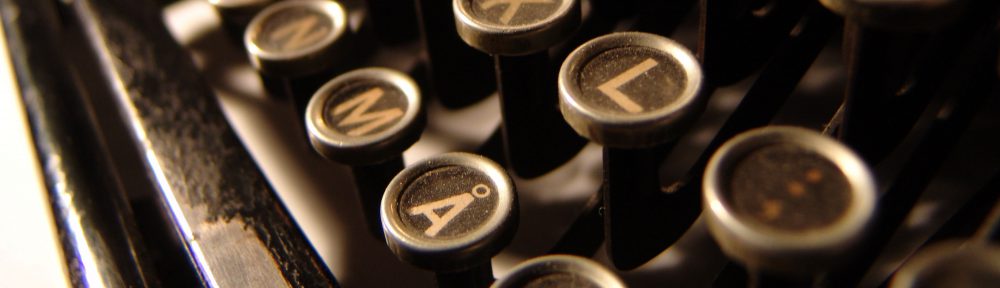
Music of the Hemispheres

A recent post by Arlee Bird at tossing it out inspired me today.  I was trying to get caught up on my blog reading, and came across this post regarding the necessity of music programs in schools.  Take a minute to read if you like.

My reaction was to post this comment:

Education in the arts is important for cultural development. Not only does it expose students to the richness and diversity of their own culture, but music is a fantastic way to expose them to others as well. I belong to a music website where all the people come together to enjoy soundtracks, and a ton of them live halfway around the world. Yet we all have this in common, and we have become friends. We don’t need anything more to divide us; it’s a global community. Keep art and music education. Support it and fight for it.

Disclaimer: I don’t have any children but if I did, they WOULD have this. I would see to it. If the school couldn’t provide it, I would. It’s too important.

I’m a bit biased, being musical myself.  My mother plays the piano like a virtuoso and I grew up listening to Chopin, Grieg, Beethoven (my favorite) and a ton of other classical pieces.  I took piano lessons myself.   Sadly that seems to be something I’m destined never to master.  I studied vocal performance in college, although I didn’t graduate, since I minored in partying.  Ha!

I remember taking music classes in grade school.  It was required.  Our teacher held a talent show every year and under her iron rule, only her pets were chosen to perform.  I wasn’t one of them and was never picked.  But I loved music class despite her obvious contempt for me.  It was one place I excelled.  We listened to and played/sang all kinds of music, from classical to folk tunes from other lands.  I continued with choir in high school and college.  Some of my best memories from then are from choir performances at other schools and music contests.

We had exposure to rhythm and theory, all of which are good for developing brains.  Here is an article from the Harvard Gazette that, while kind of old, backs me up.  And from a 2007 article about a Stanford University study, “Music engages the brain over a period of time…and the process of listening to music could be a way that the brain sharpens its ability to anticipate events and sustain attention.”

What does music do for you?  I’m listening to my soundtrack channel right now.  It’s helping me think.  At the moment, an amazing piece by Serge Prokofiev is playing.  Classical finds its way into soundtracks, you know.  Platoon had Barbers Adagio for Strings, 10 had Ravel’s Bolero, and the list goes on.

When I listen, my body relaxes, my brain unwinds and my blood pressure surely drops.  I have a day job that has been slowly becoming more stressful over time.  When I come home, I listen to my music and chat with my online friends and I feel the day fall away from me.

It helps me concentrate while I write and evokes emotions that find their way into my prose.   I wrote the entire first draft of Rose’s Hostage while listening to the soundtrack of Black Hawk Down.  I have not seen that movie and now I don’t want to, because certain segments of the music are indelibly impressed on scenes from my book.  I also like to create playlists that mirror my characters; it helps me understand the workings of their minds.  It’s like that old game, “Boxers or Briefs?” where you guess what kind of underpants someone would wear.  What kind of music would this person like?  Why?  What does he/she hate and why?

How does music inspire you or enrich your life and art?  Do you have memories from school of music ed?  Please share in the comments.

Courage, the Lion said

The definition of the word escapes us.  We think bravery and courage are the warrior, cop or firefighter charging in, kicking ass and taking names, leaping into action at the slightest hint of danger, to serve, save and protect.

In truth, courage doesn’t mean fearless.  Courage is what we show when we are afraid but we do it anyway.

Courage in daily life can be large, as in pulling someone from burning wreckage, or small, when you make an effort to smile at a coworker instead of snapping on a hellish day.  Courage is standing up for your beliefs, even if it makes you unpopular.  It’s saying “I don’t like what you said” when someone makes a remark you find offensive.  It’s apologizing when you do that yourself, and admitting you made a mistake.

Writers have to have courage to start their careers.  Countless writers never send in their work, or even show it to anyone because they are afraid.  They make up excuses not to do so, and sometimes they even write secretly to avoid the questions.  It’s perfectly okay to do it for yourself if that’s what makes you happy.  But if you have any intention of being published, then you must take yourself in hand and do what you can to improve your work, and put it out there.  You have to, because no one ever published a trunk novel that stayed in the trunk.  I must say, I’ve read a lot of novels that should have stayed in the trunk!

I talked to someone recently who writes and shows it to no one but her husband.  He thinks she’s great.  She has the fear greeblies, however, and some of them look like the following.  To her and others who may be on the fence, here are my recommendations:

  • It’s not edited. Some people think they need a professional editor to work on their material.  That’s an option but it’s an expensive one, if you want to hire someone good.  Learning to edit is part of your craft and there are numerous books out there that can help you.  Do your research and acquire this valuable skill.  You don’t need to pay anyone; you can (and should) polish your own work.

Check out Self Editing for Fiction Writers by Renni Brown and Dave King and Write Tight by William Brohaugh.  I noticed you can get a used copy of the first one for $1.23.  Even I can afford that, and I’m flat broke right now.  These books are a good start.

Eventually, you may join a writer’s group and put your work out there for critiquing.  There are writers’ forums online if you can’t find a group in your area.  Scary, but necessary.  A good group will help you grow and can point out things you don’t see, in a nonconfrontational manner.

  • I don’t know anything about publishing. Again, there are tons of source material out there.  I have recommended several websites in other posts.  Google it; no one is keeping this information from you.

  • I don’t know anything about marketing. Well, neither do I, but I’m trying to learn.  You don’t need a degree in it to build a platform for your writing career and again, there are tons of helps.  How to Get Happily Published by Judith Applebaum has a great deal of marketing information for writers.  I actually had to buy this for a class and hung on to it.

  • I sent out a query and no one replied / they said no / I got a form letter. Yes, this happens.  You can learn how to do this too.  Even a great query might not sell your book.  Maybe it’s not the right time for that book, or maybe it’s not the right book for you.  Go on to the next one and try again.

Most of the fear comes from ignorance.  The more you learn, the more confident you’ll become. Fear can’t control you if you know how to handle it.  Things aren’t as scary if you know what to do.  That’s why people are urged to practice disaster preparedness.  And it applies to any situation, not just writing.

If there was a time when you managed to do something despite your fear, please share your tale of courage with us in the comments.  

Leaving…for now

It’s sad when you can’t keep doing something you wanted to very much.

I had the GREATEST idea ever for a book; I know what’s going to happen, I know who most of the characters are and there is a terrific supporting character who would be a hoot if it ever became a film.  But something is happening, or rather not happening, with this book.   It’s like my brain is constipated and I push and squeeze but nothing comes out.

Poo analogy aside, I read a post today at Help! I Need A Publisher! that made me realize what might be wrong.  Please go and read it; I’ll wait.

Essentially, what Nicola Morgan says is that a great idea isn’t enough; it has to have a point.  She also says, “Beginning writers may find themselves spending too long nurturing a dud idea.”

I don’t think the idea is a dud.  I do think it’s not the right time to write it.  I might not have the right mindset here.   The bits I’ve shared with other people—a pivotal scene I wrote for a class assignment and the bare bones of the thing with a family member—were well received.  In fact, I get nagged about “When you gonna finish it?”

The truth?  I don’t know.

At first I wondered if I was afraid, that it was such a good idea that the concept of possibly writing a breakout novel was too intimidating and I was unconsciously sabotaging myself.  But that just doesn’t ring true.  There is a lot of detail I would have to research, but it’s not that big a deal to do it.  Some of it I already know; the rest I can find or make up easily.  I want to write the book, so it’s not that.  I’ve written some of it but I just can’t go any farther right now.

Then I thought:  Am I so in love still with Rose’s Hostage, the book I’m querying now, that I can’t let it go enough to immerse myself in the other world?  Especially since I have a sequel planned?  Possibly.  I need to do the research for that sequel now because if I should move for any reason, I would lose access to a resource right in my backyard.

What to do?  It’s a quandary for sure.  These kinds of decisions can be painful, but writers have to make them.  If you begin a story that sounded great in your head but looks stupid on the page, it’s no big deal.  Shred those pages.  Delete that file.  It’s much harder to give up on something that shows promise.

Don’t delete the one you give up on for a while.  Keep it.  It might kindle within you in time; I’m certainly not letting mine go yet.  But I think it needs to cook a bit.  Perhaps it needs more attention than I can give right now, and the Universe has plans for me so I can write it the way it deserves.  Let’s hope so.  I’ve been searching for a voice for this piece, a structure and a point of view that will make it as special as I think it can be.  When I find it, I’ll let you know.

If you’ve had to give up on something you thought was good but you knew it wasn’t working, please share in the comments.

If Wishes Were Horses…

…beggars would ride. Yes, I know my Mother Goose. Would that I were riding that horse!

Another Reply O’ Doom this week. Well, right back out there, baby!

This weekend I plan to do some revision, actually work on something new and take time to review my queries. Perhaps that is my weak spot, not that the book can’t be sold.

I find myself saying a lot “I WISH.” So even though once again I’m bushed from the day job, I thought I’d make a quick list of all my writing-related wishes. Can I make some of them come true? Let’s see.

I WISH…
That someone I query will be intrigued enough to actually ask to see my manuscript.

I CAN…
Make this happen by improving my queries and targeting them better. I can read up on effective queries and check the bookstore for titles like mine, perhaps query those agencies.

I WISH…
Whoever reads it will love it and want to represent me.

I CAN…
Keep trying. This is the only way. And keep writing other books, because this one may get read but it may never sell. That’s the way it goes sometimes.

I WISH…
I could win enough money from Publisher’s Clearinghouse Sweepstakes to write full-time.

I CAN…
Keep sending in those entries! In the meantime, take better care of my finances, get bills paid off and save what little I can. Once I’m making some money with my writing, continue these good habits. Being self-employed will require more money savvy and discipline and I need to work on that. So I should begin practicing that now, with an eye to the future.

I WISH…
People would be more understanding of how hard it is to write.

I CAN…
Ignore people who don’t get it. I shouldn’t let them dismiss or diminish what I am doing. It’s not a hobby; I’m trying to start a new career. It may not pay for a while but I fully intend to do my best to get it off the ground. I’m the only one who can decide when to abandon the effort.

I WISH…
My writing will get better and better.

I CAN…
Read. Practice. Study on my own. Keep practicing. Set a schedule to do “homework,” and do writing exercises weekly. I have plenty of books to get me going.

I WISH…
That I would never run out of ideas.

I CAN…
Use the ones I have; there will be more if I keep the imagination flowing by tapping the well.

I WISH…
Personal things will work out in my favor so I don’t have to worry about them anymore.

I CAN…
Try to keep a neutral countenance in certain places, if not a cheerful one. I should not waste energy on people who don’t care about me and only use me. I must not let them have power over me. They may have power for now. They can be mean or arbitrary or unfair, but they can never make me feel bad about myself. I rock and always will.

I WISH…
To make my friends and family proud of me.

I CAN…
Do my best and try, always try, even if I don’t make it. I can remember to tell them how I feel about them, because life is short and I may never get the chance. So all of you, I love you and thanks for your support! *HUGS*

I WISH…
To do the same for my readers, to please them and make them happy they took a chance on me.

I CAN…
Remember to say thank you every time someone tells me he/she liked what I wrote, and respond to as many blog comments as I can as long as I can. I appreciate each and every one of them. Also, I can listen to any legitimate feedback they give and weigh it carefully when I make my next writing choices.

These are but a few of my wishes; I’ll leave out the ones about cookies magically losing all calories but no taste, and that my car could fly so I wouldn’t have to tailgate some slowpoke for ten blocks.

If you have any creative or professional wishes that keep you going, please share them in the comments.

Write On!

Gah, I nearly forgot about the reflection post.  Work has been so crazy lately, I barely have enough energy left to do anything after.  When it gets like that, it’s time to take stock.  This post will be short, because I packed twenty-nine sample boxes today and my hands don’t want to do anything else.

I really enjoyed doing the challenge.  It was tough going sometimes, but I kept with it.  I only missed one post, and that was the Y one, and only because I made notes and left the file on my computer at work instead of saving it to my flash drive.

A lot of the posts were written while I was at work, on my lunch hour.  I drag my laptop in with me and write then sometimes.  I usually spend fifteen minutes yammering with the plant guys before they go back to the slog and I get down to business.  Today I read them a bit of my book; they all wanted to hear the dirty parts, ha ha.  Not likely. I need to tell them, “If I read you that part, you won’t have any reason to buy the book!”

One or two posts had to wait until I got home.  If they were kind of clunky, that’s probably why.  As for Saturday’s posts, I decided to make them about anything I want, rather than just writing or art.   I think I’ll keep that tradition, just to make it more interesting.   I might even write a bit of flash or continuing fiction.  Let me think about that a bit.

Thank you to everyone who stopped by my blog and commented.   I greatly appreciate the time you took to read my posts.  I hope to visit yours again soon.  Meanwhile, everybody write on!

Rats, I can’t seem to get the Blog Hop link code to work.  I’m sorry.  I wanted to join the fun!

Duck and Cover

Since severe weather season is upon us in the Ozarks, I thought I would share my scary story with you.  First, a little background.  When I’m not writing, I work for a manufacturer in my city’s industrial park.  We’re out east of the city, in a big bare spot carved out for the park.  Last year, on May 8th, my workplace got hit with a tornado.

That morning, the TV weather warned that a derecho was on the way.  Meteorologists expected high winds, possible tornadic activity and heavy rains from this storm, sometimes known as an inland hurricane.

The sky was utterly black; the streetlights were still on.  As I drove, I felt a creepy unease.  For some reason I had worn my watch that day, which I usually don’t.  I glanced at it.  It was ten to eight; it could have been midnight.

At work things were as usual, but people got up occasionally and went to the windows to check out the sky.  It had lightened enough so the streetlights were off, but still scary dark.  I had the radar up on my computer, as did several others.  Around 8:30, the National Weather Service put out a tornado warning for my city.  We stopped working altogether and gathered near the bathrooms, our safe place.  A vendor came in for his weekly visit and we invited him to shelter with us.

Suddenly the wind rose sharply, and the building began to shake.  Our safety manager yelled “GO! and we all broke and ran for the bathrooms.

Inside, we could hear the building creak and the wind howl.  The lights went off and the emergency lamps came on.  I was so scared I grabbed a coworker’s hand and held on tight, until gradually the winds began to subside and silence crept over us.  We could hear something creaking and flapping and I said, “Something’s loose.”

We came out and immediately went to the windows, which fortunately were still intact.  Our plant across the street had been hit.  An enormous section of the roof lay gnarled up on the ground east of the building like a giant, crumpled gum wrapper.

Weirdly, a plant worker’s pickup truck, which had been parked on the west end of the parking lot near the access road in front of the stricken building, was now out on the access road, pointed back at Plant 1, where the office was.  Although the Weather Service never confirmed it, that’s when I knew for sure it was a tornado; it had blown the roof off one way, and moved the truck the other.

Little chopped green bits of leaves had been plastered all over the windows and when I went out later, I found them all over the door.   A semi trailer that had been parked at Plant 2’s dock was blown over.  We were all afraid it had crushed our shipping manager’s car, but he’d parked on the other side and it was okay.   He later said he hated that car and he wished it had!

The wind picked up again, and the radio blared high wind warnings until 1 p.m.  No one could go outside for a while.  When it began to slack off, the vendor excused himself and left, and people ventured out and discovered that windows in several vehicles had been broken.

Mine was okay because it was parked between two of my coworkers.  A small tree we liked to park near in hot weather was completely uprooted.  The tornado had snapped the power pole behind us clean in half, and tried to suck the big company name letters off the building.  Several of them were broken and some were gone.

It a very scary and exhausting day, but it could have been much worse.  No employees in the office or the plants were injured.  This was a very bad storm that killed at least four people in other counties in my state and destroyed numerous homes, businesses and schools.  The governor had to declare a disaster area.  That seems to be something we are starting to get used to hearing in this area, unfortunately.   Between ice storms (that’s another story), flooding and tornadoes, I think I’m ready to move!

Here is a reminder of storm safety.

  • Severe storm hazards include tornadoes, powerful straight-line winds, flooding and lightning.   In an electrical storm, stay indoors, away from windows and off the phone (landlines mostly).  Don’t take a bath or shower during a lightning storm either.  Yes, it can get you there; Mythbusters confirmed it.

If you’re caught outside in lightning, experts advise not lying on the ground.  Lightning travels through the ground and you don’t want to expose yourself to it.  Instead, crouch down and cover your  ears.  Be a basketball with feet.

  • In a tornado, seek shelter in an interior room, away from windows.  A closet or bathroom is good if you don’t have a basement.  Sit next to the wall and cover your head.  DO NOT GO OUTSIDE TO LOOK AT THE TORNADO.  Flying debris can kill you!

Outside, get out of your car and into a ditch or low-lying area.  Lie flat and cover your head.

DO NOT seek shelter in an overpass; it acts as a wind tunnel.

  • Straight-line winds can reach up to 80 miles an hour and cause as much damage as tornadoes.  Safety tips are the same as for tornadoes.  In a car, pull off the road.  High-profile vehicles are especially vulnerable.
  • Floods kill the most people in storms.  NEVER drive your car into flood waters!  You can be swept away in less than two feet of water.   Remember, turn around, don’t drown!

The links contain more information about severe weather hazards.  You can read about the May 8th, 2009 derecho on its Wikipedia page.

Zygote

We’ve reached the end of the Alphabet Blog Challenge!  Thanks very much to Arlee Bird of tossing it out for proposing it to us.  I’ve found some new blogs to read.

Thanks also to everyone who stopped by to read mine.  I appreciate your comments.  I hope to see you back again soon!

I’ve been tested by posting every day.  Sometimes I’ve had to ask friends and colleagues for suggestions, and they’ve come through wonderfully.  I tried to acknowledge their suggestions.  I’ve decided to post at least three times a week and continue my tradition of Saturday’s post being about whatever I want.  If it’s a writing or art subject, fine; if not, I’ll try to make it entertaining.  But I won’t bore you with too much personal junk, I promise.

I call this post Zygote because if you use a baby as an analogy, that’s where my writing career is right now.  It’s not even into fetal stage yet.  I have only published one story so far, in my school literary magazine, but I count that.  It’s an unusual story; you can check it out on the Read Me page.  I liked it, and the editors of the magazine claimed they did also.

In the zygote stage, it’s easy to get discouraged.  Sending out queries or submissions with only rejections or no reply at all (another rejection) wearies a person.  But it’s the only way to do it.  It will pay off when (not if!) I get where I’m going.  I refuse to give up, because I’m nothing if not persistent.  Maybe I have no other purpose on this earth, but I can’t believe I’ve been given an ability I’m not meant to use.  In the meantime, I’m learning.

To succeed as a writer or artist, you must be able to admit that you don’t know everything.  I thought I was good and I’m not bad, but there is much I can do to make my work better.  You shouldn’t be afraid to seek out those things, whether it’s marketing advice or craft.

Learn as much as you can about the business end of things.  There’s a ton of info out there on the Internet.  Let’s face it; in today’s world, if you’re not on the Net you’re not going to be able to keep up.  Blogs, Twitter, Facebook, websites all help writers to gain readers and promote their work.

Most of those who have run the gauntlet that is the publishing process are kind enough to share the perils and pitfalls with the rest of us, and this little zygote is very grateful to them.  People have no idea how writing works, and publishing even less.  It makes doing the initial work to get your career off the ground that much more frustrating.

I’ll keep you updated on my journey.  Until then I’ll attempt to be as entertaining and informative as I can.  See you next time!

Yellowback

I apologize for posting my Y post late.  Here it is, for your enjoyment.  I’ll get the Z post up soon.

I found an interesting word that I thought I’d share with you for my letter Y post.

Yellowback (aka sensation novel) – cheap pulp fiction from the nineteenth century; what some would qualify as airport novels today.  Called that because the color of the jacket was often a bright mustard yellow.

During the Industrial Revolution, mass production of goods began, and suddenly anyone with the money could fill his house with all manner of furniture, linens and accessories.  A look at the Montgomery Ward and Sears & Roebuck catalogs from the late 1800s reveals a plethora of items for sale, including books.

The yellowbacks followed the penny dreadful, the best known of which is Varney the Vampire, or The Feast of Blood, a gory, overwrought vampire tale that could be purchased for a pittance and was widely devoured by the mass market.  The cheap pulp books of the day tended toward what we now call genre, or category fiction.

Category fiction falls into several areas:

Romance

Usually man and woman; mutual attraction and love; almost always has a happy ending.  The happy endings and Three’s Company-type misunderstandings which keep the characters apart are why I don’t read straight romance novels.  But then, I lean more toward the dark side.  It has cookies.

Crime

Criminals are usually protagonists.  Can involve cops/detectives, courtroom drama, and the like.  Generally, the perpetrators of the crimes are known.

Mystery/detective

A detective, forensics expert or amateur sleuth.  The majority of them are whodunit novels, where the perpetrator is unknown to the reader and to the detective, with a reveal at the end.

Action/adventure

Think Commando, with missions, jungles, weapons, and machismo.  I know that’s a movie, but it’s a great example of the genre.  Also David Morrell’s First Blood, the novel Rambo came from.

Speculative fiction

Includes fantasy and science fiction, is a broader term for those.  Fantasy involves invented worlds, magic, supernatural beings.  Science fiction is science, technology, and future-oriented and can be hard, where technology drives the plot, or soft and more character-oriented.  Alternate worlds fall into this category also.

Horror

A subgenre of fantasy, horror tales are the monster stories, ghouls, ghosts, and reanimated corpses seeking brains or revenge.  You can have straight monsters, like Pennywise in Stephen King’s IT or explore the terror within, as in Robert Bloch’s Psycho.

Westerns

Cowboys, cattle drives, and water rights, just like the John Wayne movies.  Notable Western authors include Zane Grey, Louis L’Amour, Cormac McCarthy and Larry McMurtry.

Literary fiction

Ha, got you! Literary fiction is not strictly genre, but it’s fiction and it’s a category.  So I’m putting it in.  It’s characterized by serious themes and great attention to style, depth and character development.

Category fiction is broad and malleable, and writers often combine elements of more than one genre in their work.  For example, you can write a romantic story set in an alternate universe, with magical elements.  Or like my book, where a relationship begins amidst a criminal setting, which would make it a romantic crime thriller.  Predator, while not a novel, is actually a monster (horror) movie in an action/adventure setting.  Sometimes this results in the invention of a new subgenre–vampire romance, for example–which if successful will spawn a score of imitators.

It’s recommended that you at least know what category your story falls into before you query, so you can target agents and publishers who handle that type of work.  One of the biggest reasons for rejection is sending a query to someone who doesn’t represent your kind of story.

It also gives them a better idea of where they can sell it.  Obviously your agent won’t want to take your romance novel to a horror publisher, unless it’s about monsters in love who tear down the city.  Hey, that actually sounds like something I would read…

Don’t worry if you think you’ve written a yellowback.  People have been slurping them up for over a century.  Some snobby people think genre fiction is not real writing, but tell that to Stephen King.  When your horror novel hits the bestseller list, you can laugh all the way to the bank.

X-actly What I Need!

I typed “X” into Google for today’s topic because the only word I had that began with X was xylophone.  I don’t play the xylophone!

Discovering that X-ACTO makes electric pencil sharpeners made me think about office supplies. You could lock me in a Staples with $10,000 and I could spend it all in no time.  I LOVE LOVE LOVE LOVE office supplies!

Writers use lots of office supplies.  Some we all need on a regular basis include:

  • Paper.  Probably the most used consumable item writers purchase.
  • Printer cartridges.  Expensive.  If you buy a laser printer, you will save money in the long run.  If you are making money from your writing, I think you can write off the expense on your taxes.  Alas, I spent $350 on a huge commercial laser printer and haven’t recouped the cost yet, but someday I will.  The advantage is it came from a company that will service it in my house if something goes wrong, unlike retail.
  • Pens, pencils.  Not so much anymore, unless you enjoy writing longhand.  With laptops and netbooks, who needs to?
  • Envelopes.  Catalog size for manuscripts, #10 for SASEs, business correspondence and invoicing.
  • Business cards.  Not strictly an office supply, but something a professional writer should have.
  • Shipping supplies. Being hopeful, I bought a bundle of nice, inexpensive plain boxes for mailing manuscripts.  No one’s asked yet.  Nuts!

Not everyone uses these, but they come in handy:

  • Markers. You can use different colors when editing your manuscript, to mark repetition, clichés, typos, things you like/dislike, etc.  This lovely idea came to me courtesy of Renni Browne and Dave King’s book Self-Editing for Fiction Writers.  Besides, who doesn’t like markers?
  • File folders / cabinets. Unless you’re a die-hard digital devotee who immediately scans and backs up everything that crosses your desk, you no doubt have paper copies of rejections, manuscripts, correspondence, articles ripped from magazines, notes, etc.  You need somewhere to put them.
  • Sticky notes and page flags. They come in lots of colors.  I use them to mark pages in books when I’m researching, mark the stopping point in a hard-copy manuscript when I go back to work (I have to edit on my lunch hour sometimes), and to remind myself to do stuff.
  • Stackable letter trays.  I have seven of the plastic ones.  I keep things like envelopes, labels and those plastic sleeves in them.

Office supplies get expensive.  Look for coupons and sales.  Sometimes discount stores have cheaper versions of stuff like sticky notes.  The name brands are usually priced higher.

Check the flea markets.  I know that sounds wacky, but I found those letter trays there for a dollar each.  They retail around five or six bucks.  Pack rats will occasionally clear out their closets and stick all those lovely supplies in their booths.

I also found a leather padfolio with the name of a local hospital embossed on it (probably some kind of employee premium) and a pen for only four dollars.  It even had a blank legal pad inside.  I’ve seen address books, refillable appointment books / Dayrunners, and all kinds of notepads for next to nothing.  And you’re trying to set up an office, the flea market can be a great place to find cheap furniture.  Plus, you’re recycling!

If you love office supplies and have found a great way to save on them, or just want to list your favorites, please share with us in the comments.