Character: W is for Worldview

atoz [2014] - BANNER - 910

W is for Worldview.

A character’s history and experiences shape his view of the world and of his place in it.  It’s more than how he sees himself; it’s his intellectual perception of how the world works and what effect he can have on it.  With this in hand, he can take in stimuli, reason through what is happening and why and eventually take action.

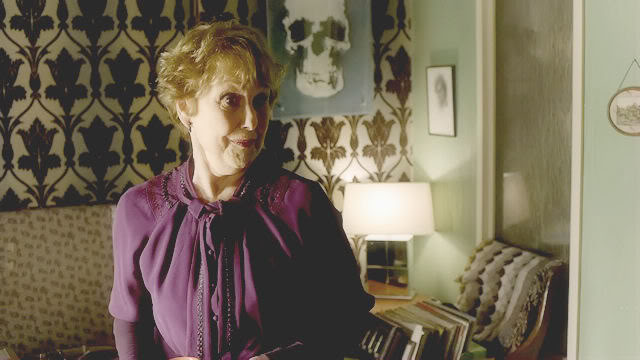
Well, John, my deductive skill tells me that we’ve discovered a robot turkey. 

Well, John, my deductive skill tells me that we’ve discovered a robot turkey.

Image:  tv.com

Perception is cognition of events, etc. as a whole.  We know people have different levels of perception and they all see things differently.  This is a great way to show something about your character.

A number of things can shape a character’s worldview.  Whether they control him and by how much depends on the proportion of their influence in his life.

Culture

Some cultures are isolationist; they believe (and teach their children) that the outside world is full of peril or is at odds with their beliefs.  For example, Amish people prefer to live a certain way in accordance with their religious dictates.  While they do make a conscious choice to join the church as adults, they rarely decide to leave their communities because their upbringing doesn’t support an existence in modern society without a huge adjustment.

A character who is exposed to other worldviews, especially during his formative years, will have more tolerance to different ways of doing things.  If your hero’s viewpoint is at odds with the situation in which he finds himself, he’s going to have a much harder time of it if he hasn’t been raised with open-mindedness.
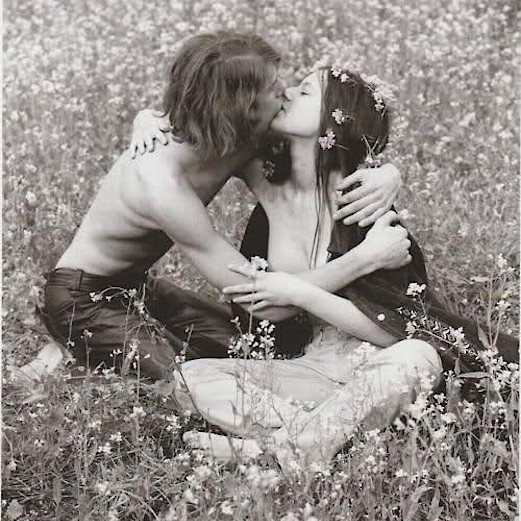
Or open-pantsedness.

Or open-pantsedness.

Image:  8tracks.com

Religion and spirituality

Many people depend on their faith for answers to the most puzzling questions of life.  Religious belief can be rigid; it doesn’t always allow for alteration and acceptance.

In the 1973 film The Wicker Man, Police Sergeant Neil Howie (Edward Woodward) comes to the remote Hebridean island of Summerisle to investigate the disappearance of a young girl.  He finds a hedonistic society that is at odds with his own strict moral upbringing.  This dichotomy causes him a great deal of anguish, and it keeps him from seeing the real reason he’s there until it’s too late.

Robin HardyÕs THE WICKER MAN (1973). Courtesy: Rialto Pictures/ Studiocanal

You’d think the people running around in animal masks would have given him a clue.

Image:  Rialto Pictures/ Studiocanal / famousmonsters.com

Education

What are some of the things we learn at school?  Besides reading, writing, history, and computer sciences, we learn socialization and cooperation.  We also learn about bullying, abuse, and cruelty.  A character who went through this in school could view people in his adult life with suspicion.  If they try to befriend him, he might think they have an agenda and avoid them.

Think about this from the bully’s point of view, too.  Your character may not be a pleasant person if he’s used to taking what he wants and getting his own way.

Media

News and popular opinion gleaned through television, radio, and internet influence people all the time.  The worst part about media is that it’s not always accurate.  People tend to take the easiest route toward learning something.  They take what they see and hear at face value and rarely bother to fact-check, unless what they’re hearing sounds suspiciously far-fetched (and often not even then).

Friends

Our friends are a huge part of our worldview.  We surround ourselves with like-minded people, and share experiences with them that reinforce those attitudes.

I’ll be there for you…but only if you're the same as me. 

I’ll be there for you…but only if you’re the same as me.

Image:  tv.com

When new people come into our circles, they sometimes shake up the status quo and give a settled group a new perspective.  Depending on that person’s motives, the change can either strengthen a group or tear it apart (which provides the writer with excellent conflict material).

———-

Your character’s worldview gives him a unique perspective on events.  Take two different people and put them in a situation with the same exact stimuli at the same exact time.  The things one person notices when he walks into a room will tell you a lot about him, as opposed to what another person would see in the same space.  See how their reactions and what they perceive differs.

This will absolutely change the way you write a scene.  It’s a huge help when working with show vs. tell.  And a character’s altered perspectives will provide you with numerous opportunities for growth and development.

 

Character: V is for Villainy!

atoz [2014] - BANNER - 910


V is for Villainy!

So you’ve decided to create a villain.  Congratulations!  Villains are great fun to write.  You can experience the worst of humanity, do really horrible rotten awful things, and wallow in depravity, muck, and vice.  All vicariously, of course.

And the clothes.  Don’t forget the clothes.

And the clothes.  Don’t forget the clothes.

Image:  fanpop.com

Villainous characters rarely come in one flavor.  There are several types, including the following, and different tactics for dealing with them.

Sympathetic villain

This one is hard to do without lapsing into antihero status.  He’s a villain because something bad happened to him, or maybe his circumstances forced him into doing the wrong thing (or the right one, but in a convoluted and awful way).  Either way, he chose his path, and he might even have grown to enjoy it.  We may not like him, but we understand him.

Tactics

You might be able to reason with this villain, especially if you lean toward giving in to him.  If you can do that without hurting anyone, he might just shut up and go away.  But you better have a contingency plan for his return, because he’s learned that villainy will make you cave.

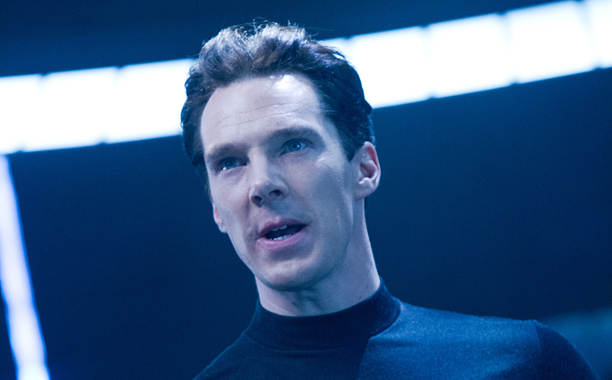
Examples:  Khan in the film Star Trek: Into Darkness, Severus Snape in the Harry Potter books.

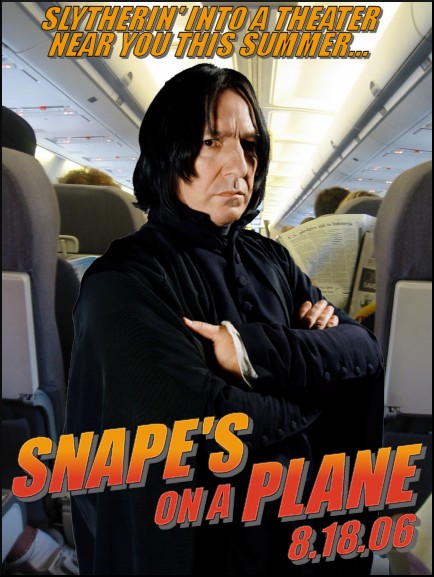
This had nothing to do with the subject, but it made me laugh really hard despite the horrid misplaced apostrophe.

This had nothing to do with the subject, but despite the horrid misplaced apostrophe, it made me laugh really hard.

 Image:  uncyclopedia.wikia.com

Unintentional villain

This is somebody who never set out to be a villain, but she ends up one anyway.  Through her actions, she hurts and threatens other characters.  She doesn’t mean to be bad and may even be puzzled by other characters’ reactions to her behavior.  An unintentional villain may also be someone who causes an accident or incident and then, terrified of the consequences, proceeds to make the situation worse with every subsequent move she makes.  Or she might just be so stupid that she’s dangerous.

Tactics

You can distract this villain long enough to escape or perhaps to push her down another path.  If she’s lashing out from blind fear, you’ll have to placate her somehow.  Show her you’re not a threat, that you’re on her side.  Maybe you can talk her down by making her feel safe.

Example:  Rhoda in The Bad Seed, Elmyra Duff from Tiny Toons

I’m gonna hug you and squeeze you and love you forever!

I’m gonna hug you and squeeze you and love you forever!

Image:  listal.com

Pure evil villain

One of my favorite characters to write was the baddest bad guy in Rose’s Hostage.  Dale Conroy is Joshua’s second-in-command in the bank robber gang.  He has absolutely no redeeming qualities whatsoever.  I did get inside his head, so you see his anger, his posturing, and his motivation.  But even though you understand him, you still hate him.  Everything he does is only to benefit himself.

Dale isn’t very clever on his own—he needs help to pull off his dastardly plot.  Unfortunately for everyone in the hideout, he knows where to find it.

Tactics

Superior strength may defeat this villain, but if you don’t have an army behind you or you can’t outfight him, you’ll have to be clever enough to find his weakness.  Everybody has one and if you can figure it out, you can take him down.

Examples:  Voldemort in the Harry Potter books, Smaug the dragon in The Hobbit, Charles Augustus Magnussen in the Sherlock episode “His Last Vow.”

Magnussen is just plain nasty, no doubt about it.

Magnussen is just plain nasty, no doubt about it.

  Image:  the guardian.com

Pure evil villains are the ones most likely to laugh maniacally and spend ten minutes explaining their wicked scheme to the hero while simultaneously buying him a chance to figure out an escape.  Seriously, this has been so overused.  If you have sufficiently shown your evil bad guy’s machinations before the final showdown, you won’t need to do this because your hero will already know about it.

Now what are some of the things that make a villainous character great?

  • He has to present a challenge to the hero.  An effective villain forces the hero into a corner.  He may actually push the protagonist so far that he’ll do something bad himself just to stop it.
  • He has to have a purpose.  Even the most terrible villains in history have reasons for what they do.  They may be twisted and stupid, but they can still end up perpetrating great evil, like Hitler with his Final Solution.  Why would a person go to so much effort unless he really believed his reasons were sound?
  • He has to be someone to whom we can relate.  The most frightening villains of all are those who walk among us and are just like us.  We all know someone who would tip over the edge if the situation were just right.  Even more terrifying is the thought that we might do the same.  When we see ourselves inside a villain, it makes us shudder.  And if he’s attractive to us somehow, desire might even tempt us to take his side.
That voice would make us do almost anything.    

That voice would make us do almost anything.

Image:  startrek.com

Whether we understand his motives or not, a good villain should have traits that make him human.   If he’s just an unreasonable monster, like Freddy Krueger, we look on him as a force of nature, the same way we see a tornado or an earthquake.  Sure, those things are destructive, but they aren’t that way out of spite or pain.

Take time to develop your villain as thoroughly as you do your hero.  After all, they’re two sides of the same coin.

Character: U is for Underpinnings

atoz [2014] - BANNER - 910

U is for Underpinnings.

No, not backstory and not underpants.  I’m talking about internal conflict, which is a mental or emotional struggle that occurs within a character.  Backstory is the events of the character’s past, his timeline and history.  Underlying conflict can stem from that.  Is there something he has to work out within the confines of the action?  It could be a past trauma, something from childhood or more recent, like a divorce or death.

He could be the survivor of a tragedy or a disaster.  The experience could leave him with messed-up thoughts and stress reactions, and it can interfere with his future decision-making.  Let it give him a phobia, and you’ve got a huge potential conflict that can even directly affect the action.

Watson will forever harbor a fear of smarmy French waiters.

Watson will forever harbor a fear of nerdy French waiters.

Image:  dailystar.co.uk

The events of the narrative can also precipitate internal conflict.  Let’s look at Frodo Baggins of The Lord of the Rings.  Frodo grew up in the Shire among his friends, adopted at 12 by his Uncle Bilbo Baggins when his parents, Drogo Baggins and Primula (really?) Brandybuck died in an accident.

It’s a pretty tranquil existence, and Frodo is content to live it as it is.  Then, along comes Gandalf poking around for what he suspects is the One Ring, which Bilbo, who just bailed on his birthday to go hang with the Elves, left in Frodo’s care.

Where he goes, trouble follows. 

Where he goes, trouble follows.

Image:  cellulord.blogspot.com

When Frodo first has to leave the Shire, he thinks he’s only going to Rivendell and the matter of the Ring will be dealt with there.  It’s a tough journey, but he doesn’t know that he will be the Ringbearer charged with its destruction (he volunteers, actually).  Like Harry Potter, Frodo has to deal with some heavy decisions and shocking events on his journey.  But the worst thing is what the Ring is doing to him while he’s trying to destroy it.

Because Frodo is pure of heart, it takes longer and hurts more, but he eventually succumbs to its insidious influence.  The conflict changes him deeply and wounds him terribly.

And leaves him in dire need of some Rivendell hair and skin products.  

And leaves him in dire need of some Rivendell hair and skin products.

Image:  flavorwire.com

You can use the story to help the character work through his traumas or leave them separate and simply allow them to influence events.  People tend to avoid things that remind them of painful experiences or elicit the same feelings.  Your protagonist could do this and screw himself in so tight your readers will wonder if he ever gets out.  A little tension never hurt a story, nor did a little glimpse of underpinning at just the right moment.

Character: T is for Talking

atoz [2014] - BANNER - 910

T is for Talking.

A character’s dialogue says a lot about him.  It’s a great way to use exposition without wasting a lot of time talking about the character’s past, doing flashbacks, etc.  In just a few sentences, he can tell you where he’s from and what is most important to him.

I don’t need to hear you talk.  Even completely pissed, I can guess your entire past simply by smelling your coat sleeve.  

I don’t need to hear you talk.  Even completely pissed, I can guess your entire past simply by smelling your coat sleeve.

Image:  BBC/beatrixblog.wordpress.com

In Tunerville, there’s a marked difference between the way Chris (the protagonist) and Callahan (spirit of the Realm) talk.  When Chris tries to tell people not to use the tuners, he uses very plain language—he just tells them to stop.  When Callahan appears, he says, “Cease use of this instrument or there will be dire consequences.”  When the two of them are talking without any tags, you can tell it’s two different people.

When I write a character’s dialogue, I think about who he is and where he’s from, and that influences my word choices.  An educated character who lives in an affluent suburb won’t talk the same as someone from the sticks.

Accents are a bit different.  You can’t really hear an accent when you read (not literally), so you’ll have to imply it so readers can hear it in their heads.  If I make him say he’s put his wellies in the boot of the car and dammit, where did he leave his biro, because he’s got to make a list for the grocer’s whilst Emma is having a bath, then you might surmise he’s from England.  You would be right.  Can you hear it?

I’m not even going to try and reproduce any other UK accent here; there are quite a few.  If you want to hear 14 accents in 84 seconds, watch this video.  It’s the coolest thing ever.

All this applies to dialect as well, which can be written phonetically to a degree, but you can’t go overboard with it.  Avoid what Margaret Mitchell does in Gone with the Wind:

             “…Now, did you hear us say anything that might have made Miss Scarlett mad– or hurt her feelings?”

Thus appealed to, Jeems gave up further pretense of not having overheard the conversation and furrowed his black brow.

“Nawsuh, Ah din’ notice y’all say anything ter mek her mad. Look ter me lak she sho glad ter see you an’ sho had missed you, an’ she cheep along happy as a bird, tell ’bout de time y’all got ter talkin’ ’bout Mist’ Ashley an’ Miss Melly Hamilton gittin’ mah’ied. Den she quiet down lak a bird w’en de hawk fly ober.”

You can’t argue that it’s Southern speak, either, because only the black characters talk like that.  Not only do many people think that’s pretty racist, it’s nearly impossible to read.  Dialect works best when you suggest it.

Be careful not to use what many writers call Hollywood dialogue, where the character tells another person stuff they both already know.  It’s clumsy.  Poor writers often use it for exposition.

“As you’re aware, Robin,” said Batman, “the Joker has been a nemesis of mine for many years now.”  

“Batman facepalm”  is apparently a thing.  A thing you can google.

“Batman facepalm”  is apparently a thing.  A thing you can google.

Image: comicvine.com

Probably the best thing you can do for good dialogue and characterization is go sit somewhere and listen to people talk.  See if you can guess two things about them just by listening to their conversation.  Try it; you might even hear something that will inspire you.

Character: S is for Sex

atoz [2014] - BANNER - 910

S is for Sex. 

Sex is one of our strongest urges, and our most troublesome.  Who we love and who we want to boink is the driving force behind many a literary conflict.

Will you make your character heterosexual or homosexual?  This does make a difference because of the dynamics involved in having those relationships.  Many gay people hide their sexuality for various reasons.  If your character is gay and in the closet, what are those reasons?  If she is not, why does she choose to be out?

Is she bisexual or polyamorous?  That sets up a whole different dynamic right there.  Regardless of orientation, you will have to consider who her lovers are and why she chooses them.

A seething cauldron of desire.

A seething cauldron of desire.

Image:  bbc.co.uk

If she has more than one, the dynamics here will affect the other characters as well.  Otherwise reasonable people may change markedly when sexual jealousy (the absolute worst kind) rears its head.  There will be a whole set of logistical management issues, especially if they don’t know about each other.

You should also consider whether your character prefers intimate relationships or just has sex.  I already did a post about writing actual sex scenes, so I won’t repeat that here.  This is part of your larger character arc—and if she’s just having casual sex, you should give her a solid reason why.  Perhaps a relationship didn’t work out and she can’t seem to connect with anyone.  She could be seeking to reproduce that experience and no one quite fits, or she might be trying to distance herself from it.  Or maybe she just enjoys it and isn’t ready to settle down with one person.

Another consideration is whether an adult character has had sex at all.  A virgin could be interesting to write, especially a male character, and one who is a bit older than the average guy at the time he’s deflowered.  We tend to assume everyone over a certain age has done it at least once, but that isn’t always the case for everyone.

Probably never.

Probably never.

Image:  harrypotter.wikia.com

Your characters’ backgrounds affect how they will act because of their socialization and cultural conditioning.  You can certainly play with making someone act in ways that aren’t typical of their gender roles in whatever culture (or time period) they live in, but avoid lapsing into stereotypes.

Certain types of fiction likely won’t discuss characters’ sexuality—children’s and middle grade won’t go there, although young adult fiction often does.  Thrillers tend not to have much sex in them at all, or it’s not relevant to the plot so it gets left out (boo!).  Horror fiction characters do it all over the place and with all kinds of creatures.

Just ask Rosemary. 

Just ask Rosemary.

Image: © Paramount Pictures / starpulse.com

Despite what some people would have you believe, we are sexual beings.  We’re one of the few animals that can (and does) mate at any time, not just during certain biologically proscribed periods.  Our carnality doesn’t have to rule us, but it definitely influences us.  When you build the scaffold of your well-rounded character, keep it in mind.


Character: R is for Romance

atoz [2014] - BANNER - 910

You and I breathe the same air,
Though we have not walked beneath the same boughs.
In the vast spread of molecules throughout the cosmos,
Our paths move inexorably toward one another
And we mingle,
Though we have not met.
We are made from the stuff of stars, of the twinkling points of light on which we gaze,
Pondering the possibility of each other, perhaps at the same moment.
One day the fabric of space and time will bend.
I will fall toward you,
And you will catch me,
And we will become one.
Until then, you will think that there is no one for you;
I will think the same,
And we will both be wrong. — © Elizabeth West

———-

R is for Romance.

I was watching Cosmos and feeling wistful, okay?

When you give your character a relationship in your story, you’ll have to consider how he deals with romance.  What elements would influence how he does this?

Socialization

In Western society, men are expected to pursue the women they’re interested in.  While women in today’s world feel more comfortable making the first move, quite a few would rather be pursued.  And many men still feel that the role of the pursuer belongs to them.

If your protagonist lives in another time, the rules could be very different.  Someone whose behavior doesn’t align with accepted norms will clash with other characters, making for some interesting conflicts.  Even modern eccentrics can throw a spanner into the works.

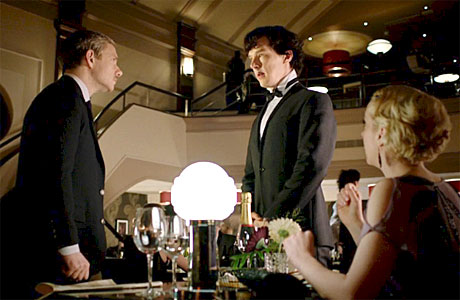
This waiter has extremely bad timing. 

This waiter has extremely bad timing.

Image:  bbcamerica.com/anglophenia

A big part of romantic socialization is the expectation we get from books, movies, and love songs with which we grow up.  Grand gestures are seen as the ultimate in true romance.  But what if your protagonist can’t afford more than a simple bouquet of carnations?  You might want to show the value of small, loving acts of thoughtful expression in your story by having your broke lover at least get them in her favorite color.  Bonus points if he has to leverage some effort to find out what that is.

Personality

Put an assertive person and a retiring person in a story where they both want the same lover and see what happens.

The assertive person is far more likely to go home with someone’s number that night.  He’s also more likely to strike out, for the same reason people who fly frequently are more likely to lose their luggage:  the more chances you take, the more chance you have of both success and failure.

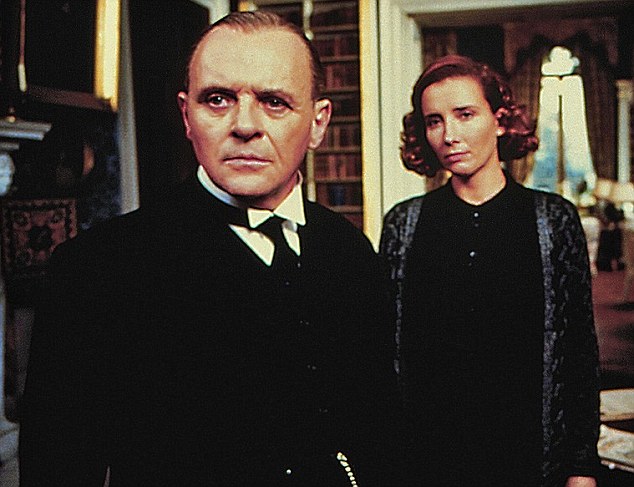
How would your character, if he were the shy one, handle this?  You could use it to push him into pursuing his true love, if you liked, or you could let his social anxiety strangle him.  In Kazuo Ishiguro’sThe Remains of the Day, the butler Stevens and the former housekeeper of Darlington Hall lose their chance at happiness together because they simply cannot admit their feelings for each other.

Talk about the British keeping a stiff upper lip…

Talk about the British keeping a stiff upper lip…

Image:  dailymail.co.uk

Even if he does manage to speak the truth to his lady love and she reciprocates, remember that no one is perfect.  The road to true love is a bumpy one.

Experience

To handle his epic romance successfully, your character will need more than just a winning personality and proper socialization.  He should have some experience dealing with the emotional needs of another person and the practicalities of such a liason.

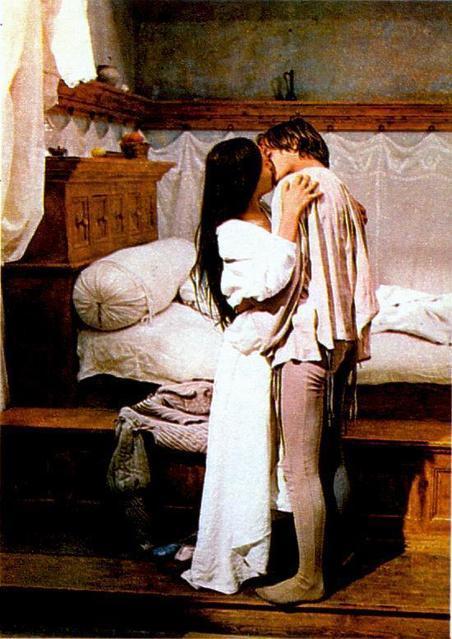
One reason I can’t stand Romeo and Juliet is that they’re both so incredibly stupid.  Romeo spends the entire play complaining and mooning over first Rosalyn and then Juliet and waiting for everything to work out. Even when he gets her, he’s a complete idiot who thinks only of himself.

Juliet is no better.  She knows that her family will never accept her marriage, and the plans she lays for her future are ill conceived and childish.  One wonders:  if they were clever enough to sneak out long enough to get married, why could not they have left after that and sent word later on, when it was too late to do anything about it?  Perhaps they were too young to think past the wedding night.

It’s all about the nooky.

It’s all about the nooky.

Image:  pinterest.com

I guess the only way it works is because they’re both really inexperienced teenagers.  To accept the tragedy, we have to accept their love.  But they’re both such idiots, it’s rather difficult.  I’ve often wondered if Shakespeare (who lifted this story from an older one) wrote it this way on purpose, to divide the audience.

Consider these aspects of socialization, personality, and experience in planning your characters’ romantic interactions.  Whether your big romance is the main focus of the narrative or simply a side plot, it will have more impact if your characters behave authentically.


Character: Q is for Question

atoz [2014] - BANNER - 910

Q is for Question.

There is one question you must ask yourself when you create a character.  Every decision he makes in the course of the narrative will hinge on the answer.

What does this person want?

Goals and wants are not necessarily the same thing.  Your character can have goals, be they professional or personal, and they could be miles away from what he truly desires.  Different people want different things, and the goals they set will help them achieve them (or possibly not).

Circumstances may tear a character away from what she wants most.  In Eric Knight’s classic novel Lassie Come Home (1940)our heroine is sold to the Duke of Rudling and taken far away from Joe, the boy she loves.  She misses him so much that when she escapes, she sets off on a dangerous and harrowing journey from Scotland all the way to Yorkshire, and home.  I absolutely adored this book as a child and freaked when I managed to find a copy.

Image:  Wikipedia

A character’s wants can also blind him to his moral path.  Twisted desires are the focus of many a tale.  Consider Boromir from The Lord of the Rings: The Fellowship of the Ring.  He’s the jock hero of Gondor, its most decorated warrior, and the favorite of his father Denethor.

Boromir’s desire to save the struggling kingdom of Gondor colors all his thoughts.  He wants to save his people.  The Ring senses this and tries to exploit it, knowing how close Gondor is to Mordor and from there, to the hand of Sauron.

You can almost hear the Ring whisper to him, can’t you? It’s saying, “Bésame…bésame muuucho…”

You can almost hear the Ring whisper to him, can’t you? It’s saying, “Bésame…bésame muuucho…”

Image: buffsisters.wordpress.com

The closer the company comes to actually carrying out the purpose of the Quest, the deeper becomes Boromir’s torment as he tries to justify to himself actually taking the Ring from Frodo. At Amon Hen, he finally gives way to his desire, breaking the Fellowship.

The Ring used Boromir’s wants against him.  But in a way, Sauron’s desire to possess the Ring of Power (and his failure to realize that a tiny hobbit held the key to his doom, not the mighty armies of his enemies) blinded him to the other characters’ purpose in destroying it.

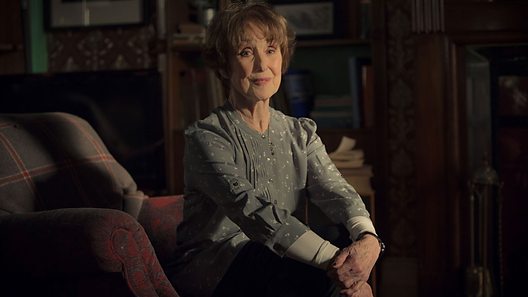
While some characters want things to change, others want them to stay the same.  Mrs. Hudson, Sherlock Holmes’s landlady, would probably like a quiet house and a tidy tenant.  Instead, she gets someone who plays the violin (screech?), does smelly, messy experiments, and has all manner of people traipsing in and out at all hours of the day and night.

Yes, dear, I know it’s important, but you’ve got to stop blowing up the coffeemaker.

Yes, dear, I know it’s important, but you’ve got to stop blowing up the coffeemaker.

Image: endodo4ever.wordpress.com

Bilbo Baggins in The Hobbit also wants a nice quiet life, but Gandalf drags him into the Quest of Erebor and he ends up quite a different person from who he was when he started.  You might start out with your character pushing toward his desires at the beginning of your narrative, but as in life, the paths of the best stories wind and twist and rarely go anywhere in a straight line.

Ask your character this question.  Listen to what he has to say.  You might be surprised by the answer.

Character: P is for Potency

atoz [2014] - BANNER - 910

P is for Potency.

I was going to write about perception, but I realized that I’d already touched on that in a couple of other posts in this series.  And I was exhausted yesterday, so I trashed my P post and went to bed.  Now that I’m awake and infused with British culinary delights from the city’s best food truck, I shall tackle yesterday’s and today’s posts.

Potency is a noun meaning efficacy, effectiveness, or strength.  We spoke about kryptonite, or weakness.  Every character has to have something he is better at than anyone else.  And you can use this ability or talent in the story in unexpected ways.

Think about your favorite characters.  What’s the one thing they can do that no one else can, or the thing other characters always seek from them?  What about them makes them able to achieve their goals despite incredible odds?

My potency is quite obvious, isn’t it?  Now bring on the next client.  I’ve got through five already before breakfast. 

My potency is quite obvious, isn’t it?  Now bring on the next client.  I’ve got through five already before breakfast.

 Image:  thewallmachine.com

Thought not a magical genius like Hermione Granger, Harry Potter is quite an excellent wizard, practically speaking.  He managed to cast a Patronus charm well before any of his classmates could (in fact, he taught them to do it in Order of the Phoenix).  He isn’t the best student; but since someone is always trying to do him in, that’s understandable.  He still got decent grades despite all the craziness.  His flying and dueling skills are top-notch.

But the thing he is most potent in, his most important quality, is his strength of character.  Harry will protect anyone he cares about to the death if necessary.  He’s absolutely without guile, and he always seems to know the right thing to do.

I’m hardly perfect; I passed out during my History of Magic exam and failed!

I’m hardly perfect; I passed out during my History of Magic exam and failed!

Image:  fanpop.com

No wonder Voldemort couldn’t defeat him.  In order to vanquish one’s enemy, one has to understand that enemy.  Harry was a mystery to the dark wizard, who couldn’t understand friendship or love or loyalty.  People gave their lives to protect Harry because they loved him.  Voldemort’s followers mostly feared him.

Combine potency with kryptonite and your protagonist might find himself in the throes of a conflict from which it will take him most of a book to disentangle himself.  A person who always sees the good in others might lean too far toward giving them the benefit of the doubt.  Before she knows it, she could be:

  •  Ensnared in her evil boss’s evil shenanigans
  • Married to an evil man who cheats on her and cleans out her bank account
  • Married to an evil woman who does the same thing
  • Doing all her evil coworkers’ tasks because she can’t see that they’re taking advantage
When I said I’d help with your TPS reports, this isn’t exactly what I meant.

When I said I’d help with your TPS reports, this isn’t exactly what I meant.

 Image: Michal Marcol / FreeDigitalPhotos.net

When you assign your character potency, be careful you don’t give him too much power.  It could get out of control and become a weakness.  Absolute power corrupts absolutely, and even a good person can become overconfident in his own abilities to the point of disaster.  Of course, this could make a really good story even better.


Character: O is for Outcast

atoz [2014] - BANNER - 910

Gabriel Garcia Marquez, the master of magical realism and author of the exquisitely complicated novel One Hundred Years of Solitude, has died at 87.  Rest in peace, sir.

Image: Wikipedia

O is for Outcast.

I could caution about writing a character like this.  A true outcast is one for a reason.  He isn’t going to suddenly become all warm and fuzzy because someone takes him in.  He may be an outcast because he’s an intolerable ass, a dangerous psychopath, or severely antisocial.

At times, Sherlock fits all three.  But we love him anyway.

At times, Sherlock fits all three. But we love him anyway.

Image:  Splash News / dailymail.co.uk

An outcast probably has something wrong with him.  You could get into his head, but I would suggest not making him too sympathetic, because warm fuzzies don’t work with someone nobody wants to be around.

You could also explore how someone otherwise okay becomes an outcast.  Take Carol Peletier in The Walking Dead—she suffered huge changes and losses.  Over time, she became so concerned with survival that she SPOILER: 1) began giving the children in the prison knife lessons, and 2) murdered other survivors to keep illness from spreading, thus shocking Rick to the point where he banished her.  Interestingly, Rick then had to kill survivors to protect Daryl, Carl, and Michonne in Season 4, something he was trying desperately not to do.  END SPOILER

Things to think about when writing an outcast:

  • Does the reason he’s an outcast make sense?  Meaning, if he kills baby puppies, yes, but if he drinks the last of the milk, no.  Wait….let me rethink that last one.
  • Where will he live if he’s not with other people?
  • If he is, will they be polite to him, or will they throw things at him when he appears, either literally or figuratively?
  • How will he survive if the story is not set in modern times?
  • If a modern outcast, will he be one everywhere or just in a certain circle (everywhere could be interesting, especially if you involve Internet stuff like doxing)?

All this assumes your outcast is a bad guy.  What about anti-heroes?

An anti-hero is a different kind of outcast.  Though he lacks the qualities that make a typical hero (bravery, selflessness, nobility, etc.), we end up rooting for him anyway.  He could be someone like Hannibal Lecter, who is irredeemably damaged but who we love because he’s just so incredibly unique (and we can’t wait to see what he’ll do next).  His motives for doing the right thing despite himself can be incredibly complicated or devastatingly simple.  Either way, he’s not going to be the most popular kid in school.

Classic Hogwarts outcast.  Good or bad?  Discuss.  If you haven’t read HP, DO IT NOW, GRASSHOPPER.

Classic Hogwarts outcast.  Good or bad?  Discuss.  If you haven’t read the books, DO IT NOW, GRASSHOPPER.

Image:  harrypotterwikia.com

If you’re going to write one of these characters, you’ll have to work hard to make him sympathetic (if he’s your protagonist) and not make him a caricature (if he’s your villain).  It’s harder than it looks to give someone noble motives and still ensure that readers don’t like him.

Have a favorite literary outcast?  Share in the comments.