H is for Human

atoz [2015] - BANNER - 910

Humans!

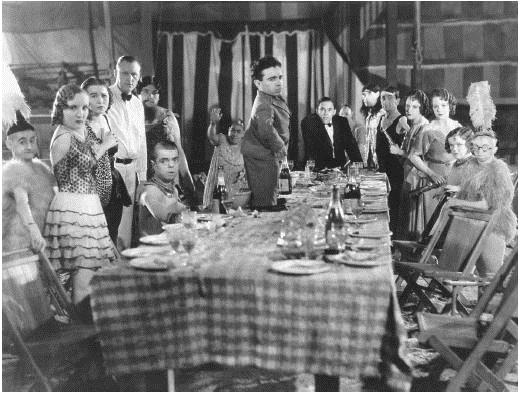
We naked apes have been telling stories to each other since the world began.  The old tell stories to the young, mothers to children, friends to each other.  People love to talk about themselves and their experiences.

“As I was saying, then he bumped into me on the bus, and you should have SEEN the look he gave me!  As if it were my fault!  So then I said….”

“So, like, then he noped on out of that swamp and left me to deal with the anaconda alone!  And he glared at me like it was my fault!  When we got back to camp, I pulled out my Tazer and….”

Image:  Serge Bertasius Photography / freedigitalphotos.net

I’ve listed three ways you can do research for your book by mining the great resource that is other people.  I’m only talking about fiction—non-fiction research involves much more fact-checking and digging.  Fiction doesn’t have to be true, or even realistic, to entertain.

1–Talk to your peeps

Your fellow meatspace inhabitants can provide you with all kinds of anecdotes and verifications.  Does your protagonist need to know how to change out a carburetor?  Know someone who does it for a living?  See if they’ll sit down with you and answer some questions.

Family members and older friends who like to reminisce will probably have tons of fascinating glimpses into a vintage era.  Did Uncle Harry live on a commune back in the day?  Ask him about it.

Better catch him now; he’s off to another protest.

Better catch him now; he’s off to another protest.

Image:  David Shankbone / Wikimedia Commons

TIPBe very careful asking people about wartime experiences, surviving disasters, and other traumatic memories.  They might not want to recall those things, and you don’t want to revive old nightmares.  You can find plenty of info on things like WWII, the Vietnam War, or cruise ship disasters by googling and reading.

Chat with people.  In the course of small talk, you might hit on something fascinating.  Ask lots of questions and listen.  One blogger did this and found out some really cool stuff.  (But in general, don’t bother people on the Tube.)

2–Don’t forget your cyberpeeps

Join forums and follow pages devoted to your interest.  I mentioned that Facebook page I follow about London; commenters there drop tons of little details.  I’ve even friended a couple of them.

TIPBe careful who you friend or contact on social media.  Before Internet, I once phoned an author to ask about something in his book about drugs and psychiatry (he welcomed questions), and he turned out to be completely paranoid.

Try a website like Quora.com.  Sign up and get an account–then you can ask questions, comment on other questions, etc.  This link contains more info about the site.  I get a regular email from them, customized to particular subjects in which I have an interest.  Some of the questions are goofy as hell, but I’ve found enough good information that it’s worth the occasional junk posts.

3–Find some expert peeps

You may need to pay experts for their time.  I sourced a local medical professional for Tunerville’s pivotal scene; I was already a client of hers.  I scheduled an appointment and totally would have paid for it to get the information I needed, but she thought the whole book idea was cool and didn’t charge me for her expertise.

Check local universities.  Subject matter experts (SMEs) abound–again, for Tunerville, I had a chat with a physics professor at my alma mater.  I knew him from attending a film club he ran on campus (which I actually heard about through a coworker).

Your connections matter!  So network any time you can.  Talk about your work to people you meet.  They might have tidbits you can use, or even know an SME who can help.

Commence schmoozing in….three…two…one….

Commence schmoozing in….three…two…one….

Image:  stockimages / freedigitalphotos.net

The FBI Office of Public Affairs exists specifically for SME inquiries from media professionals.  This includes filmmakers, journalists, and fiction writers.  I sent a registered letter asking to speak with someone for Rose’s Hostage.  They put me in touch with a Special Agent in Charge (SAC–law enforcement loves acronyms) in a city near mine and he patiently answered all my questions via email.

Now that I have all this juicy peep stuff, what do I do with it?

  • First, figure out what will work in your narrative and what won’t. Your auntie Myrtle’s racy story of the time she snuck into the crypt at St. August’s Church in the 1940s and made out with the assistant vicar probably won’t fit in a tight thriller about mercenaries on the high seas.
  • Make sure you get permission to use the information. Auntie Myrtle might tell you about the vicar when she’s tiddly in the living room, but the thought of her indiscretions in a book could have her clutching her pearls.
  • If you do get permission, change details or names that could identify people. Not everyone wants to end up on Buzzfeed* if your book goes nova.
  • Buy them lunch or a drink if you can manage it, thank them for their time, offer them a copy of the book, etc.
  • Some people might be happy with a mention on the acknowledgements. They can point to it in their copy and tell their friends, “I helped with this!”  You can email them or ask if they’re okay with being included.

Be polite when you ask for people’s time.  Work around their schedules.  Keep your inquiries short so you don’t tire them out or bore them to death.  You can choose to tell them your plot or only reveal certain details.

Remember, people want to help.  It’s a human thing.

Related articles:  How to Find Expert Sources for Articles, by Cindi Myers at www.fundsforwriters.com


*Warning: stay off Buzzfeed if you’re working. It’s a huge time suck!

G is for Geography

atoz [2015] - BANNER - 910

So you’ve decided to set your book in a faraway place, one to which you’ve never been.

Are you MAD?

Are you MAD?

Image: graur razvan ionut / freedigitalphotos.net

Perhaps, or maybe your imagination conjured up a story that doesn’t fit in the cozy suburb you’re used to.  If you want your setting to seem authentic, you’ll have to learn a bit about it.

Topography

Does your location have mountains? If so, are they craggy peaks with snow and alpine meadows, or are they lower and tree-covered?  Or is it flat, with views for miles around?  Can your characters see that huge tornado coming?

It’s that time again.

It’s that time again.

Image:  imdb.com

Weather

Speaking of tornadoes, if you set a story in the Midwest in the spring, you might want to consider this.  A perfect March and April?  Just doesn’t happen here.  Summers are hot and humid; winters tend toward cold, damp, and blustery.

The weather affects your characters.  What they wear will depend on it.  They’ll probably check the radar before they decide to drive up to the hunting cabin.   You can build the weather into your conflict.  Maybe brothers Randy and Art have been circling around an issue for a long time.  A snowstorm strands them in the cabin for a few days?  Perfect time for a confrontation!

Distance and transportation

Distances have to make sense.  In Danse Macabre, Stephen King pointed out one of his own mistakes, something he did in his novel ‘Salem’s Lot.  He said he had Ben and Susan hop in the car and go to a film in a particular real-life location, coming back that same night.  From where he had located his fictional town, they would have had a three-hour drive one way.

Hey, nobody’s perfect. 

Hey, nobody’s perfect.

Image:  Mike Segar/Reuters via The Atlantic

Many smaller U.S. cities don’t have great public transport either.  A poverty-stricken character won’t have a car; you’ll have to work out the logistics of where she works (if she’s working) and how she gets there.  Her finances will affect her transport issues, which will affect how far she can go from home.

Things to do

Where would your characters go for an evening out?  If you put them in Freeport, Kansas (population 5), they’re not likely to find the opportunity to glam up for a theater date downtown.  Characters who grew up in a cosmopolitan area of London probably never learned how to feed chickens.

You’ve got the basis for a fish-out-of-water story if you want to move a Londoner to Freeport.

WILL IT EAT ME?  AM I SAFE???

WILL IT EAT ME?  AM I SAFE???

Image:  Vitolef / freedigitalphotos.net

If you’re going to make up a place, you’ll still have to consider these elements and more.  Layout, neighborhoods, proximity to other locations–all will have to be solid in your head so that when you move people around, you’ll avoid putting them in impossible positions.

Get your geography sorted so your characters can stretch their legs.

F is for Fantasical

atoz [2015] - BANNER - 910

I spent all day trying to think of an F word (snicker) for this post.  I kept hitting on fantasy, but the intellectual brain said, “Don’t be silly; fantasy has nothing to do with research.”

The lizard brain said, “Sure it does!  If you’re writing about fantastical creatures, wouldn’t it make sense for you to research their origins?”

It’s thin, I know.

You must know about us, so that you do not sully our reputation with sparkly bullshit.

You must know about us, so that you do not sully our reputation with sparkly bullshit.

Image:  film4.com

Fantasy literature deals with subjects that are removed from reality.  Many fantasy writers invent elaborate worlds and the creatures that inhabit them, but others mold new versions of those that have gone before.

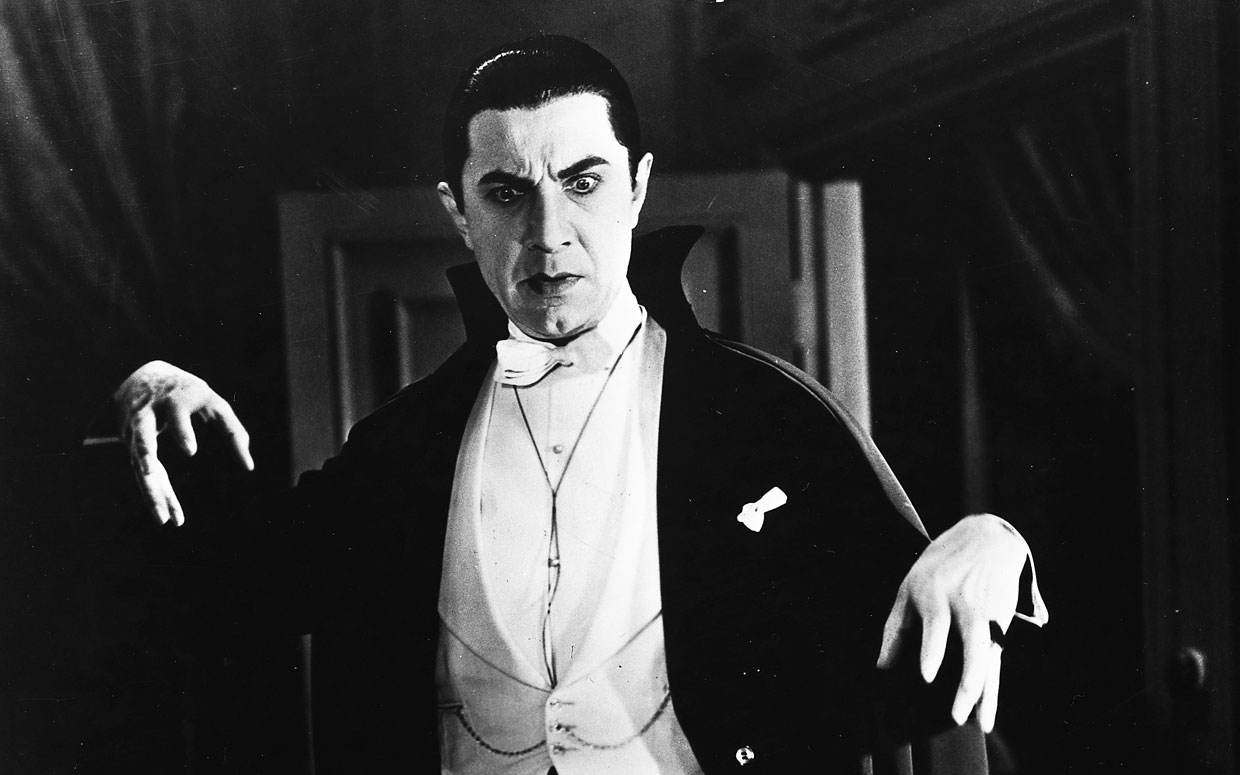
Horror is a subgenre of fantasy, so let’s discuss vampires, since our dear Count Orlok above suggested it.  This monster shows up in many cultures, but what we think of as a vampire first came to us out of Eastern Europe.  Originally, it was a demonic, reanimated corpse, not the pleasant, even erotic being of later fiction.

Abraham “Bram” Stoker gets most of the credit for bringing the vampire into the world of the Victorian drawing room.  In folklore of the Balkan and Transylvanian area, vampires are generally a peasant myth; Stoker elevated the monster to a station in life in which he could meet and threaten his genteel heroes.

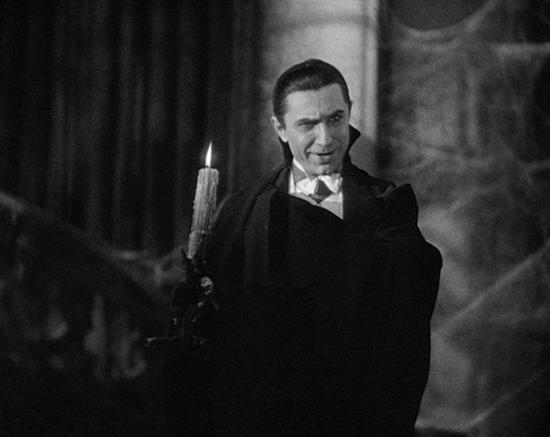
Good evening.  I am here to scare the living piss out of you.  Then I vill drink your blood.  Ahh hahahahaa. 

Good evening.  I am here to scare the living piss out of you.  Then I vill drink your blood.  Ahh hahahahaa.

Image:  immortalephemera.com

Stoker’s decision to make over the monster from a reanimated corpse visiting its family in the night into a wealthy and powerful nobleman changed the vampire tale for years to come.  Dracula, first published in 1897, became a hit even then.  The novel has not been out of print — ever.

I’ve read it; you should too.  For a Victorian book, it kicks ass.

But Stoker wasn’t even the first to do this.  The original creator of a high-born vampire was actually physician Dr. John William Polidori.  His short story The Vampyre contained the first high society bloodsucker.  He loosely based his monster on the fragment of a story written by his most famous patient, the poet George Gordon, Lord Byron.

Even the story of the story fascinates.  Polidori wrote it during the summer of 1816, when he, Byron, poet Percy Bysshe Shelley and Shelley’s fiancée Mary Wollstoncraft Godwin (later Shelley), and Mary’s stepsister Claire Claremont had traveled to Lake Geneva.

Thanks to a huge volcanic eruption, the weather really sucked that year.  In fact, it was actually called “The Year without a Summer.”  It rained so much they had to spend all their time indoors, and one night after reading from a book of ghost stories, Byron suggested they each try their hand at writing one.

I was cocky like that.

I was cocky like that.

Image:  thecultureconcept.com

Byron wrote and discarded the fragment later appropriated and revised by Polidori.  Shelley penned a story as well, and Mary, after a nightmare caused by their earlier reading, produced the first scribblings of what later became Frankenstein, or, The Modern Prometheus.

You can read Polidori’s story here, if you like.

———-

I did this research for a paper long ago; that’s how I know so much about vampires.  I shared it with you to show you something.

The vampire has certain characteristics.  No matter how you mix it up, you have to stick with the basics.  It is what is known as an archetype, which is a first form or prototype.  Everyone knows what a vampire is.  If you’re writing a straight archetype and you stray too far from canon, you run the risk of ridicule.

You were saying?

I know the Twilight series made lots of money, but it wasn’t because Meyer’s vampires were scary.  Edward Cullen didn’t even have any fangs.

Anne Rice took the noble vampire a bit further when she turned the creature into a romantic figure in Interview with the Vampire.  But Lestat de Lioncourt, the hapless Louis, the vengeful Armand, and especially the child vampire Claudia were still quite monstrous.

From Nosferatu all the way through Buffy the Vampire Slayer, writers have taken the archetypical bloodsucker in all sorts of directions.  But he’s still a thirsty demon at heart.

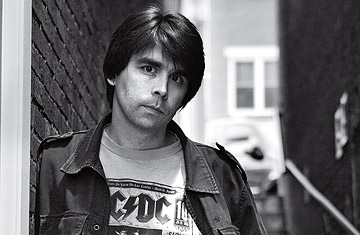
Speaking of new directions, one of the freshest takes on the Devil I’ve seen recently is Joe Hill’s Horns.  Who is Joe Hill, you ask?

Do you know me?  You might know my dad.

Do you know me?  You might know my dad.

Image: content. time.com

That’d be me. 

That’d be me.

Image: goodreads.com

Horns is about a guy accused of the murder of his former girlfriend.  He wakes up one morning with big horns growing out of his head.  They have the eerie effect of making people tell him stuff he doesn’t want to know — or does he?

If you haven’t read Horns or seen the film with Daniel Radcliffe, and you’re not too squeamish about horror, do it.  DO EET.  In fact, do it anyway, even if you are squeamish.

TIP Breaking rules requires you to know them.  So study up on your monsters, fairies, werewolves, and ghosties.  Before you monkey with the archetype, make sure you aren’t straying too far afield.  Readers like it when you do something new, but they get even more excited when they recognize it first.

E is for Ethics

atoz [2015] - BANNER - 910

Today’s topic is ethics.  Bear with me, because I took off my funny hat for this one.

Serious cat

Image:  knowyourmeme.com 

What does this have to do with research?

More has been written on this subject than I can even attempt to discuss here.  For fiction writers, research colors the work with authentic detail.  It enhances believability.  It helps with world-building.  It also raises questions of responsibility with the dissemination of information that could be used for nefarious purposes.

World-famous author Stephen King has been blamed for inciting violence with his own fiction.  The 1997 Heath High School shooting, in which Michael Carneal opened fire on a group of praying students, is the primary example.  Carneal had a copy of King’s short novel Rage, written under the pseudonym Richard Bachman, in his locker.  In the book, student Charlie Decker kills his algebra teacher and holds the students hostage, forcing them to participate in a bizarre social experiment.

King apologized for any contribution his book made to this or other incidents.  The novel fell out of print shortly thereafter and is no longer available in The Bachman Books collection or separately (although you could probably find it used if you really wanted to).

Disclaimer:  I have the original collection.  While the story is very good, I can easily see why the book was allowed to fade out of sight.  It’s basically a how-to for this type of crime.

This 2012 Psychology Today blog post by Joseph Grenny calls for a law restricting inciting speech, especially in the aftermath of school shootings that are the work of copycats, either using Rage or other media to spur them on.

Doubtless, many teenagers read King’s book.  A fair number of them probably identified with Charlie Decker.

I’m not sure I agree with Grenny on this, because as commenter TerryS helpfully pointed out, both the U.S. and England have managed to reduce the harmful consumption of cigarettes and alcohol respectively by education and public awareness campaigns.  Prohibition of alcohol cost the U.S. a great deal (and it didn’t stop anyone from drinking).

But TerryS has another point, and so does Grenny.  Mass media glorification of murderers and serial killers is nothing new; however, with the immediacy of the Internet and the growing inaccuracy of reporting these days, we should be careful what we say and how we say it.

We know that certain types of individuals seek glorification through their acts.  We also know that people have an insatiable appetite for the details of gory or shocking crimes and a deep need to understand why horrible incidents occur.

Take the recent crash of Germanwings Flight 9525, driven nose-first into the French Alps by a suicidal pilot, whose actions killed himself and all 150 others aboard (144 passengers and 6 crew).

If this were a fictional scenario, a writer might research ways to accomplish such a horrific act.  Should he outline every detail of his research in the narrative, including the exact methods, and the safeguards that the pilot overrode in order to carry out his plan?  Because that’s what the media has done, and assuming he had similar access, now the reader knows exactly how to do it.

Notice I am not mentioning his name–not only is it widely available on other media, including the article I linked to, but I don’t wish to give him personally any more attention.  By continually focusing on him, we may feed the starving psyches of other people in a similar state, who might look upon this pilot’s posthumous fame as something to aspire to.

Though caution is widely recommended by experts when these tragedies happen, and the media pays little or no heed every time, thankfully very few suicidal people follow this type of path.

As a writer, what can I do?

Restricting creative speech would hurt writers and other artists.  What would be the result of a law like this?  Would we have to submit our work to a government entity to ensure it won’t unduly influence a very small segment of the population into committing violent acts?  Who gets to decide that?

Damned if I do; damned if I don’t. 

Damned if I do; damned if I don’t.

Image:  David Castillo Dominici / FreeDigitalPhotos.net

I don’t think we necessarily have to discontinue writing horror fiction and crime stories, or censor ourselves too much.  But I do think we should be careful what information we put out there, lest we find ourselves accused of undue influence — or worse, the target of a lawsuit.

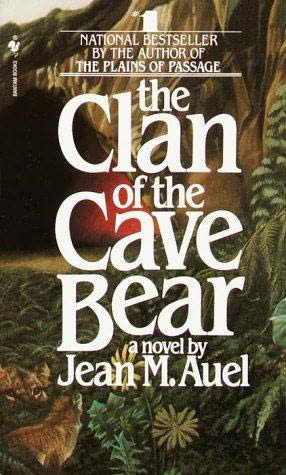
Most of your investigative results won’t find their way into your work.  A well-researched story works better when not laden by scads of detail.  I’m not including works like Jean Auel’s Earth’s Children series — the saga of Cro-Magnon woman Ayla and her lover Jondalar, her Neanderthal Clan, and their Ice Age world are all the better, I think, for the rich and varied minutiae of that era the author included.

Prehistoric fantasy at its finest!  Thank you, Ms. Auel!

Prehistoric fantasy at its finest!  Thank you, Ms. Auel!

Image:  earthschildren.wikia.com

If you’re writing about Ice Age peoples, then weapons construction is probably okay (most people aren’t going to try to construct a flint ax head or an atlatl).  If you’re writing about bank robbers, as I did, it’s probably not a good idea to include a recipe for the flash-bangs they use during heists, though a savvy redditor or 4chan user could probably find one in about two seconds.

Use research responsibly, folks.

D is for Discipline

atoz [2015] - BANNER - 910


Discipline is a term used to describe an academic field of study.  For example, psychology is a discipline, and history, etc.

How do you narrow down the fields you’ll need to research for a particular work?  You might need to take sips from several glasses.  Some examples follow.

  • Psychology:  The way people act and react in response to various stimuli that I, the author, might decide to torture them with (muwahaha)
  • History:  Setting the book in another period than my own; including events and developments from that period
  • Medicine / biology:  Anything that might affect the character’s health, detail an injury, etc.

What I choose to study will vary for any given work.  Rose’s Hostage required me to learn about bank robbery, police and FBI investigation of that crime, interviewing a witness, and outlaw bikers.

I am SO SICK of talking about this book when you can’t read it.

I am SO SICK of talking about this book when you can’t read it.

Image:  Stuart Miles / FreeDigitalPhotos.net

For Tunerville, I read about ghost hunting, physics (ugh!), a bit of landscaping, and a medical thing I can’t share because I don’t want to spoil a critical moment.

Both books needed a bit more specific input than I could find in books, so I also spoke to experts in the respective disciplines.  I talked to the FBI and to a retired police officer who was also one of my college criminology instructors (one of my favorite instructors overall, in fact).

If this sounds daunting, remember that it isn’t necessary for a writer to become an expert in a discipline in order to write about it.  Some do enjoy studying, however, and it’s possible they find a new interest they weren’t aware of before they began research.

For example, after talking to so many cops, I have developed a serious interest in the quality and variety of available doughnuts.

I’m just kidding.  Relax!  Have one.

I’m just kidding.  Relax!  Have one.

Image: SOMMAI / FreeDigitalPhotos.net

Writers should strive to present details as close as possible to reality to help the reader suspend disbelief.  If you’re writing about firefighters, you may have one as a reader.  He or she is going to know when you get it wrong.

People love learning about protagonists who have unusual jobs as well.  Look at the popularity of shows like Deadliest Catch, a reality program about Alaskan crab fishermen.

Despite this, don’t let the idea of writing about a certain discipline intimidate you.  I had an idea a few years ago that involved mountaineering, about which I know absolutely nothing and probably will never do.  I bought a couple of books about high-altitude climbing.  If I ever write this story, I will most likely have to do it completely vicariously, because I am not physically able to climb mountains.  Plus I’m afraid of heights, so NOPE.

Remember, Bram Stoker wrote Dracula without ever having seen or traveled to Transylvania, and he did it pretty well, too.

Indeed.

Indeed.

Image:  parade.com

C is for Copyright

atoz [2015] - BANNER - 910


Copyright is a tricky area these days.  The last thing you want to do is violate anyone’s copyright if you incorporate your research in your book.

For example, I used an actual thing the FBI has in Rose’s Hostage.  I had permission to mention it, but I could not use the name.  I found the information publicly available on their website, but it’s their name for it.  So I made up a name (no big deal).

Make sure you google company names, product names, etc. that your characters work with.  If it’s too close to a real trademark (or even if it just uses a similar word), you could find yourself in hot water from trademark bullies.

*KOFFgoogleMonsterCableKOFF*

*KOFFgoogleMonsterCableKOFF*

Image:  stockimages/FreeDigitalPhotos.net

Writers and artists should know several important terms about copyright.  The Internet has muddied the waters on this issue to a staggering degree.  Some people think if it’s out there, it’s okay to use it / copy it / claim it as their own.

Plagiarism happens when someone takes material from another person and passes it off as his/her own.  It can occur by failing to cite references, or by pure mean old copycatting.  The latter is so prevalent on the Intertubes that some writers have searches set up to periodically scan the Web for their writing.  This is particularly common in the world of blogging.

I copy your pages.  I is COPYCAT. 

I copy your pages.  I is COPYCAT.

Image:  Jeanne H. / care2.com

The Digital Millennium Copyright Act (DMCA) is a U.S. law that helps content creators by criminalizing measures used to get around digital rights management protections.  It also protects Internet content.  You can read more about it at the link.

People who plagiarize on the Web can be hit with a DMCA takedown notice.  This means that they have to remove the copied material and any false claims of ownership.  If they do not, the copycat could find that his/her website has been taken down.

Fair use allows you to use some material directly from a book or other work, for commentary or academic/scholarly purposes.  For example, you can quote a passage from a book in your essay, or a few lines of dialogue from The Lord of the Rings: The Two Towers screenplay if you’re writing a critique of it.

I never said that. 

I never said that.

Image:  fanpop.com

Make sure you correctly attribute the material you’re quoting, so you don’t run afoul of this permission.

If you put something on your website (even with attribution) and the rights holder asks you to remove it, DO IT.  Again, they can file a DMCA notice and get your website taken down.

And don’t even start on what happens if you plagiarize in your book, and it gets published, and someone finds out what you did.  Just ask Kaavya Viswanathan how humiliating that is.  Even if your career isn’t completely trashed, no one will ever forget what you did.

Some things to remember if you’re doing research that will make it into your fiction:

  • Don’t copy and paste anything. The old-school version of this was copying the encyclopedia entry and failing to cite it in your paper.  Pissed your teacher off and cost you points, but s/he couldn’t sue you for using stuff that wasn’t yours.
  • Make sure, like I did in Rose’s Hostage, that you don’t use trademarked names. Invent some of your own.  Creative writing is supposed to be creative!
  • Avoid accidental copying and make your writing better by skipping the info dump. That’s where a character or narrator suddenly barfs out a whole bunch of expository material into a scene.  Weave it in among the threads of the story so both the characters and the reader find it out at the same time.  In real life, action rarely stops so someone can explain everything.

For more information about copyrights and fair use, see this Stanford University link.

Edited to add:  and this one http://www.copyright.gov/ 

B is for Books


atoz [2015] - BANNER - 910

4/2/15 – I was going to write this post about books — pros and cons of using books vs. the internet, etc., but I thought the subject might be a bit too broad.  You could write a book about that.  Still, I’ll give it a go.

Also, there are tornadoes heading at me tonight, and they are calling for hail TO THE SIZE OF TENNIS BALLS, so this is going to be a short post.

Fuuuuuuuuuuuuuuuu…..

Fuuuuuuuuuuuuuuuu…..

Image:  Wide World Magazine, 1898 / Wikimedia Commons

4/3/15 – UPDATE:  Good news; no hail.  My car is fine.  Whew!  Sorry I’m late with this post.  It’s that time of year again.

You may wonder why anyone would use books for research these days.  You might even ask:

“Why can’t I just go on the internet and find research?”

Well, you can, and there’s a lot of material out there, both accurate and not (I’ll deal with checking that in a later post).  You can download books to e-readers and read bits of books or even entire works online.  The latter might be old, but they could still provide value, especially if you’re doing historical research.

Sometimes, you have to use a book.  If you do, plenty of students, teachers, writers, and readers have offered tips for doing so.

If you need to find an obscure book, the internet can often do that.  I found a library book I’d read in high school without knowing the title or the author.  Ain’t modern technology great?

When it works.

When it works.

Image:  Phaitoon/FreeDigitalPhotos.net

You can even ask the librarian to do a book search for you.  Yes, the library will do this–it’s a thing.  A very cool thing.  Make sure you return it on time, however, so others can use it too.

“What if I don’t have time to read an entire book?”

Funny you should ask!  I found this terrific article on how to skim through a book for research purposes.  This will help me out a lot.  I use sticky notes all the time in books, the small thin ones, to flag pages.  I wish like hell I’d had this article at my fingertips during college.

You might not have to.  A chapter or two might fulfill your needs, especially if the book has very clearly delineated sections.

“How do I cite the book in my bibliography?”

Depends on what style you’re using.  Writers use APA (American Psychological Association) style for social sciences papers.  They use MLA (Modern Language Association) for liberal arts and humanities.

So your childhood development class professor will ask you to use APA, and your English professor may ask you to use MLA.  For other types of publications, your editor will probably prefer the Chicago Manual of Style.

Go to this link at Purdue University’s OWL (Online Writing Lab) for APA-style citations.

Here’s another OWL link for MLA-style citations.

And this one for Chicago Manual of Style citations.

If you’re smart, you’ll bookmark the OWL site—it’s wonderful.  I know you’re smart or you wouldn’t be here.  Ha!

One of us….one of us….

One of us….one of us….

Image:  basementrejects.com

So there you have it.  Books can be a huge help when you’re researching, and they’re usually pretty interesting on their own.  But I don’t have to tell YOU that–you’re all great readers, aren’t you?

If you haven’t been to the library for a while, check it out.  Even if you don’t have a research project to do, you might find a book that will spark an idea, or even a new interest.  And you’ll support your local library.  It’s a win.

A is for Absorbed

atoz [2015] - BANNER - 910

I apologize for not getting this posted sooner — I meant to write it last night and post it today, but I had such a busy day at work that I was too tired to type.  But month end is over (yay!) and now I can get on with it.

To be absorbed is to be completely occupied mentally with or concentrating on something.  You can be absorbed in a book, engrossed in a TV show, or captivated by a storyteller.  You can become absorbed in a work task.  A typical experience includes a lack of awareness of things happening around you, or a distraction that goes on and on and on until you look up and wonder, “How did it get so late?”

Internet addiction is a thing.  

Internet addiction is a thing.

Image:  bplanet/FreeDigitalPhotos.net

That’s one of the dangers of research — it can absorb you.  It can happen over time as well, not just in one sitting.  For example, I did a lot of reading when trying to authenticate miniatures I planned, in both dolls houses and room boxes.  Along the way, however, I learned about lighting, architecture, period-appropriate technology for historical reproductions of interiors, and the history of miniatures themselves.

Some people spend oodles of money on this hobby.  I don’t have oodles of money.  I just have oodles of used books about it.  And oodles of little tiny things I haven’t found a home for yet.

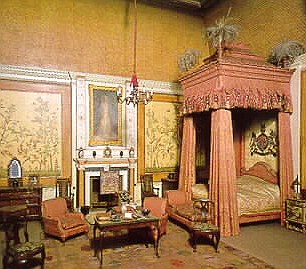
Example of the kind of decorative artistry being a trust fund baby --or a princess-- can net you.

Example of the kind of decorative artistry being a trust fund baby –or a princess– can net you.

Image:  dailymail.co.uk

That’s not a real king’s bedroom; it’s a room in Queen Mary’s dolls house.  Seriously.  Check out the link.

On the other hand, I quite enjoy becoming so fascinated with a subject that I slightly obsess over it.  I have a dear friend who does the same thing.  He gets captivated by something and we all end up hearing about it for days on end.  I believe, however, that this enriches his life.  I’ve certainly learned a thing or two when he shares his discoveries.  In that way, it enriches mine.

For Rose’s Hostage, I became slightly obsessed with bank robbery.  I read about it, subscribed to the FBI’s emails (including their periodic statistical reports about this particular crime), and devoured information about famous robbers and incidents.

For Secret Book, it’s a number of things I’ve already mentioned in previous posts.  And for Tunerville, I read a lot about ghost hunting.  The rest I pretty much made up, except for a few conversations with a physics professor and a medical professional.

It sounds fun, but as I mentioned earlier, you must take care to avoid letting the research take over.  Though I have begun several, I have never finished even ONE dolls house or room box.  See what I mean about dangerous?

If I indulged myself like this while trying to write a book, nothing would get done.  I have actually had to force myself to finish a story even if I’m uncomfortably hazy on the details.  This is not the time to be a perfectionist.

Mental paralysis is also a thing.

Mental paralysis is also a thing.

Image:  Stuart Miles/FreeDigitalPhotos.net

TIP

Just write the damn thing and fill in the details later, silly.


So do your research, but leave time to do your work as well.  Otherwise you may look up and find that the story has passed you by.