Character: H is for Happiness

atoz [2014] - BANNER - 910

H is for Happiness.

Most people think of happiness as an end result.  However, it can actually be something that happens along the journey.  Think of all the advice people give regarding happiness.

 You must be happy with yourself before you can be happy with someone else.

 Enjoy the small things.

 Take time every day to be grateful.

 Remember those who helped you and give back twice what you got.

Lots of good advice, but how often do people heed it?  Complications wrought by the pursuit of happiness make good fodder for stories and for character development.

Is your character relatively happy with her life?  If not, why not?  What motivates her to be happy?  Think about what a person needs to reach this state of being.  It will vary between each one.  If a character is not happy, and you offer her the means to be that way, to what ends will she go to achieve it?  Is that the goal for this character, or will she find it on the way to something else?

A character may seek happiness by pursuing a specific thing.  But maybe you could have her go after something she thinks will make her happy (like monetary success), only to find out that it is a complete lie, and she finds it by being honest with herself.

 Or not.  

Or not.

 Image:  Rosen Georgiev / FreeDigitalPhotos.net

Some people enjoy being miserable all the time.   How many of us have been suckered into helping a whiny friend or relative repeatedly, because nothing seems to get any better? They may use it to control others—making them miserable too, eliciting sympathy or even tangible goods and services from them.

Maybe they like the drama misery brings.  Their lives are pretty good, but adversity brings attention.  If they don’t have any, they manufacture some.

They may hide in misery.  Fear of change, or of taking a risk at being happy and crashing to the ground in flames, they prefer to stay where they are.  The devil you know is better than the devil you don’t, right?

The first major conflict in the story will affect your character’s happiness level.  He may be pretty content at the start, but when he runs headlong into a huge change, he’ll have to choose a path.  Will it be the safe one, or the dangerous one?  Which will bring him closer to his goal, or help him achieve it?  Will he be able to return to his previous content state, or will things change so much that he’ll have to accept a new normal?

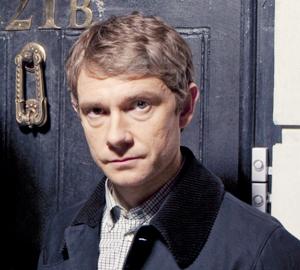
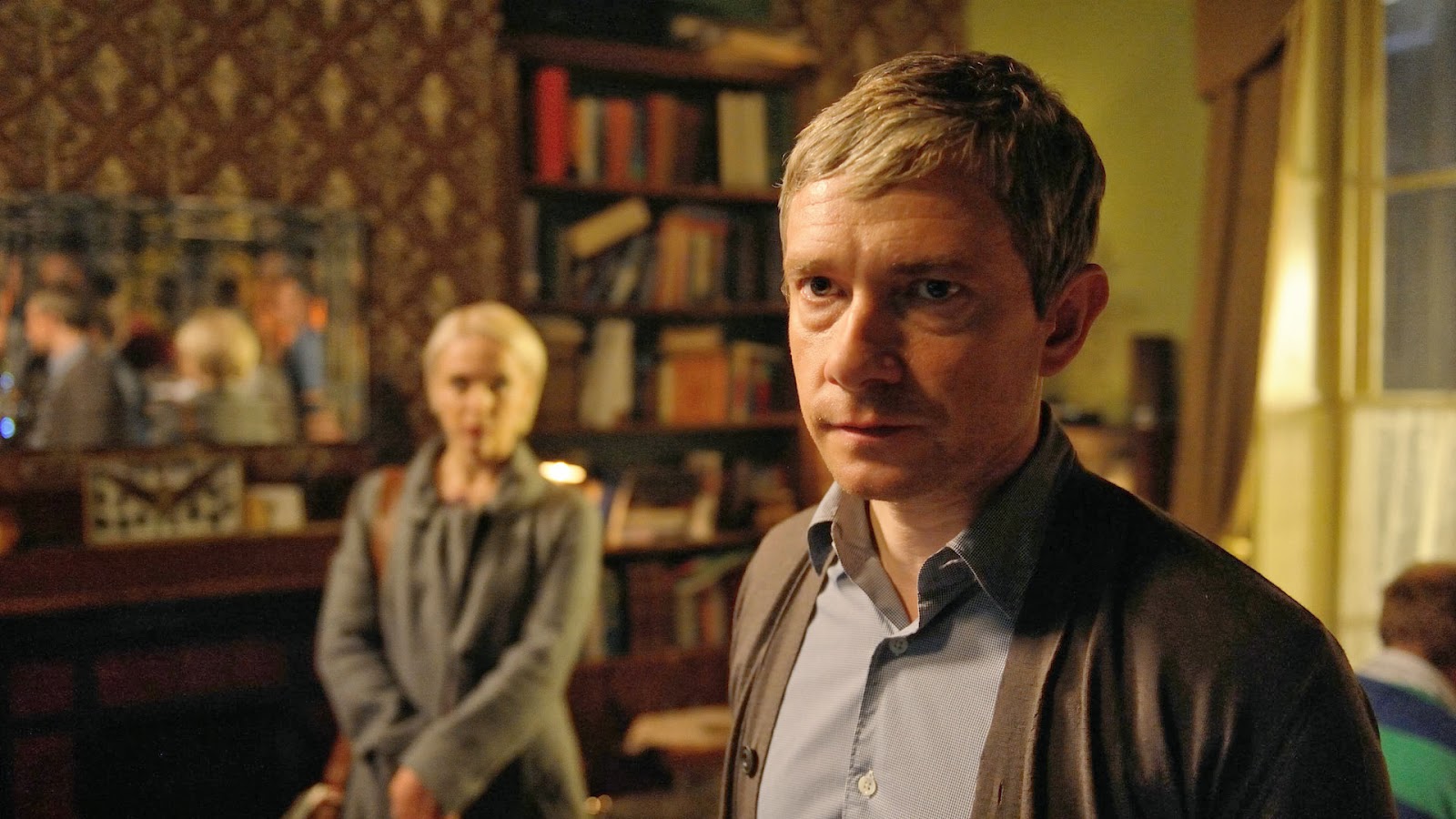
 @DrJohnWatson tweeted:  Really just want a nice, quiet cuppa with my sweetheart and my best mate and—oh bloody hell.  Bring on the danger.  #addictedtoacertainlifestyle 

@DrJohnWatson tweeted:  Really just want a nice, quiet cuppa with my sweetheart and my best mate and—oh bloody hell.  Bring on the danger.  #addictedtoacertainlifestyle

 Image:  primetime.unrealitytv.co.uk

(WARNING: Don’t click the image link if you haven’t seen Sherlock: Series 3 yet.)

If he’s miserable, try shoving something terrific at him and watch him squirm.  Decide where you want your character to begin.  Then you can mess with his life in all sorts of ways.  Muwahaha, writing is fun!

Character: G is for Gender–of the writer!

atoz [2014] - BANNER - 910

How do you write a character of the opposite gender as yourself?  The first caveat is to beware of stereotypes.  Otherwise, you’ll doom your protagonist to a fate worse than death:  the dismissive eye-roll!

I’m a female writer who creates a lot of male characters for some reason (don’t ask why; I really don’t know).  I’ve had male readers look at my work.  So far, none of them have said I didn’t get it right (although I’m sure not every single detail was completely accurate).  My brother read Rose’s Hostage and said Joshua was exactly as a man in love thinks and behaves.  (Yay!)  Even so, that’s still only one man’s opinion.

Overall, men and women are more alike than different.  Aside from our naughty bits and reproductive organs, we have the same basic anatomical structures.  Heart, lungs, gallbladder, intestines, liver, eyeballs, etc.—all the same.  We all poop, pee, sneeze when we have a cold, and bleed when we’re cut.  And it’s all red.

 Except maybe for this guy.

Except maybe for this guy.

 Image:  Wikipedia.com

We both get hungry and feel better when we eat.  We get tired and feel refreshed after a good night’s sleep (unless there is some kind of underlying health issue).  We have the same emotions, the same hopes, fears, and dreams.

Still, dissimilarities exist.  What might a female writer need to consider when creating a male character and vice versa?

The genders are different in certain ways.  Physiology is probably the most obvious.  Men are generally larger than women.  Agent Scully might end up crawling through the ductwork because Agent Mulder won’t fit.

They have more upper body strength, proportionately.  Mulder can probably carry Scully out of the burning building, but she might have to drag him out.  Anatomical differences will dictate how characters do certain things.

Re the naughty bits:  how do you describe physical sensations?  What does it feel like to get socked in the nuts?  How does a male orgasm differ from a female one?  What’s it like to have menstrual cramps, or give birth?  How many men want to know that last one?  Not many, I’d guess.

Nope nope nope nope. 

Nope nope nope nope.

Image:  artur84/FreeDigitalPhotos.net

You could read a lot of literature about men that describes similar feels.  You could Google it (believe me, it’s out there).  Or, you could ask someone of that gender and hope they can describe it to you in a way that makes sense.

Men and women are pretty much the same when you’re talking about personality, intellect, and things like values and qualities.  Your biggest difference is going to be socialization.

It’s definitely something to consider.  You should start with personality and socialization, because those two things will dictate a lot of the following elements:

  • Language choices:  Men use fewer words on average, but does this occur due to a guy’s personality or societal norms?  You could have a male character who talks everyone’s ears off.  That wouldn’t necessarily be considered feminine, nor would a woman who doesn’t talk much be thought of as masculine.
  • Perception:  The cliché is that men don’t notice the same details that women do.  This study seems to think there are differences in literal sight (and they favor the men on small detail!).  But a trained observer—male or female—is going to notice more things overall.
He sees EVERYTHING. 

He sees EVERYTHING.

Image:  marcelmovies.blogspot.com

In Thomas Harris’s brilliant novel The Silence of the Lambs, agent-in-training Clarice Starling excels at victimology because she sees details about the female victims that drew the gender-confused killer.  Her observation that kidnap victim Catherine Martin owns bespoke clothes for large women leads her to Jame Gumb, the murderous tailor who is making himself a woman suit—out of real women.  Clarice doesn’t do all the work (she’s too inexperienced), but her perception hones in on things the male agents do not notice.

Remember, this is a female character written by a man.

  • Expressing emotions:  Women are often perceived as being more emotional than men, even when they’re acting rather reserved and businesslike.  Your female character doing so-called non-traditional work (a firefighter, for example) might yell at a fumbling trainee in exactly the way a male character would.  Because of this stereotype, her coworkers may react differently.

Bob yells at trainee Walter.  Everyone says, “Bob’s a tough trainer.  He lets you know when you screw up.”

Catherine yells at trainee Walter.  Everyone says, “Damn, Catherine is a bitch.  She’s too emotional for this line of work.”

Yes, I know.  You’re thinking Dafuq? But it’s real.  And male writers, you have to consider it, because it could change the way Catherine acts in certain situations.

Below, I have listed some books I particularly enjoyed where the author was a different gender from his/her protagonist.  If you have any recommendations, feel free to post them in the comments for other readers to check out.

The Silence of the Lambs by Thomas Harris 

Discussed above.

Memoirs of a Geisha by Arthur Golden 

This book was so good it made me insanely jealous I didn’t think of it first.  You would not guess a man wrote this if you didn’t know.

Frankenstein by Mary Shelley

All the main characters are men.

The Harry Potter series by J.K. Rowling

This series has male and female characters of all ages, but the main protagonist is a boy.

Character: F is for Family

atoz [2014] - BANNER - 910

F is for Family.

Does the character have one?  How did he/she grow up?  I put this under family and not children or childhood because it extends into adulthood.  A character who grew up with a family who did not give a crap about her may not give a crap about anyone else.  She could defend people who cared for her as a child or exhibit vengeance toward them if they did not.

If she has a child, this will change how she reacts to other people and things in the story and affect what actions she takes.  Her reactions will differ from someone who doesn’t have kids, even someone who may be protective toward younglings.  Most mothers would fight a ravening grizzly to the death to keep their little ones from harm.  Other moms might be too high to care.

You can also have a character hook up with a surrogate family.  A great number of people consider their friends their families, either because they’re too far away from blood relatives, estranged from them (or don’t know who they are), or none of them are living.

 Even if they are, they might just irritate the hell out of you. 

Even if they are, they might just irritate the hell out of you.

 Image:  cinepremiere.com

And of course, when a character forms a long-term romantic partnership, he or she creates a family.  It may not contain children, but the two together are now a unit.  For someone who grew up on his/her own, this could provide all kinds of readjustment for a writer to explore.

This leads me to another point.  The events of your story should dictate whether your character has a family, too.  In Rose’s Hostage, I deliberately chose to alienate many of the characters from this kind of relationship to increase their vulnerability.  Libby, the hostage, has no family at all; all her relatives are dead.  Her best friend Jade is like a sister to her and is in a serious relationship herself.  Libby has tried to form a romantic attachment, only to have it blow up in her face.  When we meet her, she’s bored, directionless, and ripe for the picking.

Along comes Joshua the bank robber, who has no family ties either and whose one attempt to create them ended fatally.  Libby is vulnerable to the capture bonding that occurs when he kidnaps her.  Despite Jade’s attempts to support her, it’s not enough to prevent what happens.  (I’d love for you to find out what happens, if I ever get my manuscript back and get it published.  Rawr!)  Joshua becomes vulnerable to her as well, which proves a huge (and deadly) distraction.

Bonds with coworkers can affect the story too.  Example:  When Skye in the TV show Marvel’s Agents of S.H.I.E.L.D first joined the group, she tended to be sneaky about stuff and fly by the seat of her pants because she was so used to being completely on her own.

Now that she’s more a part of operations and Agent Coulson (love him!) is offering her stability and guidance, she’s starting to open up and work more collaboratively with them instead of going her own way (i.e. behind their backs).  She’s becoming one of the S.H.I.E.L.D family.

 “Daddy?” 

“Daddy?”

Image:  zap2it.com

In turn, Skye has begun to mean something to them.  If you watched the “T.A.H.I.T.I.” episode where

****SPOILER****

she gets shot and they go to the underground bunker to get the drug used to bring dead Coulson back to life,

****END SPOILER****

(By the way I figured out how to do this, haha!)
you will have seen what lengths her new family will go to in order to help her.  Adversity is a good tool with which to build relationships in a narrative, and so is a common goal that characters share.

Character: E is for Emotional Traits

atoz [2014] - BANNER - 910

E is for emotional traits.

Your character’s emotional makeup affects his interaction with other characters and defines how he handles both his daily life and whatever adventures (or mishaps) you decide to give him.  Is the character outgoing or quiet?  Does everyone know when he’s mad, or does he keep it buttoned up?  Does this change during the course of the story?  If so, how?

According to some psychologists, the Big Five of personality / emotional traits consists of:

  • Openness:  receptive to new experiences and new ideas; intellectually curious, creative
  • Conscientiousness:  dependable and organized
  • Extraversion:  talkative; gains energy being around others
  • Agreeableness:  cooperative, compassionate, and friendly
  • Neuroticism:  worries a lot; nervous, anxious, and sensitive

You can inherit personality traits, but they are influenced also by environmental factors.  Each person is different, and each person has different levels of these traits.  Mix and match and see what you come up with.

I’m guessing REALLY low on extraversion and agreeableness. 

I’m guessing REALLY low on extraversion and agreeableness.

Image:  Colin Hutton/theguardian.com

Probably neurotic as hell.  But can you blame him?

Probably neurotic as hell.  But can you blame him?

Image: bbc.co.uk

When a character goes through a trauma or some event that causes him to adjust his worldview, it can change his personality to a degree.  Increases and decreases in these traits also occur with changes in age, such as neuroticism becoming quite high in adolescence, and because of depression, etc.  However, if your character is mostly agreeable, he probably will continue to be so overall after something bad happens, but maybe not in certain situations.

For example, let’s say I made up a character named Tim.  He’s pretty friendly and nice, until someone kills his sister Marian during a convenience store robbery.  Now Tim is very upset and angry.  It will take him some time to recover from Marian’s death.  Once he is able to get past the bulk of his grief, people will say, “Oh you’re back to your old self again.”

That doesn’t mean Tim will be the same as he was before.  Maybe he is really depressed, and all his rebound sociability is fake.  He could be suicidal (Marian was his best friend; they were twins and he couldn’t confide in anyone else, and he is lost without her) and then he meets a woman who reminds him of his sister, someone he can talk to.

Or, he could go to eleven on the anger scale and start hunting for the bastard scum who killed his family.

My name is Tim.  You killed my sister.  Prepare to die.

My name is Tim.  You killed my sister.  Prepare to die.

 Image:  graur razvan ionut / FreeDigitalPhotos.net   

Tim could fake being okay by day, while at night, he scours the streets of the city to dispense vigilante justice while wearing a black—oh wait, that’s Batman.   Anyway, consider your character’s emotional makeup as you develop him or her.  Strong emotions or hang-ups create interesting interactions with other characters.

Character: D is for Dynamic

atoz [2014] - BANNER - 910

No tornadoes yesterday, at least not here.  But it’s now cold again.  I don’t know about you, but I’m thoroughly sick of it.  It’s cold in my house and it’s hard to type.  What I really want right now is a nap (thanks, comfy blanket!), but I’ll do the best I can.

D is for dynamic.

A dynamic character is one who changes over the course of the narrative.  Does he learn anything?  Do the events of the story alter his perceptions in any way?  Does he do things he would not have done at the beginning, for whatever reason?  Is there growth?

Unlike static characters, who stay the same throughout a story, the inner personalities, thought patterns, and outward behavior of dynamic characters will alter as the events unfold.  The change can be abrupt or it can be a slow process, a struggle through the entire story arc.  It doesn’t have to be a positive change either.  The character can fall apart completely and then either stay that way, die, or hit bottom and come back up.

Whatever you do with him, it must make sense within the narrative.  People don’t alter their entire worldview for minor things.  You can’t have your character show signs of extreme trauma when he’s merely stubbed a toe.

“Finding out your wife has an enormous and dangerous secret vs. tripping on the kerb?  Well, bollocks; I don’t know which one’s worse.” 

“Finding out your wife has an enormous and dangerous secret vs. tripping on the kerb?  Well, bollocks; I don’t know which one’s worse.”

Image:  buddy2blogger.blogspot.com

You must also avoid derailing the character; that is, don’t make him do things he would never do based on how you showed him earlier.  If he’s doing something because the story demands it, then it better be an action he could and would reasonably be capable of performing.  Keep your evil characters evil.  Don’t make a menacing villain suddenly turn into a ginormous teddy bear.

SPOILER! 

This happened in The Dark Knight Rises, when Ra’s Al Ghul’s daughter revealed her childhood association with Bane, who then made puppy eyes at her like a nanny on crack.  All the air went out of him at that point, and he ceased to be a frightening and credible threat and just became stupid.  TV Tropes calls this badass decay.  Don’t do it; it’s annoying.

OKAY, SPOILER OVER.

Sorry, I’m on the free version of WordPress and it won’t let me blank out spoilers (that I’m aware of).

Don’t make the cute little girl suddenly pick up a machine gun and blow everybody away, unless you’ve established a clue earlier that she either might know how to use it or can learn really quickly.  Most small children can’t handle automatic weapons.

I have my doubts about these two.

I have my doubts about these two.

Image:  Phaitoon/FreeDigitalPhotos.net

Dynamic characters will move your story along.  As they evolve, their actions and reactions will initiate changes from other characters.  When Samwise Gamgee leaves the Shire with Frodo in The Lord of the Rings, he’s just a simple gardener and Frodo’s manservant.  By the time they reach Mount Doom, he has ridden in a boat, fought orcs, and killed the horrific giant spider Shelob.  Frodo’s deterioration and steadily decreasing ability to even care for himself brings out fortitude in Sam that he never knew he had.

Come on, say it with him; you know you want to.

Image:  xoyannie.com

The best protagonists don’t stay the same through a story.  Have fun putting your characters through their paces.  Give them things to do that challenge them.  We should all live this way in real life, too, because it keeps us fresh.


Character: C is for Critical Flaw

atoz [2014] - BANNER - 910

We’re under a tornado watch today, so I’m charging my phone and blogging my post right now, just in case.  Welcome to spring east of the Rockies!


I’m in yer backyard, rearranging yer patio furniture.

 Image:  NWS/NOAA  / Wikimedia Commons

A critical flaw is something inherent in your character that will affect the story conflict in some way.  It might drive him to act, perhaps wrongly, in situations or keep him from acting when he should.  There are a million examples—Harry Potter always trying to do everything himself without asking for any help, the Marquise de Merteuil’s blindness to the consequences of her mean-girl enjoyment as she toys with her lovers (and everyone else) in Les Liasons Dangereuse.  I’m going to use Sherlock Holmes as an illustration, because I’m reading the stories right now.

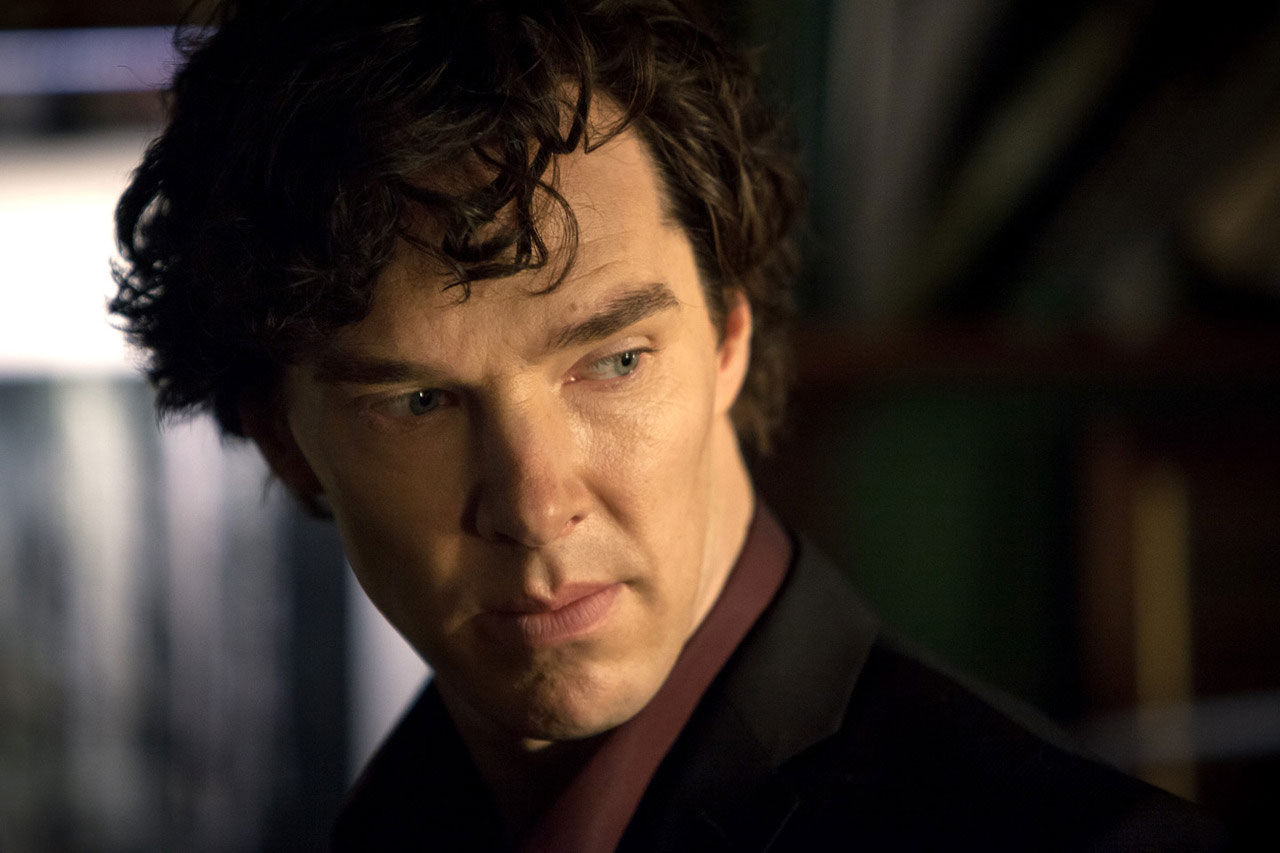
 No, truly, I am.  Did I really need an excuse to post this?  Did you mind?  I think not. 

No, truly, I am.  But did I really need an excuse to post this?  Did you mind?  I think not.

 Image:  benedictcumberbatch.co.uk

Holmes’s insatiable curiosity and expansive intellect make him an excellent detective, because he 1) can’t resist the mystery, and 2) he’s driven to learn what he doesn’t already know.  He’s also an eccentric jerk.  I’m talking about Literary Holmes, not BBC Holmes, though my first impression of that version was “What an ass.”

The stories are from Watson’s point of view, so we get a bit of an exalted impression of Holmes.  Watson is enamored of his intellectual friend and partner.  He’ll get up out of bed in the middle of the night to go run off on an adventure with this guy, who basically treats him like an adoring and slightly annoying puppy.

Literary Holmes is a perfect example of a charismatic sociopath who is capable of occasional social niceties, though he can hardly be bothered.  He’s more engaging with people than the BBC Holmes and even laughs.  I don’t recall BBC Holmes ever smiling, except in the “His Last Vow” episode, and I knew in one second that was fake. [NOTE: He does–even laughs, but only genuinely with Watson.]

At times, I find Literary Holmes’s superior way of explaining things insufferable.  I wish Watson would tell him to stuff it, but he’s far too polite.  He often reminds me of Sheldon Cooper on The Big Bang Theory, only without the insecurity that makes Sheldon so endearing.


*knock knock knock* Watson…*knock knock knock* Watson…*knock knock knock*Watson…

*knock knock knock* Watson…*knock knock knock* Watson…*knock knock knock* Watson…

 Image:  bigbangtheory.wikia.com

Sherlock Holmes has an interesting critical flaw; because he’s so intelligent, he thinks he’s one step ahead of everyone.  As Irene Adler clearly showed him in A Scandal in Bohemia (1891), he isn’t.  It interests me that Doyle chose to make this defeat come at the hands of “the woman,” which was ballsy for a writer in protectionist Victorian times.  Despite his admiration for her smarts, Holmes neither trusts nor exhibits any apparent physical desire for any member of the female sex.

It’s a pity Doyle didn’t work this flaw to a greater extent.  I’m not finished reading the stories yet (you should see the size of the collected works—oof), and I know there is one where Sherlock shows a bit of affection for Watson, who is just about his only friend.  (Not like that—good cripes, get your mind out of the gutter!)

What I would like to see on the show is someone (not Irene—too easy) utterly destroy the great detective with an entire episode series story arc.  Make him flail.  You can’t appeal to sociopaths on an emotional level, so the only way to do it would be to frustrate him nearly to death.  I want to see Sherlock Holmes LOSE HIS COOL COMPLETELY.  Perhaps this could happen after they’ve worked their way through all the story adaptations.

Give your character a major flaw, and then exploit the hell out of it.


Character: B is for Backstory

atoz [2014] - BANNER - 910

Today, I went to the passport office to turn in my application, so I can invade the U.K. later this year.  It will be so nice to have an actual vacation, far away from the yapping dogs and revving low-riders that have overtaken my neighborhood.  Perhaps I’ll win the Lotto drawing before then and I can afford to move.

 This will do. 

This will do.

Image: xedos4/FreeDigitalPhotos.net

 On to A-Z!

B is for backstory.

 In what sort of culture did your character grow up?  Whether we like to admit it or not, our backgrounds influence what sort of adults we’ll be.  While backstory doesn’t have to be a part of your narrative, you should definitely think about for your major characters.

The three male protagonists in my novel Rose’s Hostage had absentee fathers and one who was abusive.  This shaped them in various ways:

  •  Pierce the detective adopted his wife’s dad as a surrogate father
  •  Joshua the bank robber values independence and control
  •  John Cook the serial killer rebelled silently, underneath a façade of decorum

Libby the hostage also never knew her father, though she spent summers with her grandparents and did have a male influence.  Still, she seeks a bond with a strong man who perhaps to her is the fulfillment of a wish fantasy, a hero type she has built up in her head who will swoop down and save her from her humdrum life.  Too bad the one she finds (Joshua) is more of an anti-hero.  Libby is every woman who ever fell in love with the wrong man.

Single mothers raising kids alone is common.  Will this bond the character to another one over their shared background?  Will they seek to put it behind them?

Actors who study or practice Method acting talk about motivation.  As a writer, you’ll seek the same inner contemplation for your major characters.  To make them well-rounded, you will have to think of them as real people, with hopes, dreams, traumas, and fears.  They feel all the same things you do, in varying levels of intensity.

 Even this guy. 

Even this guy.

Image:  fanpop.com

 So how to do this?   It’s not always easy to identify with people in situations that are alien to you, and that can make it difficult to write a character’s behavior authentically.  If you can draw parallels to the situation, you might find moments in your own life where you can recall a similar feeling.

You can elicit your own past here, but eventually, as a writer, you’ll have to imagine scenes to which you have no possible real-life connection.  Re acting techniques again (so many of them are useful for writers; or maybe it’s just me, because I did so much theater in high school and college), Stella Adler modified the Method and urged her students to use the scene’s circumstances to stimulate their imaginations.  Adler also advocated doing research to understand different experiences better.  (I do this too!)

Another helpful tool is character worksheets.  I love these; I make one for each of my major characters and even paste pictures of people or drawings in them that resemble how they look in my mind.  Many of them have questions or list items where you can jot down things like your protagonist’s socioeconomic status, whether they have siblings, where they spent most of their childhood, etc.  Imagine you are your character as you fill it out.

You can make your own, or google character worksheets for writers.  There are thousands of them.

————

Reveal backstory carefully; avoid the “information dump,” where all your backstory suddenly shows up in the narrative in one large clump.  Work tidbits in here and there.  Let the reader get to know the character as we read (I need to work on this one).  Your tale may not make much use of all the background, but your characters will have more depth if you think about where they came from.

Character: A is for Age

atoz [2014] - BANNER - 910

OH HOLY CRAP YOU GUYS.  I completely forgot about the A-Z Challenge!!!

I had a meeting at school on March 31, late in the day, regarding a class project.  Since the professor is also my adviser, we had a discussion about my desire to run like the wind from school.  Conclusion:  I’m taking the summer off to write the sequel to Rose’s Hostage, and I may or may not come back in the fall.

I apologize for forgetting, so today I’ll be posting my A and B posts.  (I knew I should have put a pop-up reminder in my calendar, but noooooooo, I thought I would remember.  Bollocks.)

The theme for this year’s challenge is Character.  Throughout these posts, I’ll discuss elements I consider when I’m developing a character for a story.  I might even make one up as we go along.

Ready?

A is for age. 

What the character does and thinks affects the story, so your first task is to figure out how old the person should be.  There are profound differences between perspectives at each age and how they drive a character’s actions.

For example, children lack information that adults have gleaned through experience, and they don’t always see things as they actually are.  Stephen King’s It and The Body (you may know it as Stand By Me, the film version) and Robert R. McCammon’s Boy’s Life contain fairly realistic depictions of how kids see and cope with events in their worlds.

Let’s make our character a single adult woman named Sarah.  What are some of the things she might be concerned with?

  • Family (children)
  • Career
  • Money
  • Relationships

These are pretty basic to every adult, but Sarah will most likely be thinking about them in a different way at forty-three than she was at twenty-three.

 Nope, gonna party ‘til I drop!

Nope, gonna party ‘til I drop!

 Image:  photostock/FreeDigitalPhotos.net

 Twenty-three

If Sarah is typical of most young people, she’ll be on her own but still learning how to handle her own affairs.  A twenty-three-year-old who went to college might not be working, but if she is, she’ll likely be entry-level.  She may be a saver, or she might blow her entire salary on cute shoes (or books, or computer parts, or whatever hobby you want to saddle her with).

Sarah could be in a relationship or dating around.  It’s up to you.  A serious boyfriend is an option here, but depending on where she lives and how she grew up, she may have a family already.  If so, her responsibilities will differ from other people her age.  She may be more resourceful or mature (unless you decide to make her a complete meth head or party animal).

This is a good time for a character to meet an older mentor, someone who will guide her into adulthood.  It could be an older lover.  It could be a coworker, a relative, or a friend.  It could be the story’s antagonist—adversity builds character, you know.

Her outlook on the future will skew toward possibilities.  When I was this age, I felt I had the whole of time and space ahead of me.  I could have adventures.  I could do things that mattered.  I might even change the world.

 Boy, I really didn’t know jack. 

Boy, I really didn’t know jack.

 Image: David Castillo Dominici/FreeDigitalPhotos.net

 Sarah in her twenties will adapt to almost instantaneous changes; she probably rents instead of owns a home, and she may move far from where she grew up, more than once.

Forty-three

By this age, Sarah will probably have settled into some kind of routine existence, unless she’s a test pilot or an archaeologist or an astronaut.  Most people entering their forties have been working for a while, so they’re more aware of how to handle money, their time, and their duties.

This may also be a time where Sarah looks at career changes—maybe she had a family earlier and wants to do something different with her life.  She could return to that future optimism she had at twenty-three.  She could go back to school, which would revitalize her.  Overall, older adults tend to be more risk-averse, so Sarah might decide that she’s not willing to risk any stability for what could amount to a pipe dream.

Many people start to face their mortality in their forties.  They begin to lose parents, siblings, friends, and classmates.  Their kids grow up and have kids.  They may face health issues of their own.  They discover signs of aging (this can really mess with a character’s head).  It’s the age of evaluation:  is my life what I wanted it to be?  Is there anything I can do about it at this point?  If so, what?

Sarah in her forties is still young enough to change her life, but unless change is forced upon her (divorce, loss, asteroid), will she want to?

———-

You’ll find tons of things to think about when deciding how old to make your character.  If you’re stuck in your story, try changing your protagonist’s age and write a few scenes from that perspective.   It might be just what you need to give your story some punch.