

What sort of country will your characters inhabit? How far are they from natural resources? What resources do they have? Where in the world are they located?
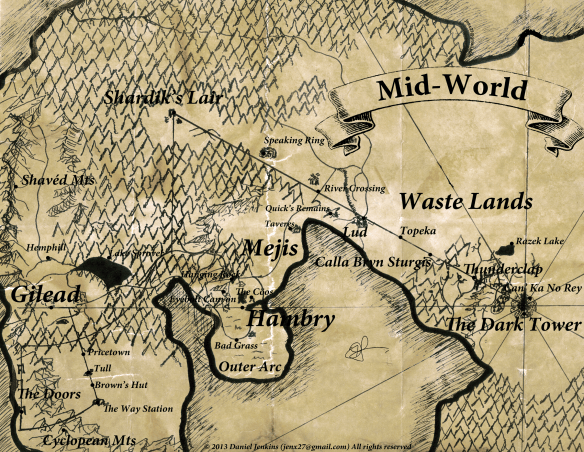
Or where in what world?
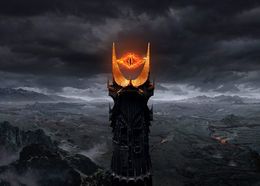
Image: Daniel Jenkins / darktower.wikia.com
In Tolkien’s Shire, the hobbits either have everything they need, or they can grow or construct it. Bilbo, Frodo, and the Fellowship are unique in leaving their homes to satisfy any sort of quest. This is the case partially because of their culture, but it’s also because their lives in the Shire are sustainable. They don’t want for anything and don’t have to seek it.
Wherever they live, your characters will have to either work with what they have or alter their environment to suit them, depending on their level of power. In the film Mad Max: Fury Road, the post-apocalyptic desert dwellers have little to sustain them. Even their access to life-giving water is controlled by the megalomaniac Immortan Joe. The citadel Joe has built lies in a natural canyon and a series of caves, but he and his minions have added structures that allow them to control the flow of water, and thus control the rest of the population.

Can you tell I loved this film? Because I loved it. Rent it. It kicks ass.
Imperator Furiosa and Joe’s wives leave to find a place she remembers as green and cool, but she has to cross a huge expanse of barren desert to get there in a stolen war rig. Because the escapees are at the mercy of the inhospitable surroundings, everything they do is geared toward survival as well as reaching their goal.
You too might take your characters on a journey. Along the way, you should give them ways to find the things they need. In The Walking Dead, Rick and company scrounge through abandoned shops, houses, and storehouses to find what they need.
In other stories, characters will have to hunt their food. On the road in The Dark Tower, Roland makes what Eddie Dean calls “gunslinger burritos,” deer meat wrapped in a kind of edible leaf that tastes vaguely like spinach. Clearly Roland knows how to take care of himself and his ka-tet; he don’t need no stinkin’ supermarket.

I don’t neither.
The deer and vegetation are readily available, as are the goods in Rick Grimes’ post-apocalyptic landscape. Should a character have to cross a desert or high plain, he would have to carry food and water with him. A backpack makes a good conveyance; he could beg, borrow, steal, or make one. The change in topography will change his needs.
Think about the terrain surrounding your setting. Is it a small village in mountains? This will affect not only how it looks, but how people get around. Higher elevations typically receive more snow; if your characters have to climb up and down steep hills in it, they’ll need proper clothing, their vehicles need to handle it, and a reliable source of warmth or fuel will be imperative.

Tauntauns aren’t gonna cut it.
All this may seem overwhelming, but it’s really just common sense. Once you’ve fallen deep into your story and you’re living within your characters, their needs will become clear. Relax and enjoy the adventure on which they will take you.





 How many times have you seen a film in which a character reveals his origins the second he opens his mouth? Some areas have their own language or a version of the common language. We can also recognize the origins of many English speakers by their accents. However, dialect is more than just accents; it also encompasses things like phrasing, vernacular, and slang.





 Grr, I cut my pinky on a mandoline blade when cleaning out a kitchen drawer today. The giant bandage is making it hard to type.


 Graphomaniac - A. Elizabeth West


