F is for Future

Oh, you’ll have lots of fun with a futuristic setting.  Speculative fiction in particular is rife with them.  Generally, these stories take place on Earth, but they can also happen on other worlds and involve other life forms.  For our purposes, we’ll discuss those that focus on humans.  Here are a few of the most popular types.

Dystopian or utopian societies

Humanity has either lost control of some major issues and its world has gone sour, or it has mastered them to the point where all needs are met.  The latter holds the potential for extreme boredom, so usually some outside threat will arrive to menace the population (or the heroes must prevent it).  Dystopias include The Hunger Games and Fahrenheit 451; a couple of familiar utopias are twenty-fourth century Earth in Star Trek: The Next Generation and the Shire in The Lord of the Rings.  (We’ll talk more about utopias in the U post.)

Post-apocalyptic worlds

Something dreadful has befallen the human race and now the survivors must cope in the aftermath.  Swan Song, The Walking Dead, and The Stand are post-apocalyptic works.

The Dark Tower (you knew I’d sneak this in, didn’t you?) sort of counts.  Mid-World is a parallel universe to our Earth.  It’s dying—beset by decaying infrastructure, damage from long-ago conflicts, and the weakening of the time nexus at the site of the Dark Tower, the object of Roland’s quest.

Pretty but dangerous.

Image:  Ned Dameron / stephenking.com

Space opera

A space opera is a sweeping, epic story set in a huge universe that includes humans or one that humans have somehow traveled to or been incorporated into either through evolution or interstellar travel.  Star Wars is the best known, but we also have Star Trek, John Carter of Mars, Buck Rogers, Firefly, et al.

Time travel

While not strictly a setting, time travel lets characters hop into the future and experience alternative worlds and timelines from a base in their own time or through a sort of lost wandering.  Doctor Who is a notable example; though the Doctor is an alien, a Time Lord from the planet Gallifrey, his travel companions are usually human.  Quantum Leap presents a variation where futuristic technology enables a protagonist to travel not only forward in time but backward as well, and into other characters (something Roland also does in The Dark Tower: The Drawing of the Three).

I’m in ur head, makin you change stuffs.

I’m in ur head, makin you change stuffs.

Image:  quantumleap.wikia.com

Futuristic stories can happen a half-century or a century from where we are, or even thousands of years hence.  Some writers start over and imagine a complete overhaul of life as we know it, to the point of unrecognizability.  Others do a credible job of projecting how our current future may actually appear.  The writers and designers of the Star Trek series made some pretty interesting technology predictions that we’re actually using today.

Flip phones and 3D printing and tablets!  Oh my!

Flip phones and 3D printing and tablets!  Oh my!

If you want to project the future in your story, you should remember two things:

  • Change is slow.  Rarely does any major shift in culture occur without a very long period of adjustment.  A huge, instantaneous sea change is not realistic.  Technology may change the way we do things, but people’s motivations still remain much the same as they did a hundred years ago.  Food, safety, love, and power are four very compelling motivators.
  • If you want the speculative elements to be effective, the reader must be able to suspend disbelief.  Using aliens demands an effort right out of the gate.  Many folks don’t think they exist, and those who do tend to have their own ideas about how that scenario would play out.  Your situation must make sense, even if it’s only within the confines of your story.

You may decide to set the story on another world, a la The Martian, etc.  For a known world or one in a scientifically known setting, do your research!  Don’t say there are people breathing oxygen in the Moon’s atmosphere unless you’re prepared to explain how we suddenly evolved this ability (and where the oxygen came from).  Alternatively, you can make up a planet.  Come on; you’re a writer.  It’s what we do!

This is the most magnificent stock photo representation of writing I’ve ever seen. 

This is the most magnificent stock photo representation of writing I’ve ever seen.

Image:  imagerymajestic / freedigitalphotos.net

If you think you can swing a futuristic setting, go ahead.  In fact, it’s worth trying even if you’re not sure.  You’ll never know if you don’t try, and practice makes perfect, right?

E is for Exposition

How will you reveal your setting to the reader?  You don’t have to give them everything, only the important things.  Most people don’t pay attention to trappings that don’t affect them directly.  And if you don’t show them everything, they’ll fill in the rest.

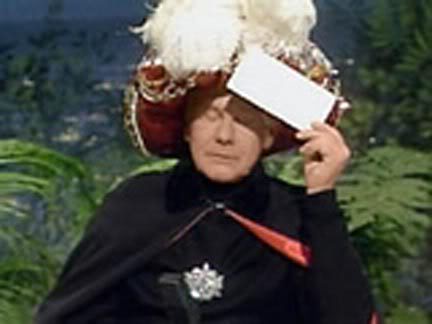
“I must have absolute silence to visualize this setting…..No, I cannot be wrong.  May a weird holy man light a Roman candle in your pants!” 

“I must have absolute silence to visualize this setting…..No, I cannot be wrong.  May a weird holy man light a Roman candle in your pants!”

Image:  decolady-randommusings.blogspot.com

If you want to adopt a sort of omniscient view, you can describe the setting in general terms and then zoom in, as in a film.  Or, and this is more fun, you can show your setting in the character’s point of view and reactions rather than tell the reader about it.  Let the reader infer.  Here’s an example–the opening to a story.  See if you can guess where the person is:

Helen turned away from the clock and reclaimed her seat on the bench. The checkered tile floor at her feet wavered and blurred like bits of glass in a kaleidoscope, seen through a lens of tears.  The inside of her nose prickled at the sharp odor drifting upward from its shiny surface. 

Sounds jangled around her in a jumbled cacophony:  rubber squeaking on the tile, a metallic clatter, voices strained in hushed anxiety, the blaring crackle of a loudspeaker high on the dingy yellow wall, the faint warble of a siren, and somewhere far off, a scream.  Her knobbly fingers slid restlessly over the smooth wooden beads of her rosary and she wondered when the news would come, if the next shriek would be hers. 

Did you guess yet?  You should be able to tell what Helen is doing and where she is though I never actually say, if I’m any kind of writer at all.  (Shhh; let me maintain my delusion at least through the rest of this post!)

Helen’s reactions and the details of her surroundings will clue your reader in.  Make certain that the details of your setting have a purpose.

Establishing mood

Dingy yellow wall; anxious voices; a scream.  This is not a pleasant place, nor is it one where Helen wants to be.

Objects in the room the characters will use

Helen’s rosary; a bench; the tile on which she may collapse if the news isn’t good.

Objects or furnishings that reveal character (what kind of person makes use of this space?)

A siren; a loudspeaker; the bench; a stinky but clean floor; rubber-soled shoes that squeak on it.

A more complete description at the outset indicates a setting we will return to later.  When people pass through a place, especially when they’re in a hurry, they don’t notice details.  Make sure if they do that there is a reason for that particular detail, and that your character’s traits and state of mind would allow him to see it.

For example, a terrified person trying to escape a monster in a forest might run right past a spring when he becomes hopelessly lost.  A gunslinger, trained to observe and make use of his surroundings, would see the spring and note it even as he ran, though he would probably be pursuing the monster rather than fleeing it.  He might return to it later to fill his waterskin before he continued on his quest.

Monster killing is thirsty work, sai. 

Monster killing is thirsty work, sai.

Image:  “Roland” by Phil Hale / darktowercompendium.com

Many writers tend to describe things by sight; it makes sense, since it’s the primary human sense, the one we use most.  But the world has other elements and if you use them, you’ll make your setting much more vivid.  Use the five senses to acquaint readers with your world.

  • Taste
  • Touch
  • Smell
  • Hearing
  • Sight

We have a sixth sense—our intuition—that gives us the ability to make instantaneous judgments from an amalgam of sensory input.  Have you ever, while driving, knew without knowing how you knew that the person in front of you was going to turn?  Or walked in on an argument, and though you heard nothing, the room had a sort of tension?

These cues provide valuable information that can help your reader enter your world.  Use all of them.  But do it sparingly.  Your reader should form the picture inside his own head.    One limitation of film is that the viewer can see everything, but in only one way–the way the director has decided it will look.  In prose, you have endless possibilities, limited only by your reader’s imagination.

D is for Dialect

How many times have you seen a film in which a character reveals his origins the second he opens his mouth?  Some areas have their own language or a version of the common language.  We can also recognize the origins of many English speakers by their accents.  However, dialect is more than just accents; it also encompasses things like phrasing, vernacular, and slang.

“WHOOOOOOOOOO!” -- international slang for “Our festivities are fast approaching the extremity of fun; let us now indulge in a bit of exuberant expression.”   

“WHOOOOOOOOOO!” — international slang for “Our festivities are fast approaching the extremity of fun; let us now indulge in a bit of exuberant expression.”

Image:  photostock / freedigitalphotos.net

In some cases, the differences are simply regional variations, such as calling soda pop or using idiomatic expressions that may puzzle your character at first.  In others, whole other languages may dominate.  In the United States, many cities and towns have immigrant areas where almost no one speaks English.  This presents not only a challenge to anyone who lives and works near or in the area, but to the residents themselves, in terms of obtaining housing, employment, and social services.

The variation of language enriches your story.  It adds color.  I’m not saying you have to become a linguistics expert to write a good story; it’s just something you should be aware of.  Whatever you choose, it should be appropriate for your setting, its period, and your characters.  You can use existing language, or if you’re writing a fantasy, make one up.

This guy did both.  #goals

This guy did both.  #goals

Image:  medievalists.net  

I’ll give you a sample of the latter.  In Stephen King’s The Dark Tower series, (yes, I’m re-reading and I’m obsessed!) he gives the inhabitants of Mid-World a variance of speech, Low and High.  The Low speech is the everyday language, with regional differences like the Quaker-ish thee and thou Roland (the gunslinger) encounters in the barony (region) of Mejis in Wizard and Glass.  The High Speech is more formal and denotes something like gentry, as in Gilead, where Roland is from.

Though Mid-World folk use some words across the board, there are differences, and different words carry more importance.

Low Speech

  •  Cully – a jerky young guy, or mayhap just an inexperienced youngster
  • Bumbler (High Speech: throcken) – a small animal like a cross between a dog, a raccoon, and a groundhog. It is capable of imitative speech and though bumblers used to live with humans, by the time the book happens, they’ve mostly gone feral.  The character Oy is a bumbler.

I love this representation. It’s almost exactly as I pictured Oy. :)

Image:  SlateGrey / deviantart.com

They had better not leave out Oy in the films, and he had better be right!

  • Stuffy guy – A human effigy burned on a bonfire at the Reap (harvest) festivals. In days of yore, long before Roland’s time, they burned actual people.
  • Graf –beer made from apples; as ubiquitous as ale in The Lord of the Rings.
  • Cry off – cut it out, stop.
  • Sai (like sigh) – a polite term of respect, something like sir or ma’am. If you want to express gratitude to someone in Mid-World, you would say Thankee-sai.  A crossover used in both Low and High Speech.
  • Threaded – in the ancient history of Mid-World, radiation (nukes?) from the violent conflicts of the technologically advanced Great Old Ones left genetic damage among the living beings, resulting in things like cats with extra legs and fantastical mutant creatures in the Wastelands, for example. Threaded stock is unaffected by these mutations and thus more valuable. You’d hear this among livestock drovers, breeders, and anyone with a vested interest in such things.

High Speech

  • Ka-tet – one from many; refers to a group (tet) coming together with one goal, fate, or destiny (ka), good or bad. The little band of people (and one bumbler!) Roland collects on his way to the Tower is a ka-tet.
  • Glammer – a Low Speech crossover, it means magic, or something that isn’t necessarily real but that dazzles and enchants.
  • Dinh – a leader. A dash-dinh is more like clergy.
  • Gilly – a mistress. The virginal Susan Delgado is tapped as Mayor Thorin’s gilly in Wizard and Glass, but she and Roland fall in love before this comes to pass.

(WARNING:  Do not read this book when you are heartbroken because it will kill you!)

  • I cry your pardon – another crossover; it means, “I’m sorry; please forgive me.”
  • I (you) have forgotten the face of my (your) father – I am ashamed; I have brought dishonour on myself but also on my father and all my ancestors. (Or you did.)
  • Char – death.
    • Chary man – one who deals in death.
    • Charyou tree – the bonfire at Reap.
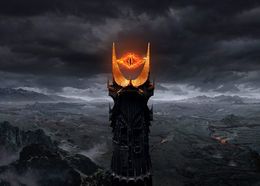
  • Sigul – sign or symbol. The Crimson King’s sigul is a red eye, similar to the evil eye found in ancient art.
Gee I wonder who else used an eye to represent the evil dude. *KOFFTOLKIENKOFF* And incidentally, Barad-dur means “dark tower” in Sindarin.

Gee I wonder who else used an eye to represent the evil dude. *KOFFTOLKIENKOFF* And incidentally, Barad-dur means “dark tower” in Sindarin.

Image:  lotr.wikia.com

Gestures

  • Fist to forehead – Using the right hand; a bow, a gesture of respect.  For extra humility, do it on bended knee.
  • Tapping the throat – a respectful gesture of greeting /acknowledgement. Three taps on the throat with the right hand is the proper address to women; on the breastbone with the left hand is to men.

You can find many of these at this Dark Tower glossary.

Heh, so I got a little carried away there, but you see what I mean.  The words and gestures King used reflect a broad variety of influences in his grand fantasy, which incorporates elements of classic Westerns, the modern world, and fantasy and science fiction (the Tower as an anchor for space-time, the Beams, robot Guardians, etc.).  They also give the setting a unique feel.  Every place you go, you’ll find a variant of thank you, but nowhere except Mid-World will you say thankee-sai. 

You probably won’t have to get this elaborate for a story set in modern times.  But language, verbal or non, is important—we cannot communicate without it, and neither can the inhabitants of your settings.  Misunderstandings between your characters and those who surround them are a fun source of conflict, and they can have catastrophic consequences in your little world.

Do ye kennit?

Image:  Michael Whelan / Wikipedia.com

Further reading:

http://www.theatlantic.com/international/archive/2016/01/difference-between-language-dialect/424704/

C is for Connection

This post builds on something I brought up in the last post, about your character and how he/she sees the setting.

Who is your protagonist?  Is your character a stranger in a strange land, who will discover the setting along with the reader?  Or is she already an inhabitant of that world?  Your character’s viewpoint and her connection with her surroundings will affect how you portray your setting.

Example:  a cluttered basement.  If your character lives in the house, she might view it as a treasure cave filled with exciting possibilities of discovery.  In a large outbuilding on the property where I grew up, the attic crawlspace above a built-in apartment was crammed with items that had belonged to my grandparents.  I would climb on top of the old upright freezer, hoist myself up there and crawl around the ductwork for hours exploring piles of old receipts, ledgers, etc. I dream about that attic space sometimes.

Aidan Turner who plays Ross Poldark.

When I’m not busy dreaming about stuff like this.  ;)

Image:  telegraph.co.uk

The basement in your story, like my attic, will be a well-loved and familiar place.  If your character is a hostage held against her will in that same basement, it will become a frightening prison cell with unimaginable terrors lurking in dim corners, where strange noises of scuttling and squeaking emanate from that pile of dusty boxes.  Who knows what could be in there, or when she will escape?

This also will show in your narrative voice, in the point of view you choose for the scene.  When you write the setting, try to incorporate it into the character’s experiences instead of merely describing it.

Example:  Sarah lives in London.  Her cousin Harriet does not.  When Harriet visits Sarah, they both see the same objects, infrastructure, and landscape, but they interpret it differently.  When you write from Sarah’s POV, she will use different words to describe things with which she is familiar.  She won’t notice details of things she sees every day; Harriet will.

Sarah takes the bus to the tube station and then gets on the train to go to work.  She does this every day.  She might not even notice, or only see peripherally, the color and pattern of the seat upholstery on the Victoria Line.  It won’t register to her because it’s not only familiar, it’s unimportant.

It looks like this, by the way.

It looks like this, by the way.

Image:  markdodds / Flickr / Buzzfeed.com

Harriet has never ridden the tube before.  Everything jumps out at her thus:

The swirl of people disoriented her.  She tried to hear the announcement, but the thud of many feet obscured the words and she only caught a few. “Your attention…now approaching the platform…mind the closing…belongings…exit the train.”  Sarah steered her firmly toward the opening in the side of a nearby carriage. 

Harriet clung to her bag.  “Mind the gap between the train and the platform,” she heard the recorded voice say.  She glanced at her feet; the black maw seemed huge, ready to swallow her if she misstepped.  She stretched her leg over the painted line and the yellow words that echoed the announcement (no doubt meant for silly tourists like her) and boarded the carriage. 

The doors whooshed shut behind her and the train started with a jerk.  Harriet clutched at the blue pole.  When her hand had it firmly, she glanced at Sarah.  Her cousin stood serenely beside her, eyes on her phone, her fingers lightly resting on the pole. 

“Crikey,” Harriet said, her voice shaking a bit.  “You do this every day?”

When you find a place in your narrative where you’ve lapsed into description, try doing this instead.

Prop masters and set dressers know that the objects in a room tell an audience a lot about the person who lives there.  The way actors interact with these objects says the same.  Things they touch and use often are favorites.  What are they?  What do they represent?  Can you use these objects to advance the plot?

Incorporate items in your setting that have value to your character, or will have.  Let your character bring your setting to life.

Maybe not like this, though.

Image: © 1931 Universal Pictures / britannica.com

B is for Backstory

B

Your primary setting should have a backstory.  It doesn’t have to appear in your narrative, though many novels do have some kind of place exposition.

This is a good time to practice show vs. tell (something I struggle with).   Your protagonist can interact with the environment and slowly infer what this setting is all about, how it functions, and which people he should avoid.

Or not–remember how J.K. Rowling made us think dotty old Arabella Figg was just a Muggle babysitter Harry Potter hated getting stuck with when the Dursleys didn’t want to take him anywhere?  And later we found out she was actually watching over him and she was a Squib!  Who’dve thought!

(Sorry, I had a nerd spasm there for a second.  I’m okay now.)  My point?  Little Whinging, Surrey, looks like an ordinary English suburb, but it has secrets.  Neither Harry nor we know them at the beginning.

Yep, just another rainy day at Number 4 Privet Drive; nothing to see here.  Certainly no wizards about.

Yep, just another rainy day at Number 4 Privet Drive; nothing to see here.  Certainly no wizards about.

Image:  Elizabeth West / Warner Bros. Studio Tour, London

Settings we have some familiarity with don’t require much exposition—when we see a medieval village, we know several things right off the bat:

  • Depending on the architecture and scenery, we can tell roughly where we are
  • Life is hard
  • The people we’re about to meet are poor, unless we’re standing in a palace or a large house
  • There will probably be some kind of authority figure like a squire, a noble, or a wicked queen
Thaaaat’s right.  I’m all about that wickedness, baby!

Thaaaat’s right.  I’m all about that wickedness, baby!

Image:  onceuponatimeabc.wikia.com

Even if we know where we are, we need a sense of the dynamics.  Your protagonist might have landed in a medieval village where everyone is a typical serf, landowner, etc. but the vortex in the woods keeps spitting out alien creatures they have to feed every so often.  Maybe he’ll find it when he goes to investigate why the trees in the center of the forest keep rocking back and forth when there is no wind.

If he is a resident himself, the origins of an insidious plot to replace the kindly squire with a sympathizer of the wicked queen might slowly dawn on him through a series of unusual events that deviate from the familiar routine.  First, you have to show that routine.

Either way, at some point, readers want to know why this particular place functions the way it does (or doesn’t).   A bit of backstory dropped here and there in the form of flashbacks, information from other characters, and perhaps even a book or document in a convenient place will save time.  If you want your reader to experience your setting, let your protagonist discover it.  Readers will do so along with him, and that will let them participate in your story.

It’s almost as if we were there -- HOLY CRAP MYRTLE!  IT’S A DEMENTOR! GET YOUR WAND OUT, QUICK! 

It’s almost as if we were there — HOLY CRAP MYRTLE!  IT’S A DEMENTOR! GET YOUR WAND OUT, QUICK!

Image:  Elizabeth West / Warner Bros. Studio Tour, London

A is for Area

ASo you’re writing a story!  You’ve got the who; you’ve got the what; now you need to pick the where.

Will it be a big place or a small one?  Depending on what happens in your tale, its primary setting could be a vast forest, a tiny village, or a large and bustling city.  It could be a forty-acre farm or a 780-square-foot house on a lot in town.  It could be one room, or a palace so large even the servants sometimes get lost.  You can use an entire country or just a small county or town within that country.  You can even hop between planets.

How will you measure it–in feet, or in miles?  As you name and consider your place and its attributes in your mind, so your characters will also.  If it is a fantasy world, perhaps it will have its own terms, and it will make them known to you.  A few familiar ones:

  • League – a measurement used in fairy tales, a league is a Middle English term meaning a distance of about three miles (roughly).
  • Furlong – about 220 yards, or the length of a good furrow (Old English).
  • Wheels – In Stephen King’s The Dark Tower series, the gunslinger Roland speaks of distance in this measurement, which varies in continuity anywhere from 1.1 to 1.7 miles each.

I like the last example best, because 1) King made it up, and 2) I’m rereading the series before Hollywood completely borks it.

Strangers to this land of yours won’t know how far something is unless someone explains it to them.  You’ll need to place landmarks, so travelers may judge their progress.

Turn right at the third skull and keep going straight until you fall off the cliff. 

Image:  Jon Sullivan / Wikimedia Commons

Vast or miniscule, populated or barren, wild or cultivated, your setting is the frame for your characters.  Give it as much thought as you would them and it will serve you well.